All species › Pigeons and doves › Pigeons and doves › Rock Dove
Rock Dove | Columba livia
Rotsduif | Paloma bravía
The Rock Dove is the wild ancestor of the domestic and feral pigeon. It is not native to the Caribbean: the birds here are feral domestic pigeons that arrived with European colonists. They live on almost every inhabited island, most numerous in towns and harbours, and their plumage ranges from the grey wild type to brown, black, white and pied.
Voice
A low, rolling coo, oo-roo-coo, repeated by males displaying with puffed-up neck. On take-off a loud clatter of wings.
Recording: Stanislas Wroza — CC BY-NC-SA 4.0 · converted to mono · xeno-canto
Identification
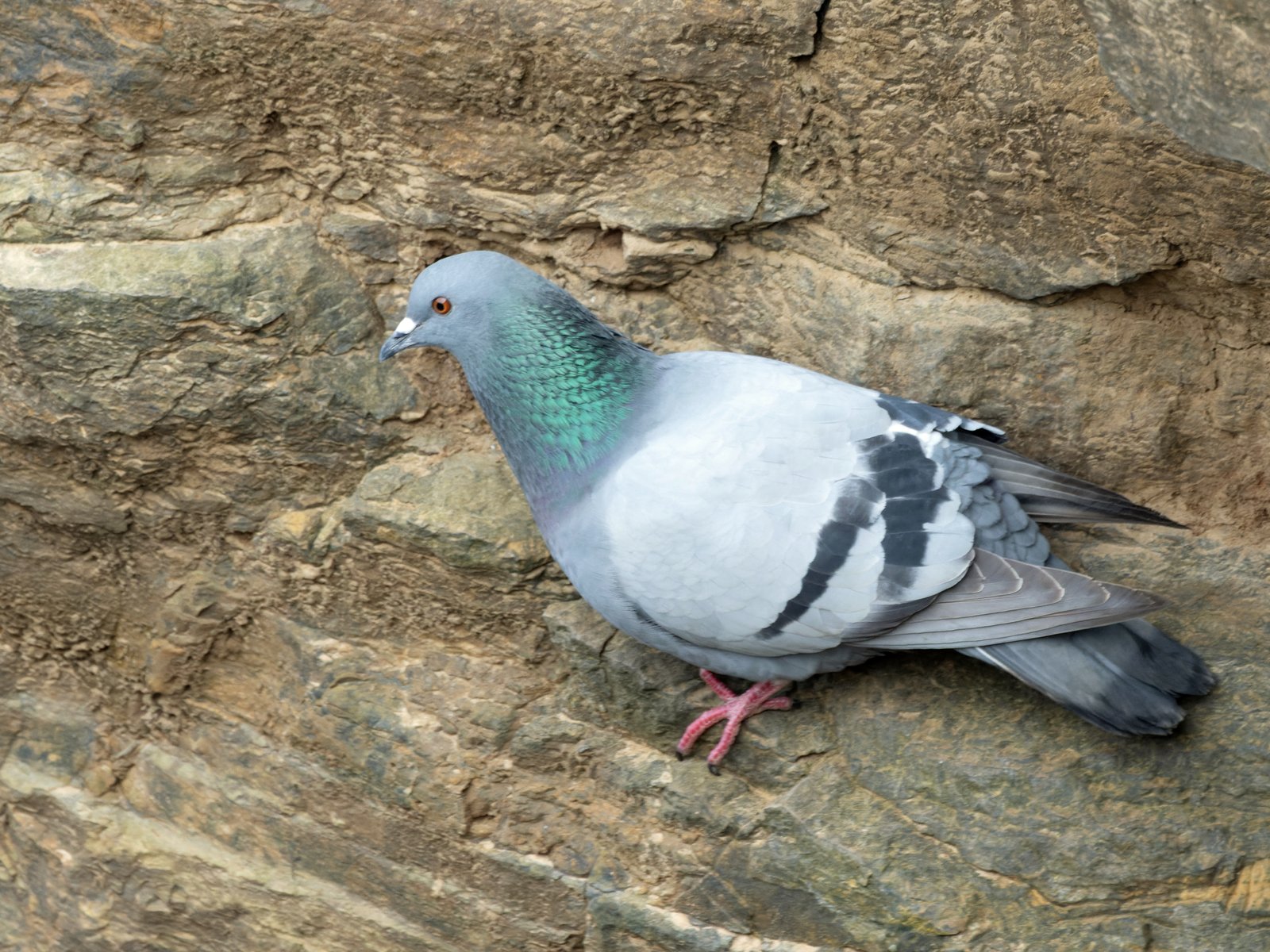
31–34 cm, compact, with a small head and short legs. The wild-type bird is blue-grey, with a darker head and a neck glossed green and purple. Two black bars cross the pale grey wing; the rump is white or pale grey, the tail grey with a dark terminal band. The iris is orange, the bill dark with a white cere, the legs red. Feral birds are highly variable: chequered, reddish-brown, dark slate, white or blotched, and a flock often contains every variant. The sexes are alike. Flight is fast and direct, with the wings raised in a V when gliding.
Confusion species
White-crowned Pigeon Patagioenas leucocephala and Scaly-naped Pigeon P. squamosa can resemble dark Rock Doves, but lack the wing bars and white rump, are slimmer and longer-tailed and live mainly in forest, mangrove and gardens with fruit trees. Plain Pigeon P. inornata has wine-red on head and breast and a white edge along the wing. In the Bahamas white Rock Doves may be confused with Pied Imperial Pigeon Ducula bicolor, which is larger and has black flight feathers and black in the tail.
Habitat
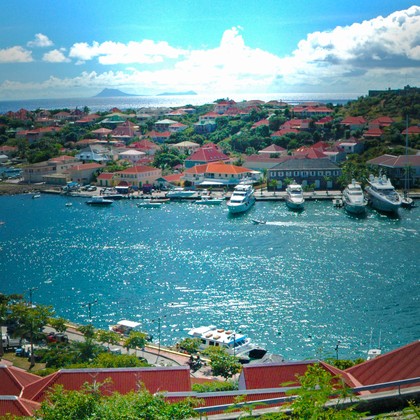
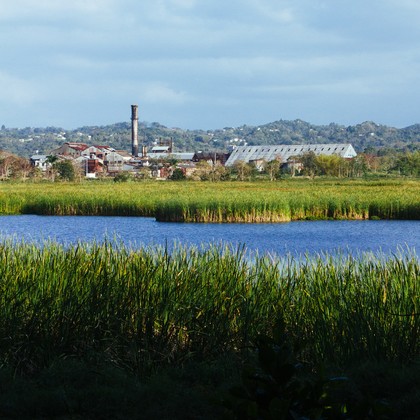
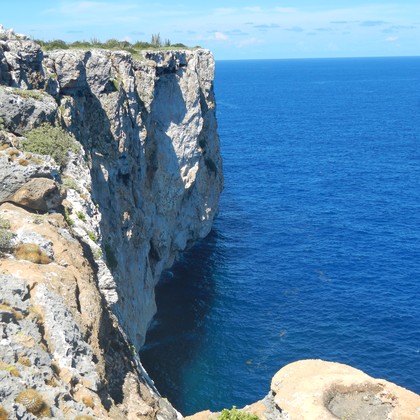
Towns, villages, harbours, airports, markets and industrial areas, and beyond them farmyards and fields where grain is available. Locally also on cliffs and rocky coasts, where feral birds nest on ledges. It eats seeds, grain and scraps, almost always on the ground. It breeds all year round on ledges and in cavities of buildings, under bridges and on rock faces.
Where the bird is most at home, classified by the vegetation types of the Caribbean.

Range and movements
Feral on almost every inhabited island in the region, from the Bahamas, Cuba, Jamaica, Hispaniola and Puerto Rico through the Virgin Islands and the Lesser Antilles to Trinidad and Tobago, the ABC islands, the Cayman Islands, the Turks and Caicos and San Andrés. Most numerous in the large cities, such as San Juan, Santo Domingo and Havana. Native to Europe, North Africa and south-western Asia; as a feral bird found worldwide.
- Resident
- dark = core range, pale = thinly spread
How and when to look
On squares, markets and quaysides in any town. Birds in wild-type plumage, blue-grey with two black wing bars and a white rump, can be found in most flocks.
Conservation status
Not threatened globally. In the Caribbean an alien. Feral pigeons can transmit diseases to native pigeons and doves; little is known about the extent of this in the region. Pigeon keeping and racing are popular in Cuba and Puerto Rico, among other islands, so domestic birds continually join the feral populations.
Scientific name
Columba livia | Gmelin, 1789
Gmelin described the species in 1789 and placed it straight away in the genus where it still stands. The genus Columba was introduced in 1758 by Linnaeus. Columba is Latin for 'dove' and goes back to Greek kolumbos 'diver', from kolumbaō 'to dive, to swim'; classical writers used it of the rock dove for the swimming stroke of its wings in flight. livia is a Medieval Latin variant of livida 'livid, bluish grey', Theodorus Gaza's rendering of Greek peleia 'dove', itself from pellos 'dark-coloured'. The specimen the first description was based on came from southern Europe.