All species › Passerines › New World blackbirds › Red-winged Blackbird
Red-winged Blackbird | Agelaius phoeniceus
Epauletspreeuw | Tordo sargento
The Red-winged Blackbird is one of the most numerous birds of North America. In the Caribbean it occurs only in the northern Bahamas, with an endemic subspecies, bryanti. The Cuban birds formerly included in this species are now treated as a separate species, Red-shouldered Blackbird Agelaius assimilis.
Voice
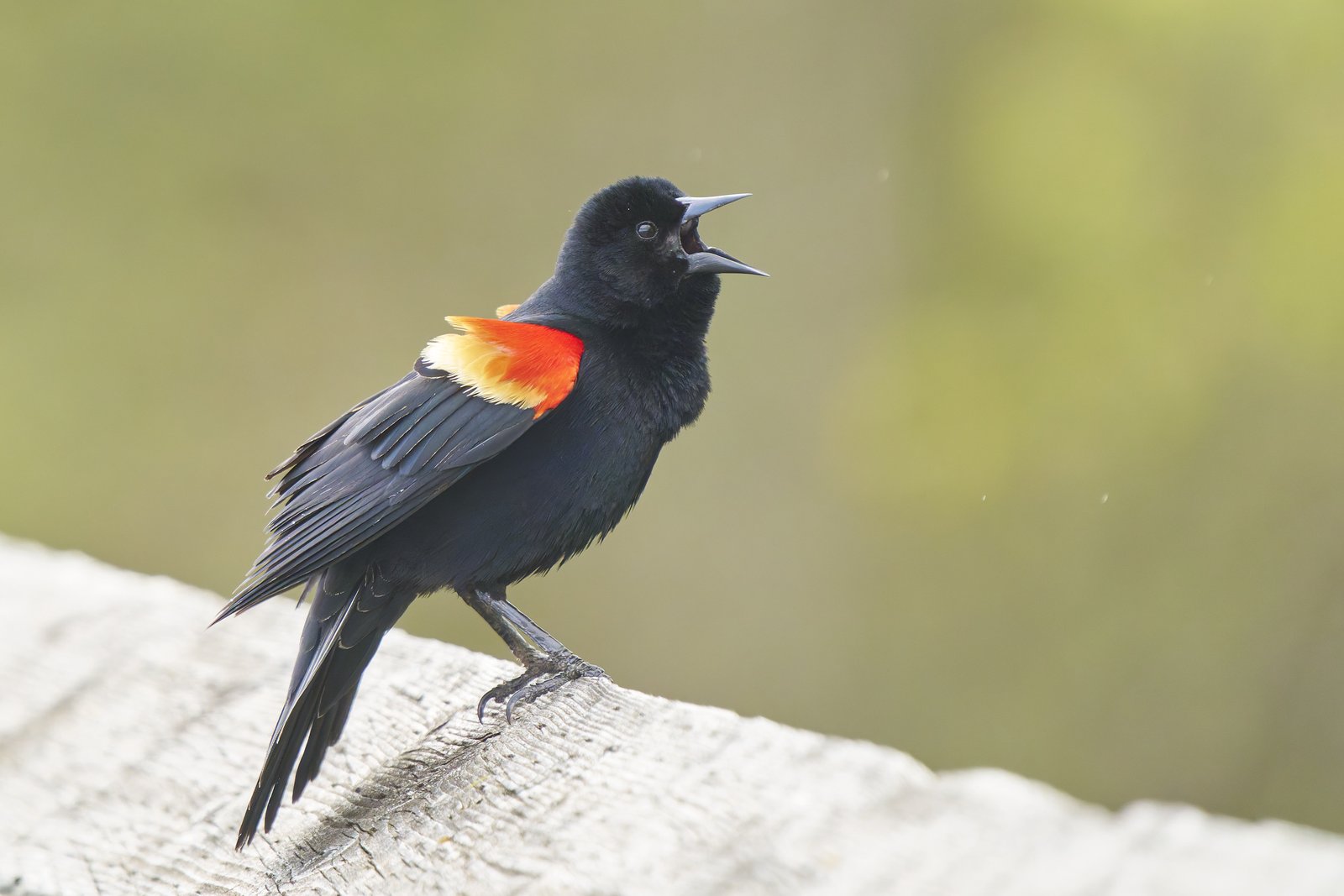
The male's song is a rasping, gurgling conk-la-ree, delivered with spread tail and raised epaulets. Also a dry chek, harsh metallic calls and a chattering chorus from groups in the mangroves.
Recording: Pat Goltz — CC BY-NC-SA 4.0 · converted to mono · xeno-canto
Identification
17–23 cm; the male is clearly larger than the female. The male is glossy black with a red shoulder patch (epaulet) with a yellow lower border; at rest the red may be largely hidden, so that only the yellow border shows. The female is dark brown with dense dark streaks on the pale underparts, a pale supercilium and often a light orange or pinkish wash on the throat. Young males are brownish black with pale feather edges and an orange-red, mottled epaulet. The bill is pointed and conical.
Confusion species
In the Bahamas the main confusion risk is Greater Antillean Grackle Quiscalus niger, which is larger, has a yellow eye and a long, keel-shaped tail and lacks a shoulder patch. The male Shiny Cowbird Molothrus bonariensis has a purple gloss and no epaulet. The streaked female may recall a sparrow or Savannah Sparrow Passerculus sandwichensis but is larger, with a longer, more pointed bill.
Habitat
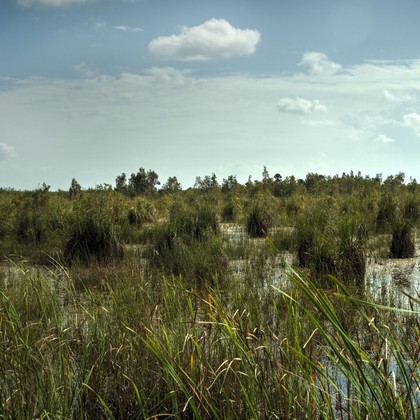
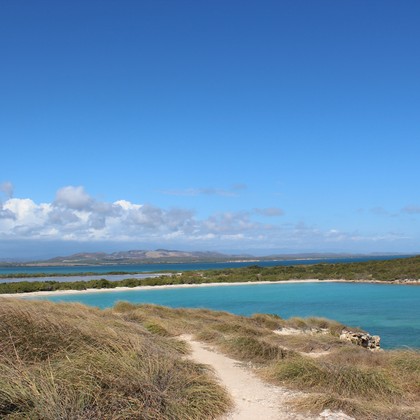
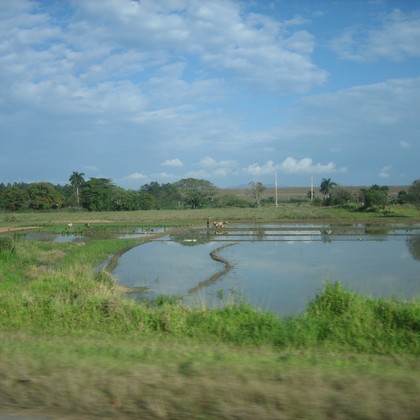
Fresh and brackish marshes with reeds and sedges, mangroves, coastal scrub, pastures and village edges; in the Bahamas also at garden feeders. It eats seeds and insects, often on the ground. The cup nest is slung in reeds, shrubs or mangroves, low over the water.
Where the bird is most at home, classified by the vegetation types of the Caribbean.



Range and movements
Resident in the northern Bahamas, including Grand Bahama, Abaco, Andros and New Providence. It is absent from the southern Bahamas and the other islands in the region. Outside the region it breeds from Alaska and Canada through the United States and Mexico to Central America.
- Resident
- Summer visitor (c. Oct–Mar)
- Winter visitor (c. Apr–Sep)
- Passage (Mar–Apr, Oct–Nov)
- dark = core range, pale = thinly spread
How and when to look
On Abaco and Andros males can be seen singing in spring in mangroves and coastal marshes, and in some settlements they visit feeders. A perched male with the red hidden is identified by the yellow shoulder border.
Conservation status
Not threatened. The world population is very large, although declining in North America. Little is known about the trend of the Bahamian population.
Scientific name
Agelaius phoeniceus | (Linnaeus, 1766)
Linnaeus described the species in 1766 as O[riolus] phoeniceus; because it was later moved to another genus, the author and year stand in brackets. The genus Agelaius was introduced in 1816 by Vieillot. Agelaius is Greek, from agelaios 'gregarious, of a flock', after the birds feeding and roosting in large flocks. phoeniceus is Latin for 'crimson' (from Greek phoinix, Phoenician purple), after the red shoulder patches. The specimen the first description was based on came from Charleston, South Carolina.