All species › Passerines › Waxbills › Red Avadavat
Red Avadavat | Amandava amandava
Tijgervink | Bengalí rojo
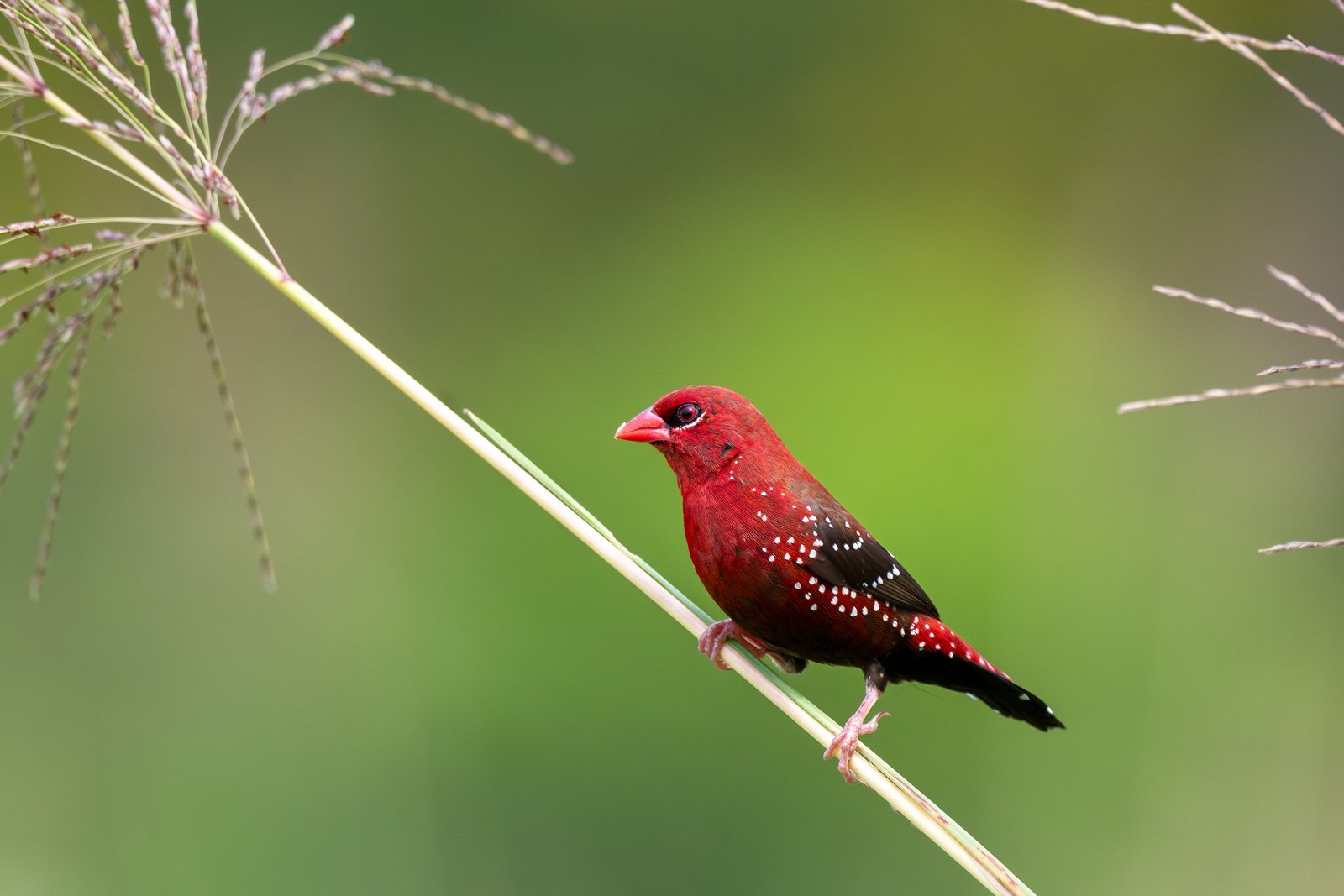
The Red Avadavat is a small estrildid finch from South and South-east Asia that is widely kept as a cage bird. On Puerto Rico it has been known in the wild since 1971; it is also established on Guadeloupe and Martinique. The breeding male is the only largely red estrildid finch in the region.
Voice
A high, thin tsee or pseep, often given in flight and repeated by flocks. The male's song is a soft, high twittering of whistled notes.
Recording: Mathieu Waldeck — CC BY-NC-SA 4.0 · converted to mono · xeno-canto
Identification
9–10 cm, small, with a short, rounded black tail and a red bill. The breeding male is deep red, with browner wings, black lores, a blackish lower belly and undertail, and small white spots on the flanks, wing coverts and rump. Outside the breeding season the male resembles the female, often retaining some red feathers. Females and non-breeding males are grey-brown above and pale buff below, with dark lores, a red rump and small white spots on the wing coverts. Juveniles are browner, without red, with pale wing bars and a dark bill.
Confusion species
The breeding male is the only largely red estrildid in the region. Orange-cheeked Waxbill Estrilda melpoda also has a red rump, but has an orange cheek, pale lores and no white spots. Common Waxbill Estrilda astrild and Black-rumped Waxbill Estrilda troglodytes have a red eye-stripe and a longer tail; Common Waxbill is also barred and Black-rumped Waxbill has a black rump.
Habitat
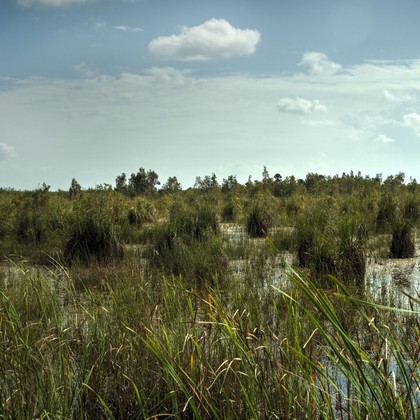
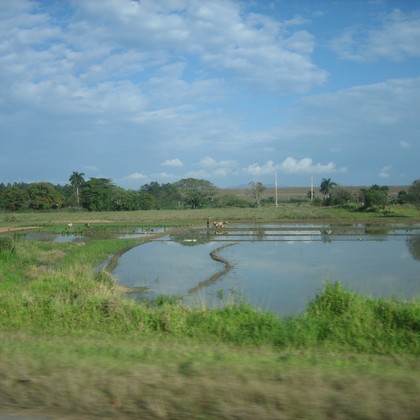
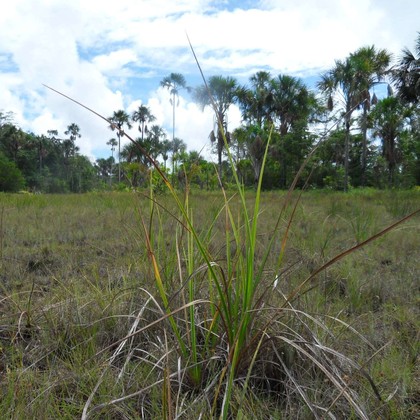
Wet grassland, banks with tall grass and reeds, the edges of freshwater marshes, rice fields and cane fields. It forages in small flocks on grass seeds and also takes small insects. The nest is a ball of grass with a side entrance, low in dense vegetation. On Puerto Rico it breeds mainly from February to May.
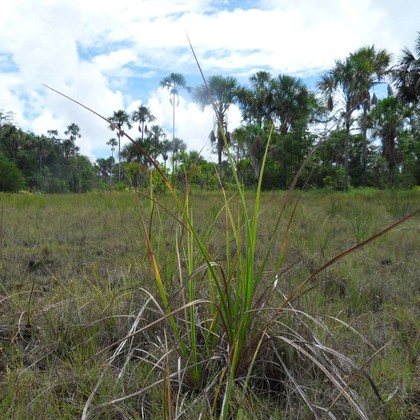
Where the bird is most at home, classified by the vegetation types of the Caribbean.

Range and movements
Introduced and established on Puerto Rico, mainly in the coastal lowlands, and on Guadeloupe and Martinique. One record from the Dominican Republic. Native from Pakistan and India through South-east Asia to southern China, Java and the Lesser Sundas. Also introduced to Spain, Egypt, Fiji, Hawaii and Japan, among other places.
- Resident
- dark = core range, pale = thinly spread
How and when to look
On Puerto Rico in marsh edges and wet grassland of the southern coastal lowlands, for example at Laguna Cartagena; on Guadeloupe in wet grassland and reed fringes. Flocks keep low in the grass and are found mainly by their thin calls. On Puerto Rico males in breeding plumage are seen mostly in the first months of the year.
Conservation status
Not threatened globally, although it has declined in parts of South-east Asia through trapping for the bird trade. In the Caribbean a locally established alien.
Scientific name
Amandava amandava | (Linnaeus, 1758)
Linnaeus described the species in 1758 as Fringilla amandava; because it was later moved to another genus, the author and year stand in brackets. The genus Amandava was introduced in 1836 by Blyth. Amandava goes back to Ahmedabad in Gujarat, the Indian city from which these birds were traded as cage birds. The specific name repeats the genus name. The specimen the first description was based on came from Calcutta, India.