All species › Birds of prey › Ospreys › Osprey
Osprey | Pandion haliaetus
Visarend | Águila pescadora
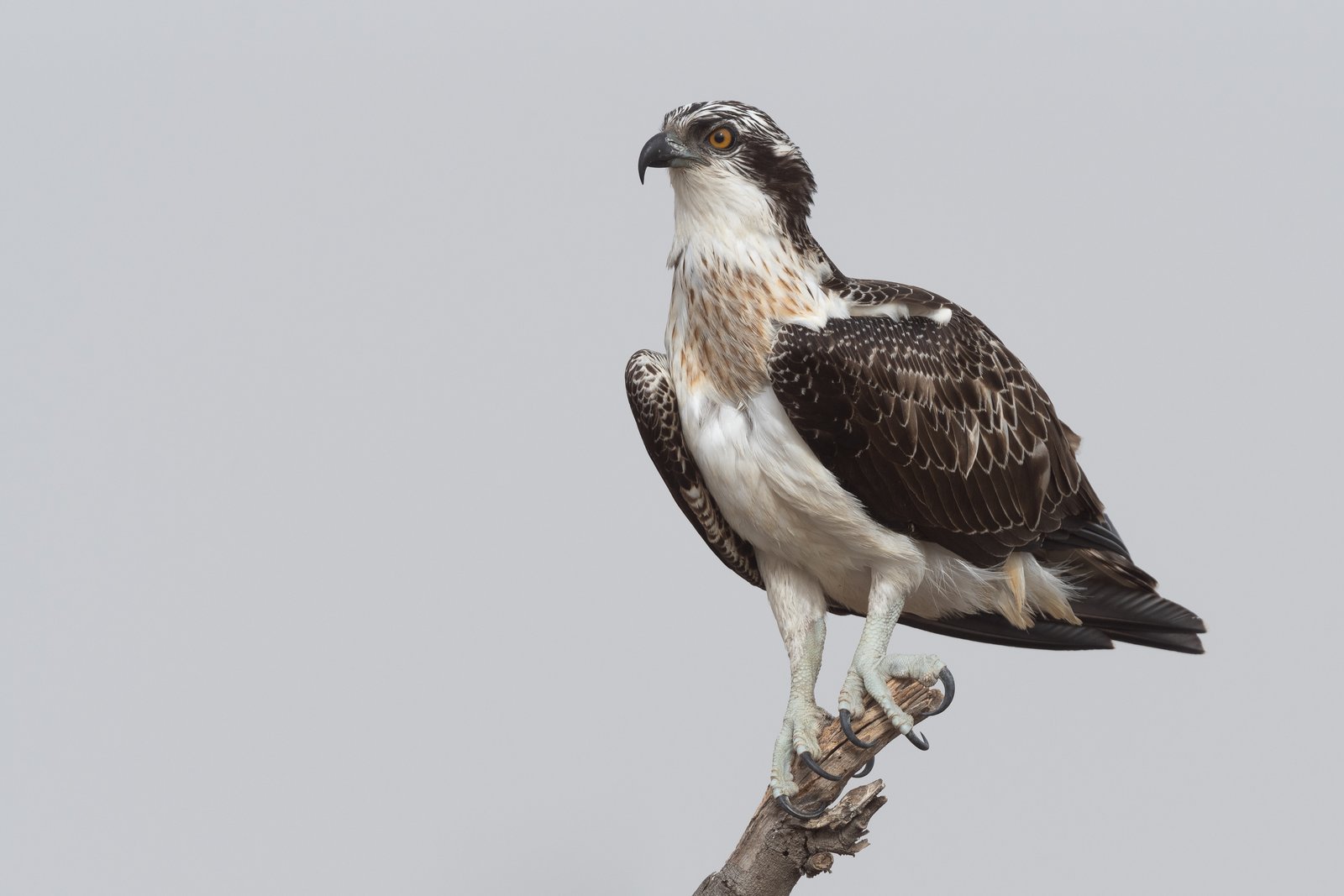
The Osprey is the only raptor in the region that lives almost entirely on fish. Two forms occur: the Caribbean Osprey (subspecies ridgwayi), a scarce resident of the Bahamas, the Turks and Caicos Islands and Cuba, and North American birds (carolinensis) that are seen along all coasts and waters in winter and on passage. In Cuba it is called guincho.
Voice
A series of short, whistled cheep-cheep-cheep calls, mainly at the nest and in interactions; the alarm is a higher, more urgent kyee-kyee.
Recording: David Darrell-Lambert — CC BY-NC-SA 4.0 · converted to mono · xeno-canto
Identification
50–66 cm, with long, narrow wings that show a crook at the wrist in flight, giving a silhouette reminiscent of a large gull. The upperparts are dark brown, the underparts white. The head is white with a dark eye-stripe running back to the nape; the eye is yellow. From below the wings are white with a black carpal patch and barred flight feathers. Females usually show a clearer brown breast band than males. Caribbean birds have a whiter head, a narrow or broken eye-stripe and an almost unmarked breast; North American birds have a broader eye-stripe. Juveniles have pale fringes to the upperparts.
Confusion species
Large gulls such as American Herring Gull Larus smithsonianus also have crooked wings but lack the dark eye-stripe, black carpal patch and brown upperparts. Red-tailed Hawk Buteo jamaicensis has broader wings, a dark belly band and, in adults, a rufous tail. Magnificent Frigatebird Fregata magnificens has much longer, more pointed wings and a long forked tail.
Habitat
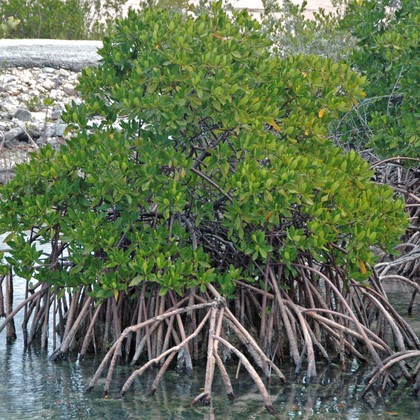
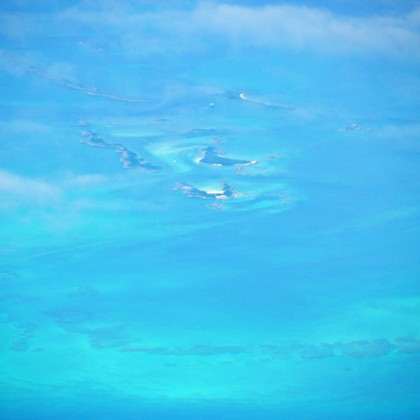
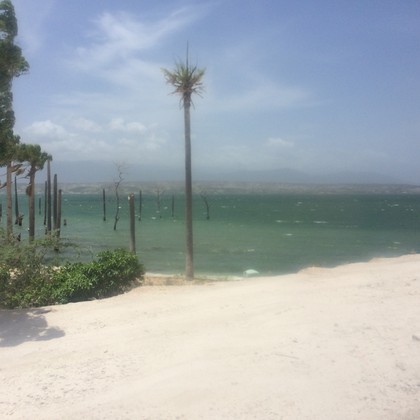
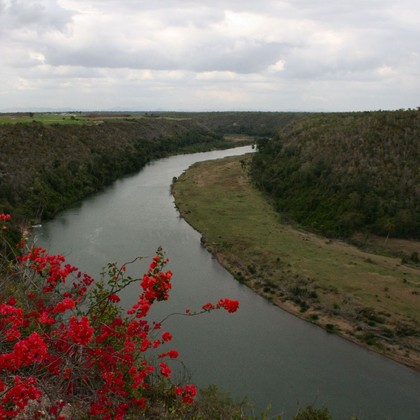
Shallow coastal waters, bays, lagoons, seagrass beds, mangroves, salt pans, lakes, reservoirs and estuaries. Hunts from the air or from a perch, plunging feet first after a brief hover and seizing fish just below the surface. Caribbean birds nest along the coast on rocks, islets, dead trees, mangroves and increasingly on poles and masts; most lay in November and December.
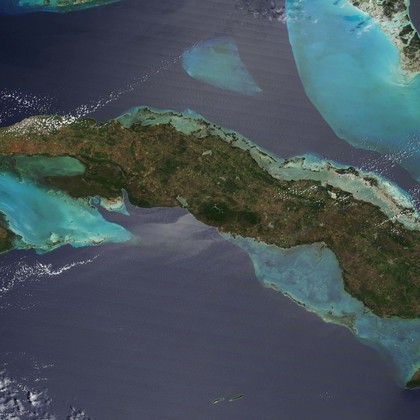
Where the bird is most at home, classified by the vegetation types of the Caribbean.

Range and movements
As a breeder only along the coasts of the southern Bahamas, the Turks and Caicos Islands and Cuba, everywhere in small numbers. North American birds winter or pass through the whole region, from the Bahamas and the Greater Antilles to the Lesser Antilles, the ABC Islands, San Andrés and Trinidad and Tobago; a few immatures stay through the summer. Outside the region over almost the whole world except Antarctica.
- Resident
- Summer visitor (c. Oct–Mar)
- Winter visitor (c. Apr–Sep)
- Passage (Mar–Apr, Oct–Nov)
- dark = core range, pale = thinly spread
How and when to look
In winter the chances are best along shallow bays, lagoons and salt pans, where birds often perch on poles, masts or dead trees. Caribbean breeders are best looked for along the coasts and cays of Cuba and the southern Bahamas; the white head with a narrow eye-stripe separates them from wintering birds.
Conservation status
Not threatened. The world population has recovered strongly since the ban on DDT. The Caribbean subspecies is scarce and scattered, with low breeding success; disturbance of coastal nests and loss of nest trees are a local problem.
Scientific name
Pandion haliaetus | (Linnaeus, 1758)
Linnaeus described the species in 1758 as Falco Haliaetus; because it was later moved to another genus, the author and year stand in brackets. The genus Pandion was introduced in 1809 by De Savigny. Pandion is taken from Pandion, the mythical king of Athens and grandfather of Theseus. haliaetus comes through Latin from the Greek haliaetos 'sea eagle', from hals 'sea' and aetos 'eagle'. The specimen the first description was based on came from Sweden.