All species › Passerines › Tyrant flycatchers › Northern Tufted Flycatcher
Northern Tufted Flycatcher | Mitrephanes phaeocercus
Noordelijke kuiftiran | Mosquerito moñudo
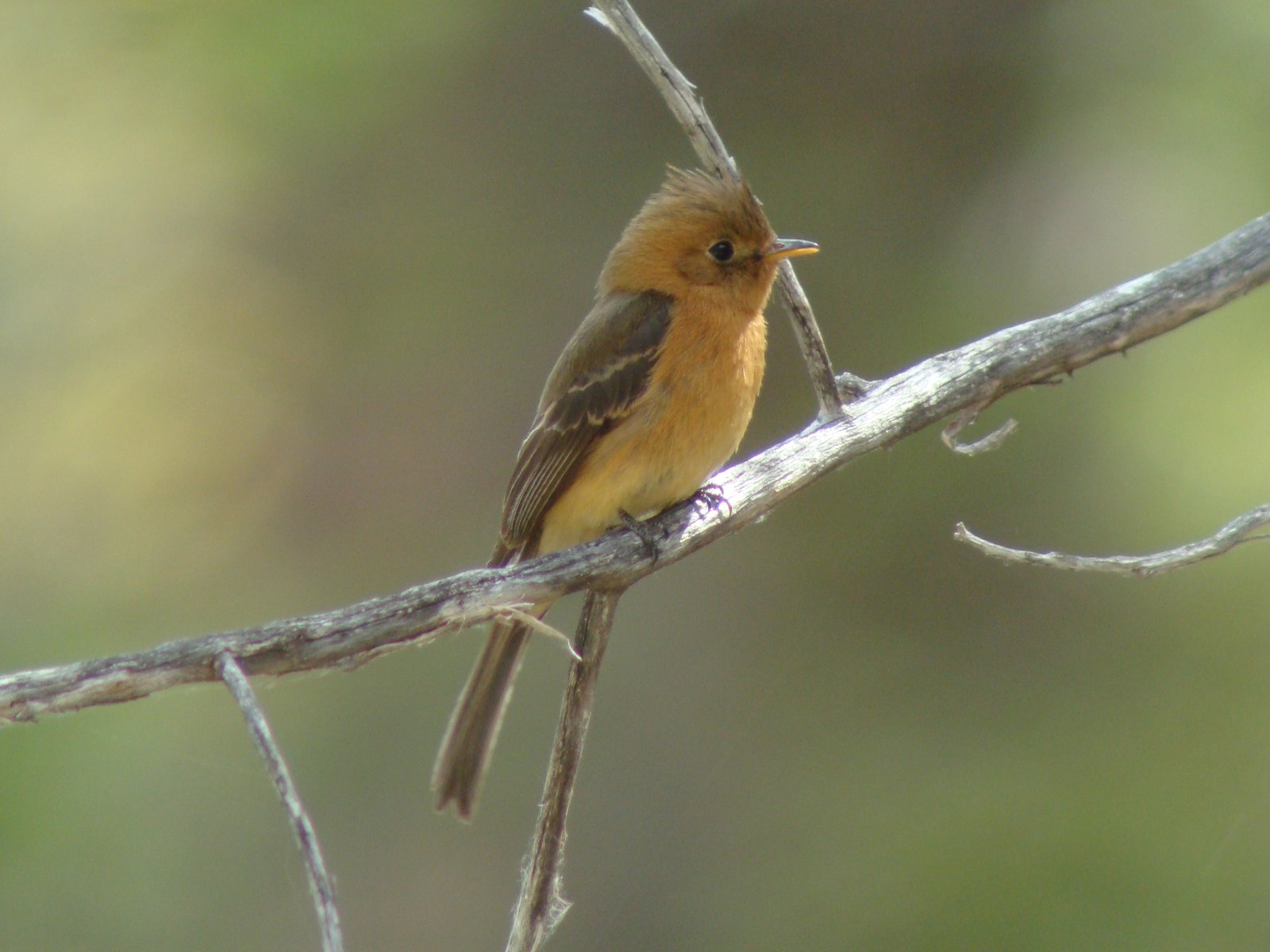
The Northern Tufted Flycatcher is a small, cinnamon-coloured flycatcher with a pointed crest from the montane forests of Mexico and Central America south to north-western Ecuador. It is largely resident and has been seen only a few times outside its range, including in Texas and Arizona. The species is on the Caribbean list as a possible vagrant, but no accepted record from the region is known.
Voice
A rapid series of high notes, roughly bip-bip-bip-dididi-bip, mainly at dawn; also single or repeated chwee notes and a short pik call.
Recording: Manuel Grosselet - Rebeca Martinez — CC BY-NC-SA 4.0 · shortened to the first 60 s, mono · xeno-canto
Identification
12–13 cm, small, with an erect, pointed crest and a fairly long tail. Head and upperparts are brownish olive, the face cinnamon with a narrow pale eye-ring and a pale spot above the lores. Throat and breast are bright ochre to cinnamon, the belly ochre-yellow. The dusky wings have two ochre wing bars. The upper mandible is black, the lower orange-yellow. After landing it often quivers its tail.
Confusion species
Its crest and cinnamon underparts distinguish it from all other flycatchers in the region. Cuban Pewee Contopus caribaeus of Cuba and the Bahamas has an ochre belly but is larger and greyer, without a cinnamon breast or pointed crest. Bran-colored Flycatcher Myiophobus fasciatus of Trinidad is brown with a streaked breast.
Habitat
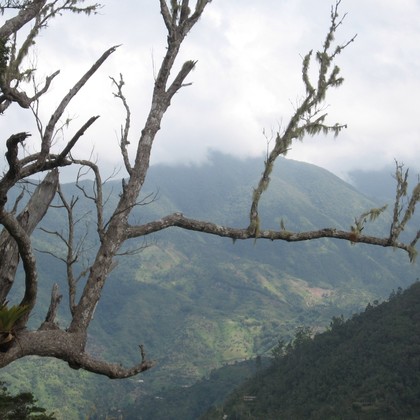
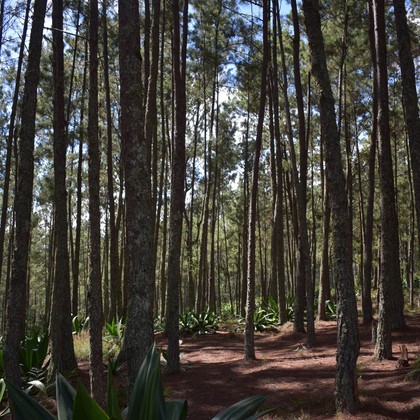
Within its range montane forest: pine and pine-oak forest, evergreen and secondary forest, especially edges, gaps and clearings, from about 100 to 3000 m. It sallies from a prominent branch after flying insects and often returns to the same perch.
Where the bird is most at home, classified by the vegetation types of the Caribbean.

Range and movements
No documented records from the Caribbean are known. Older museum records from Trinidad held under this name in international databases prove on checking to be Yellow-olive Flatbill Tolmomyias sulphurescens. Outside the region from north-western Mexico through Central America to western Colombia and north-western Ecuador.
How and when to look
A record in the region needs photographs or sound recordings. The pointed crest, cinnamon breast and orange-yellow lower mandible are the features to document.
Conservation status
Not threatened. The species is fairly common within its range and tolerates secondary forest and edges.
Scientific name
Mitrephanes phaeocercus | (Sclater, 1859)
Sclater described the species in 1859 as Mitrephorus phaeocercus; because it was later moved to another genus, the author and year stand in brackets. The genus Mitrephanes was introduced in 1882 by Coues. Mitrephanes is Greek, from mitra 'headband, turban' and -phanēs 'showing', after the crest. phaeocercus is Greek, from phaios 'dusky' and kerkos 'tail', after the dark tail. The specimen the first description was based on came from Córdoba, Veracruz, Mexico.