All species › Nightjars › Nightjars › Nacunda Nighthawk
Nacunda Nighthawk | Chordeiles nacunda
Nacundanachtzwaluw | Añapero ñacundá
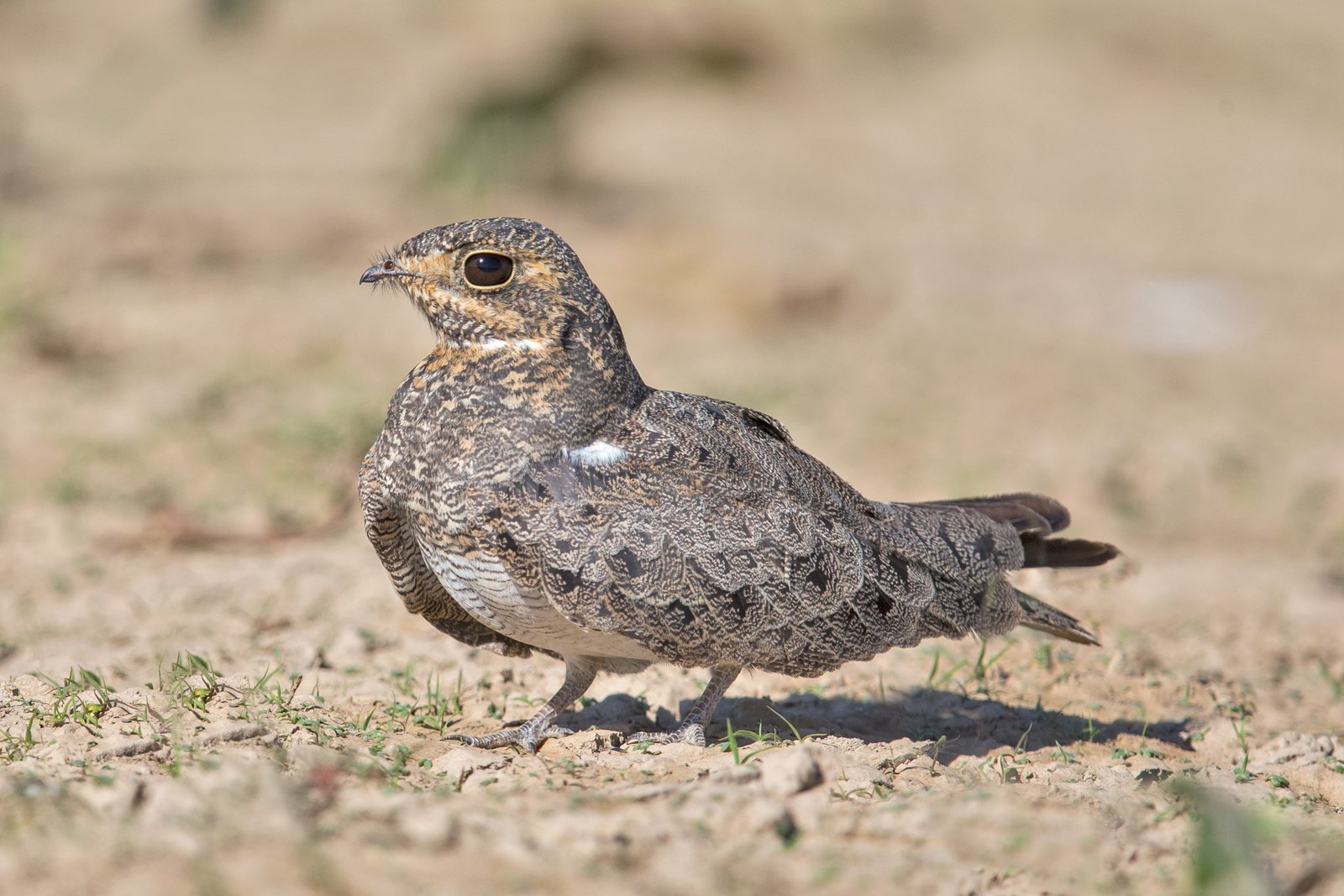
The Nacunda Nighthawk is one of the largest nightjars in the world, a bird of the open savannas of South America. It is partly active by day, often stands upright on the ground and sometimes hunts in groups over grassland and water. In the Caribbean it is a rare visitor to Trinidad.
Voice
Usually silent, even while hunting. At the nest soft clucking sounds; otherwise low, purring calls.
Recording: Fabrício Grigolin — CC BY-NC-SA 4.0 · converted to mono · xeno-canto
Identification
28–32 cm, large and heavily built, with a big head, long legs and broad wings. The upperparts are sandy to grey-brown with fine dark markings; head and breast are speckled brown, with a white V-shaped band on the throat. Belly and undertail coverts are pure white. The wings are dark with a broad white band across the primaries and a white underside, so that the bird looks pale below in flight. The male has white tips to the tail feathers.
Confusion species
Lesser Nighthawk Chordeiles acutipennis is much smaller, has a barred rather than pure white belly and a narrower white wing bar nearer the wingtip. Common Nighthawk Chordeiles minor is also smaller and darker, with a barred belly. No other nightjar in the region combines a pure white belly with pale underwings.
Habitat
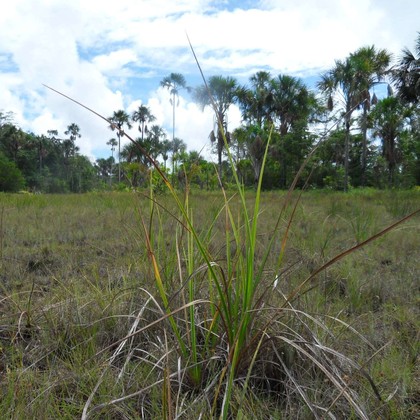
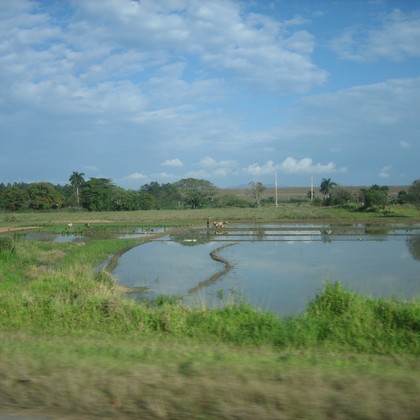
Dry and seasonally flooded savanna, open grassland, marsh edges and degraded former forest, also rice fields and pastures. It roosts and nests on the ground and hunts insects at dusk and sometimes in daylight, often low over grass or water, where groups of up to hundreds of birds may gather. The egg is laid on bare ground without a nest.
Where the bird is most at home, classified by the vegetation types of the Caribbean.

Range and movements
In the region known only from Trinidad, as a rare visitor; breeding has not been recorded there, and the species is absent from Tobago and the other islands. Outside the region in the open lowlands of South America east of the Andes, from Colombia, Venezuela and the Guianas to Argentina and Uruguay.
- Resident
- dark = core range, pale = thinly spread
How and when to look
A sighting in Trinidad is a matter of luck; chances are best over open grassland, savanna and rice fields around sunset. The white belly and pale underwings are the best feature, even in poor light.
Conservation status
Globally not threatened; the species has a very large range and numbers appear stable. In the Caribbean it is a rare visitor without a regular population; records are worth documenting.
Scientific name
Chordeiles nacunda | (Vieillot, 1817)
Vieillot described the species in 1817 as Caprimulgus nacunda; because it was later moved to another genus, the author and year stand in brackets. The genus Chordeiles was introduced in 1832 by Swainson. Chordeiles is Greek, from khoreia 'dance' and deilē 'evening', after the dancing hunting flights at dusk. nacunda comes from the Guaraní name ñacundá, meaning 'big mouth'. The specimen the first description was based on came from Paraguay.