All species › Nightjars › Nightjars › Lesser Nighthawk
Lesser Nighthawk | Chordeiles acutipennis
Texasnachtzwaluw | Añapero menor
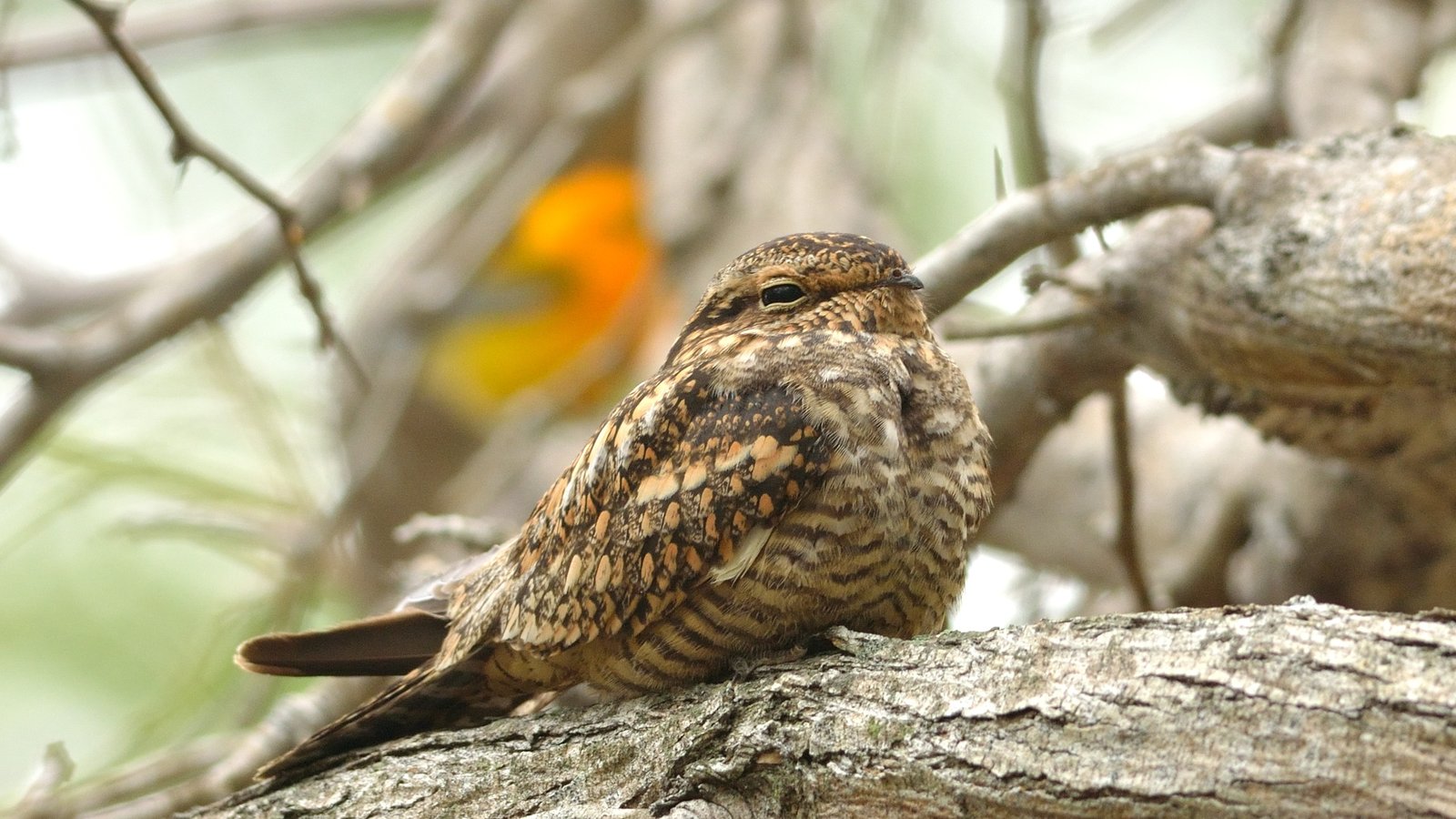
The Lesser Nighthawk is a small, pale nightjar of dry, open country in the Americas, from the south-western United States to South America. In the Caribbean it is a common resident in Trinidad; on Tobago and the ABC Islands it is a vagrant. It hunts low with a fluttering flight over open ground, often early in the evening.
Voice
Much quieter than Common Nighthawk. The song, given from the ground, is a long, soft, toad-like trill that can last for minutes. In flight a low, gurgling, laughing sound and soft bleating notes.
Recording: Richard E. Webster — CC BY-NC-SA 4.0 · shortened to the first 60 s, mono · xeno-canto
Identification
19–23 cm, slightly smaller than Common Nighthawk, with long, pointed wings and a slightly forked tail. The plumage is grey-brown, heavily mottled and speckled, with a warmer buff tone. The underparts are buff with fine barring. A white (in the female buff) bar crosses the primaries, clearly nearer the wingtip than in Common Nighthawk. The inner primaries show buff spots. The wingtip is somewhat more rounded, as the outermost primary is shorter than the second. The male has a white throat patch and a white tail band; the female has a buff throat and no tail band.
Confusion species
Common Nighthawk Chordeiles minor, a passage migrant, is slightly larger and darker, has the white wing bar midway between the bend of the wing and the tip, lacks buff spots in the primaries and usually flies higher. Nacunda Nighthawk Chordeiles nacunda is much larger, with a pure white belly. White-tailed Nightjar Hydropsalis cayennensis has rounded wings without a broad bar and a pale collar.
Habitat
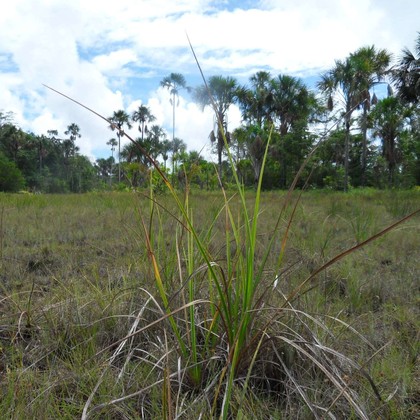
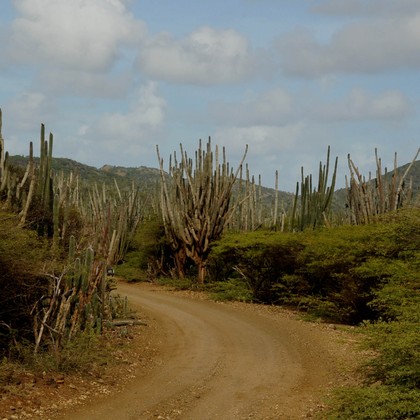
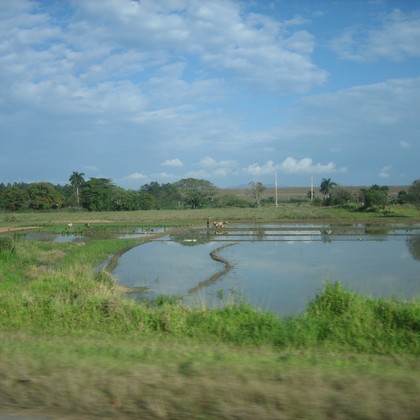
Dry, open country: savanna, coastal plains, thorn scrub, waste ground, rice fields and pastures, also the edges of mangroves and salt pans. It hunts flying insects at dusk and in the early part of the night, low over the ground and water. The egg is laid without a nest on bare ground or gravel.
Where the bird is most at home, classified by the vegetation types of the Caribbean.



Range and movements
Resident in Trinidad, where it is common in the open lowlands; a vagrant on Tobago. Recorded as a vagrant on Bonaire and Curaçao. Outside the region from the south-western United States through Mexico and Central America to northern and central South America; the northernmost birds move south in winter.
- Resident
- Summer visitor (c. Oct–Mar)
- Winter visitor (c. Apr–Sep)
- Passage (Mar–Apr, Oct–Nov)
- dark = core range, pale = thinly spread
How and when to look
In Trinidad best around sunset over rice fields, open coastal plains and pools in the west of the island, where birds fly back and forth low over the ground. The position of the white wing bar, close to the tip, is the best feature on a flying bird.
Conservation status
Not threatened; the species has a very large range. Habitat is lost locally to development.
Scientific name
Chordeiles acutipennis | (Hermann, 1783)
Hermann described the species in 1783 as Caprimulgus acutipennis; because it was later moved to another genus, the author and year stand in brackets. The genus Chordeiles was introduced in 1832 by Swainson. Chordeiles is Greek, from khoreia 'dance' and deilē 'evening', after the dancing hunting flights at dusk. acutipennis is Latin, from acutus 'pointed' and penna 'feather, wing', after the pointed wings. The specimen the first description was based on came from Cayenne, French Guiana.