All species › Birds of prey › Hawks, eagles and kites › Mississippi Kite
Mississippi Kite | Ictinia mississippiensis
Mississippiwouw | Elanio de Misisipi
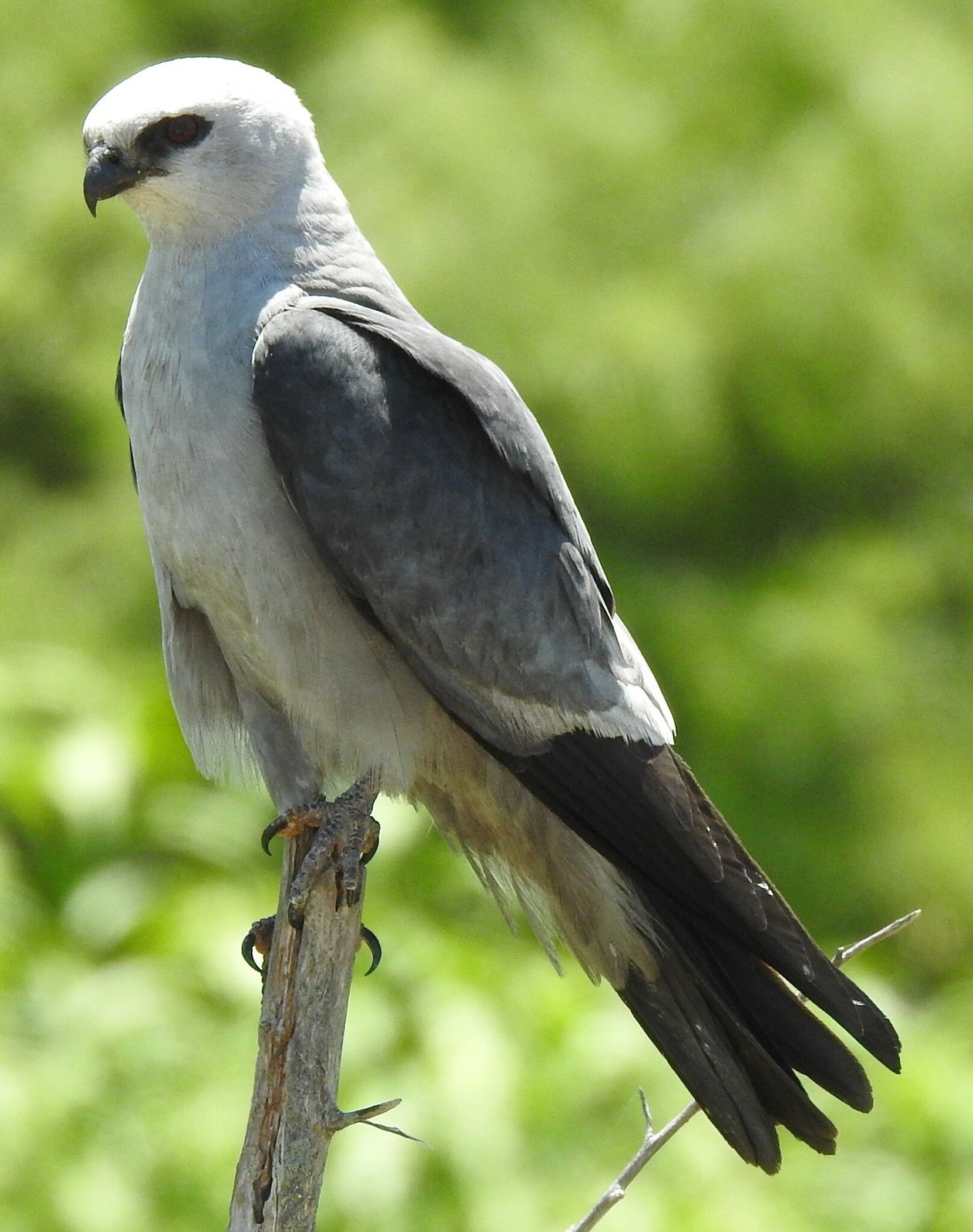
The Mississippi Kite is a buoyant, grey kite of the southern and central United States that winters in southern South America. Most birds migrate overland through Mexico and Central America, but a small proportion passes through western Cuba. For most of the Caribbean it is a rare passage migrant.
Voice
Usually silent on migration. On the breeding grounds a thin, two-note whistle pee-tiuu.
Recording: Brad Banner — CC BY-NC-SA 4.0 · converted to mono · xeno-canto
Identification
35–38 cm, with long, pointed wings and a fairly long, black tail, slightly flared at the tip and unbanded. Adults are grey, with a pale grey, almost white head, dark wingtips and, from above, pale secondaries forming a pale panel in the wing. The eye is red, with a black patch in front of it. Immatures are heavily streaked reddish brown below, have a banded tail and wings with pale spots. It hunts and migrates in smooth, floating flight, often in groups.
Confusion species
Plumbeous Kite Ictinia plumbea, only on Trinidad, is darker, has a rufous patch on the primaries and white bands under the tail. Swallow-tailed Kite Elanoides forficatus shares the floating flight but is black and white with a deeply forked tail. Peregrine Falcon Falco peregrinus is heavier, with a dark head and faster, more powerful wingbeats.
Habitat
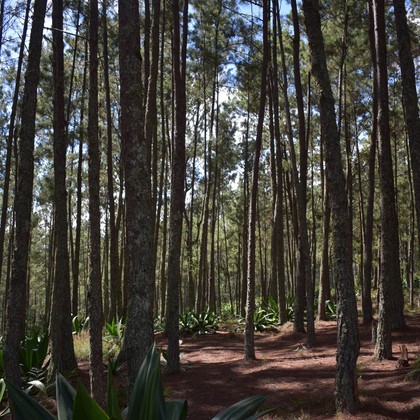
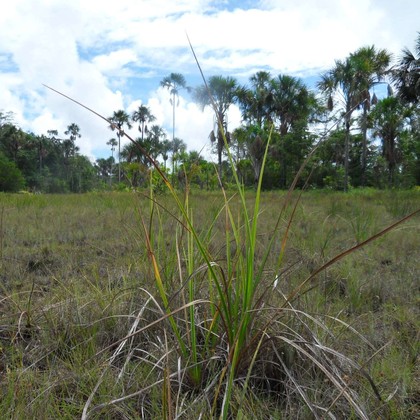
On migration over all kinds of landscape: forest, pine forest, open country and coasts. It hunts large insects such as dragonflies, cicadas and beetles in flight and eats them on the wing. On migration it rests in groups in tall trees.
Where the bird is most at home, classified by the vegetation types of the Caribbean.


Range and movements
In Cuba small numbers pass the western tip of the island in autumn, from late July to early October, at Cabo San Antonio on the Guanahacabibes Peninsula. In spring and elsewhere in the region rare or vagrant. Outside the region it breeds in the southern and central United States and winters in Paraguay, southern Brazil and northern Argentina.
- Passage (Mar–Apr, Oct–Nov)
- dark = core range, pale = thinly spread
How and when to look
The best chance is during raptor migration in August and September at Cabo San Antonio, where large numbers of Swallow-tailed Kites also pass. Flocks often migrate high; scanning the sky over the coast with binoculars is then the best approach.
Conservation status
Not threatened. In the United States the species has expanded its breeding range in recent decades, including into towns and villages with tall trees.
Scientific name
Ictinia mississippiensis | (Wilson, 1811)
Wilson described the species in 1811 as Falco misisippiensis; because it was later moved to another genus, the author and year stand in brackets. The genus Ictinia was introduced in 1816 by Vieillot. Ictinia comes from Greek iktinos 'kite'. mississippiensis means 'of the Mississippi', after the type locality near Natchez on that river. The specimen the first description was based on came from near Natchez, Mississippi, USA.