All species › Passerines › New World blackbirds › Martinique Oriole
Martinique Oriole | Icterus bonana
Martiniquetroepiaal | Turpial de Martinica
The Martinique Oriole is the smallest of the orioles each confined to a single Lesser Antillean island. Unlike its relatives on St. Lucia and Montserrat it has a brown hood. The species suffers heavily from brood parasitism by Shiny Cowbird.
Voice
Harsh scolding calls and whistles; the song is a soft, chattering warble.
Recording: Barry Edmonston — CC BY-NC-SA 4.0 · shortened to the first 60 s, mono · xeno-canto
Identification
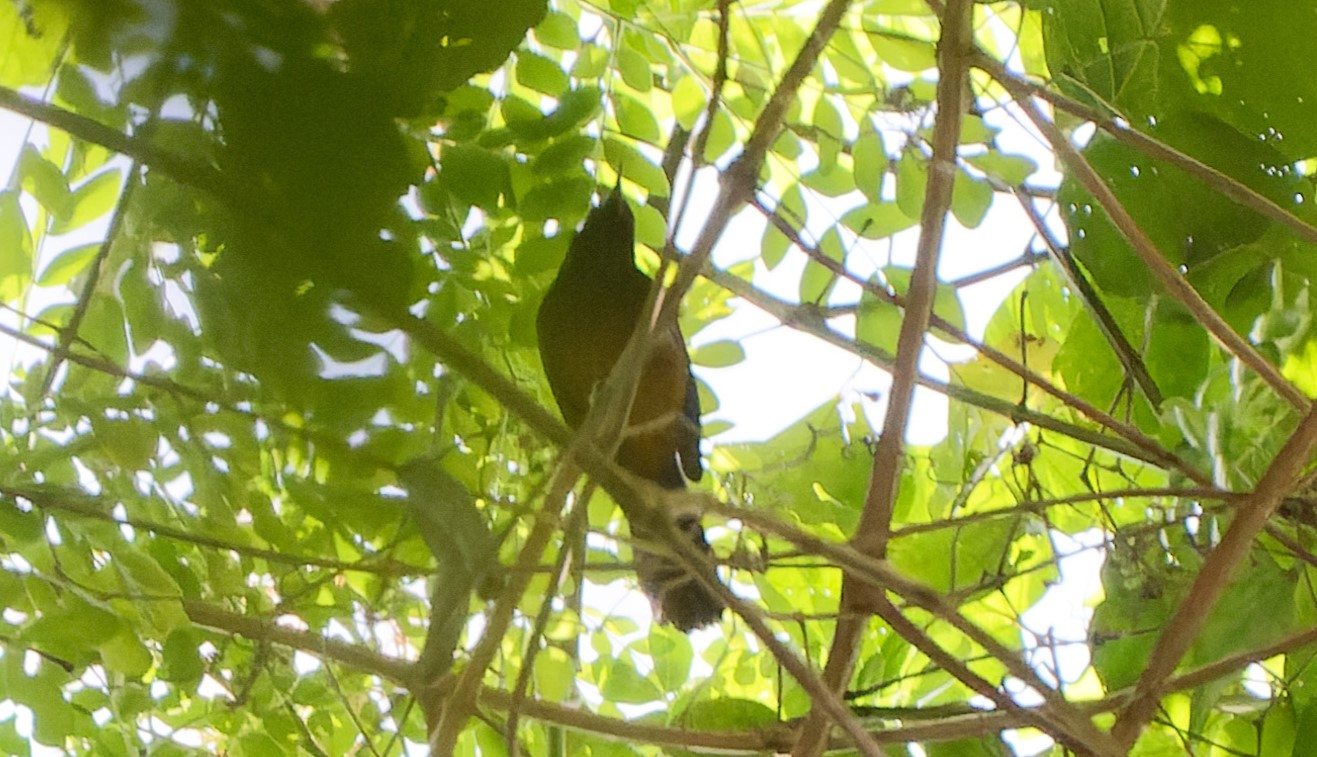
18–21 cm, slender, with a long tail and a pointed, slightly decurved bill. Head, throat and upper breast are chestnut, the back, wings and tail black. Shoulder, rump and belly are rusty orange to ochre. The male is slightly brighter than the female. Immatures are duller and more olive.
Confusion species
Carib Grackle Quiscalus lugubris and Shiny Cowbird Molothrus bonariensis are all black, without brown or orange. The male Lesser Antillean Bullfinch Loxigilla noctis also has a rufous throat but is much smaller, black with a thick bill and no orange on rump or belly. No other oriole occurs regularly on Martinique.
Habitat
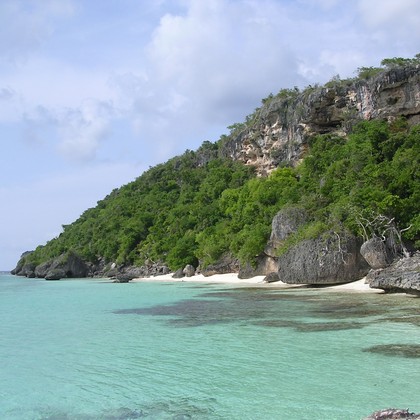
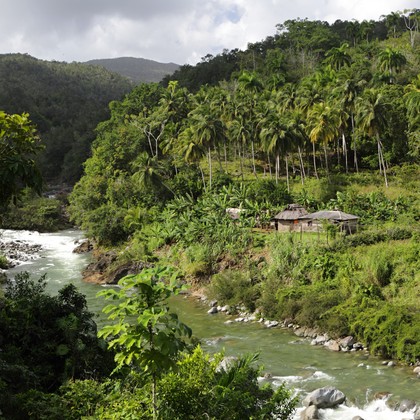
Dry and moist broadleaf forest, coastal woodland, mangroves and plantations, originally up to about 700 m. Because much of the island has been urbanised, the species is now found mainly in mangroves and dry forest away from built-up areas. It feeds on insects, fruit and nectar. The nest hangs from the underside of a broad leaf such as that of a banana, palm or heliconia, and usually holds two eggs.
Where the bird is most at home, classified by the vegetation types of the Caribbean.



Range and movements
Only on Martinique. The species does not occur outside Martinique.
- Resident
- dark = core range, pale = thinly spread
How and when to look
Mangroves and dry forest in the less developed parts of the island, and forest edges with banana and palm leaves, are the best places. The harsh scolding call is noticed sooner than the bird itself.
Conservation status
Vulnerable. Besides habitat loss, the main threat is brood parasitism: Shiny Cowbirds lay in about three quarters of nests each year. The species is legally protected in Martinique.
Scientific name
Icterus bonana | (Linnaeus, 1766)
Linnaeus described the species in 1766 as O[riolus] Bonana; because it was later moved to another genus, the author and year stand in brackets. The genus Icterus was introduced in 1760 by Brisson. Icterus is from Ancient Greek ikteros, a yellow bird usually taken to be the golden oriole, the sight of which was thought to cure jaundice. bonana comes from French banane 'banana', after the English name 'Banana-bird' for West Indian orioles found in banana plantations. The specimen the first description was based on came from Martinique.