All species › Waders, gulls and terns › Sandpipers and snipes › Long-billed Dowitcher
Long-billed Dowitcher | Limnodromus scolopaceus
Grote grijze snip | Agujeta escolopácea
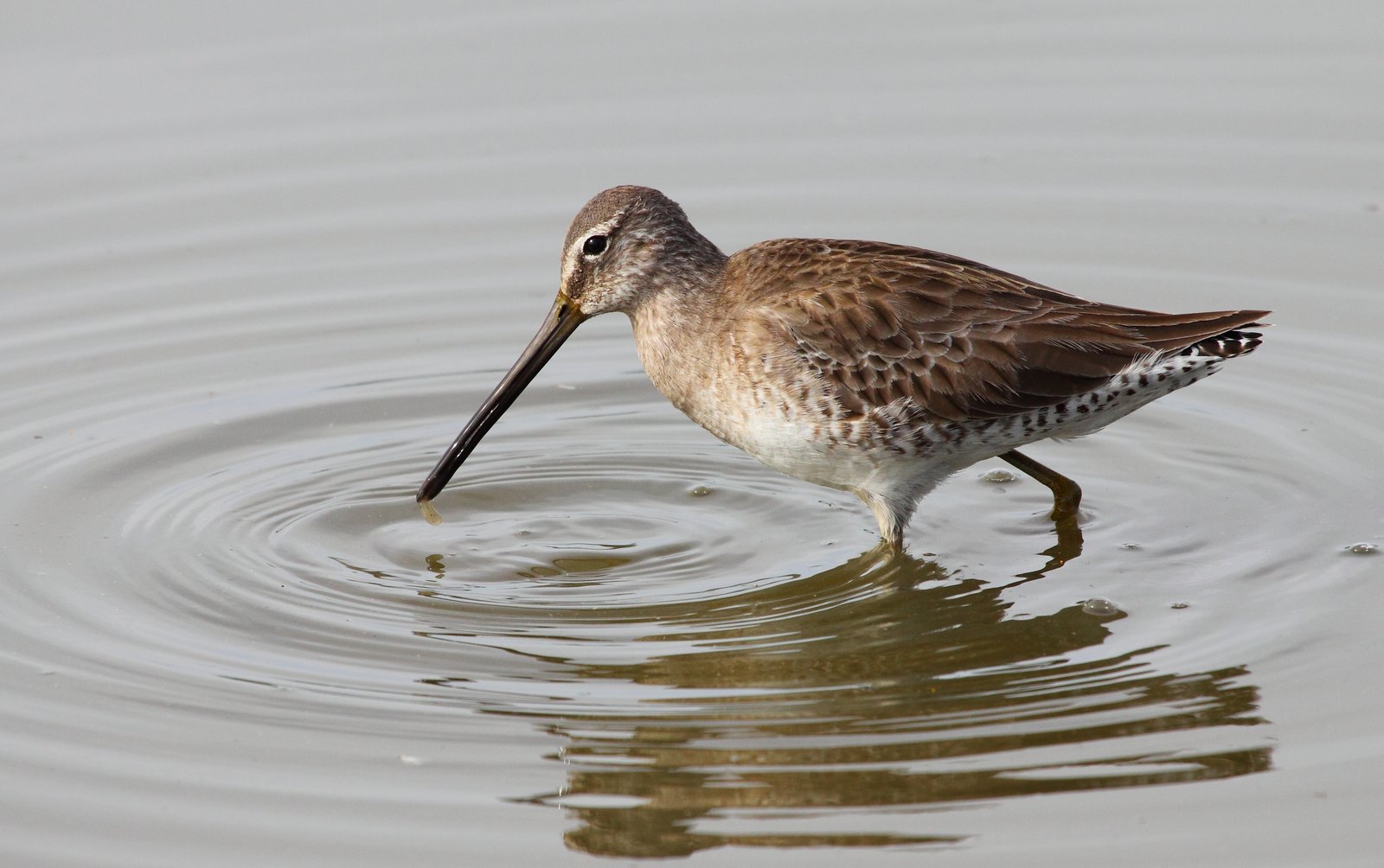
The Long-billed Dowitcher is the freshwater counterpart of the Short-billed Dowitcher. The two are very similar and differ mainly in call and habitat preference. It breeds in north-eastern Siberia, Alaska and north-western Canada and winters mainly in the southern United States and Central America; the Caribbean lies at the eastern edge of its winter range.
Voice
A sharp, high keek or kyeek, singly or in quick series of three or more; flocks also call while feeding.
Recording: AUDEVARD Aurélien — CC BY-NC-SA 4.0 · converted to mono · xeno-canto
Identification
26–30 cm. Compact, short-legged shorebird with a very long, straight bill. In non-breeding plumage grey above, with a uniformly dark grey breast fairly sharply demarcated from the white belly, and a pale supercilium. In breeding plumage (spring) rufous down to the belly, with dense barring on the breast sides. Juveniles are greyer than young Short-billed Dowitchers, with plain grey tertials narrowly edged pale. In flight a white wedge runs from the rump halfway up the back. The dark tail bars average broader than the white. Females have the longest bills.
Confusion species
Short-billed Dowitcher Limnodromus griseus is paler grey with a speckled breast in non-breeding plumage, juveniles have tertials with pale internal bars, and the call is a soft tu-tu-tu. Bill length overlaps and is not a reliable feature. Stilt Sandpiper Calidris himantopus has longer, yellowish legs and a shorter bill slightly drooping at the tip. Wilson's Snipe Gallinago delicata has a striped head and back and lacks the white back wedge.
Habitat
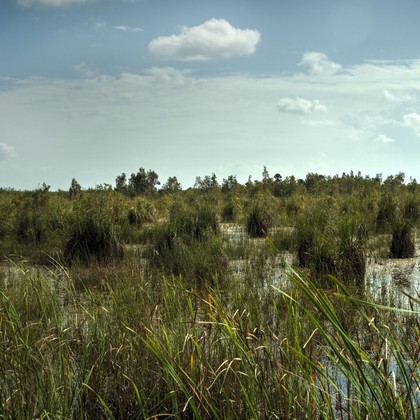
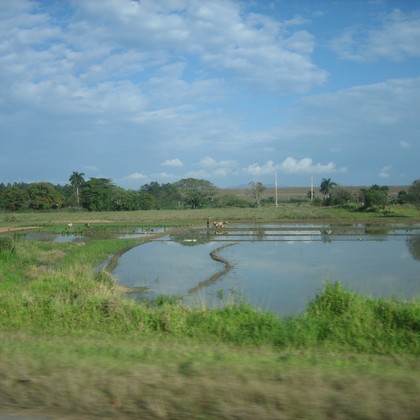
Mainly fresh and brackish water: shallow ponds, the edges of freshwater marshes, rice fields, sewage ponds and flooded grassland; less on saline lagoons and rarely on open mudflats. It feeds in shallow water with a rapid, vertical sewing-machine action of the bill, often belly-deep.
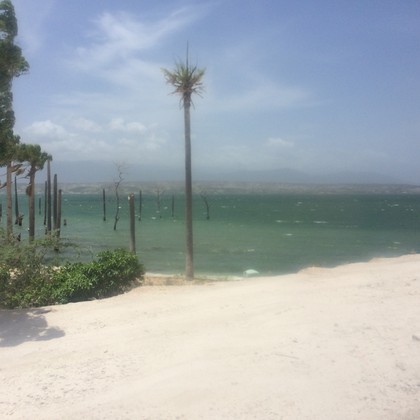
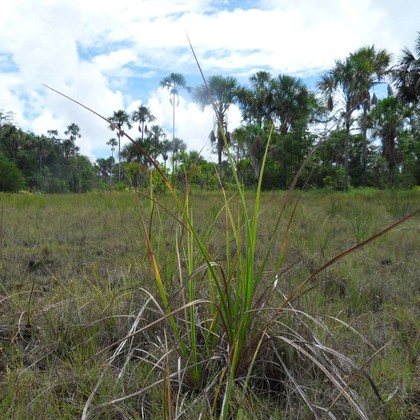
Where the bird is most at home, classified by the vegetation types of the Caribbean.

Range and movements
Most frequent on Cuba, where it winters fairly commonly on many wetlands, and on the Cayman Islands, the Bahamas and Puerto Rico. Scarce to rare on Hispaniola, Jamaica, Barbados, the ABC Islands and San Andrés, and a rare visitor elsewhere in the Lesser Antilles. Outside the region it breeds in north-eastern Siberia, Alaska and north-western Canada and winters from the southern United States to Central America.
- Resident
- Winter visitor (c. Apr–Sep)
- Passage (Mar–Apr, Oct–Nov)
- dark = core range, pale = thinly spread
How and when to look
Dowitchers on fresh water, wading deep and calling, deserve a second look. Identification works best by call; silent birds in non-breeding plumage often cannot be named with certainty.
Conservation status
Near Threatened according to the IUCN, owing to a decline probably linked to the loss of wetlands in the wintering range. In the Caribbean the species benefits from rice fields and sewage ponds.
Scientific name
Limnodromus scolopaceus | (Say, 1822)
Say described the species in 1822 as Limosa scolopacea; because it was later moved to another genus, the author and year stand in brackets. The genus Limnodromus was introduced in 1833 by Wied-Neuwied. Limnodromus is Ancient Greek, from limnē 'marsh' and -dromos '-runner'. scolopaceus means 'snipe-like', from Latin scolopax 'snipe', after the long straight bill. The specimen the first description was based on came from near Council Bluffs, Iowa.