All species › Tinamous › Tinamous › Little Tinamou
Little Tinamou | Crypturellus soui
Kleine tinamoe | Tinamú menor
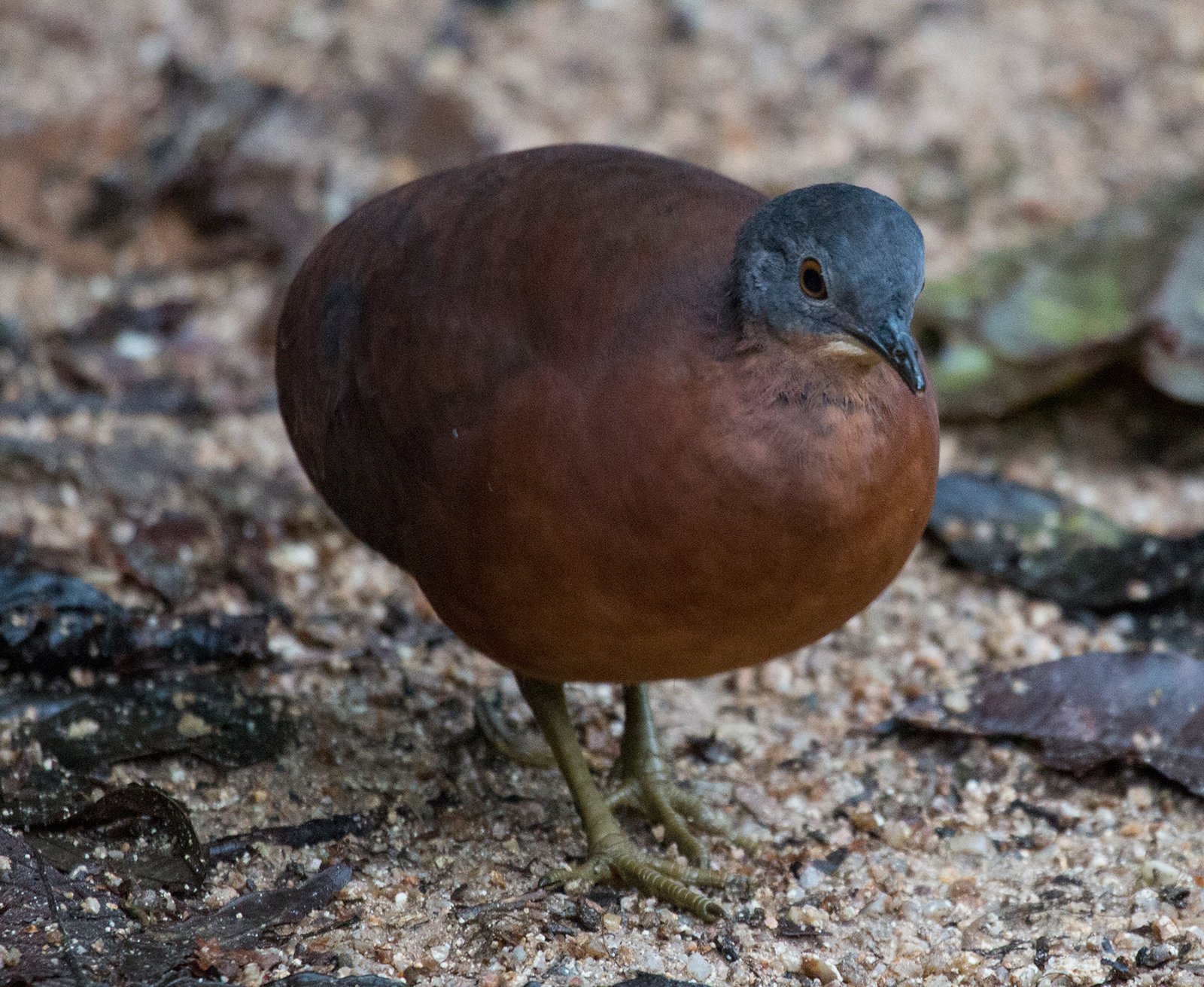
The Little Tinamou is a plump, almost tailless ground bird of the forest that is heard far more often than seen. Tinamous are related to the ratites but can fly. Within the region it occurs only in Trinidad, with its own subspecies, andrei, which also lives in north-eastern Venezuela.
Voice
A series of soft, tremulous whistles that rise in pitch and quicken in tempo; also a single descending, plaintive whistle. Calls mainly at dusk, often from dense undergrowth.
Recording: José María Loaiza B. — CC BY-NC-SA 4.0 · converted to mono · xeno-canto
Identification
21–24 cm, rotund, with a small head, thin neck and very short tail. The upperparts are plain dark sooty brown without barring, the head greyer, the throat whitish. The underparts are warm ochre-brown to rufous; the female is usually brighter rufous than the male. The bill is dark and the legs olive-green to yellowish. It walks unobtrusively over the forest floor; when flushed it flies off low on whirring wings over a short distance.
Confusion species
No other tinamou occurs in Trinidad. Ruddy Quail-Dove Geotrygon montana and Grey-fronted Dove Leptotila rufaxilla also walk on the forest floor, but have a dove's build, with a longer tail and a rounded head, and fly off with clattering wings. Grey-cowled Wood Rail Aramides cajaneus has long legs, a long yellow bill and a grey neck, and keeps to damp places.
Habitat
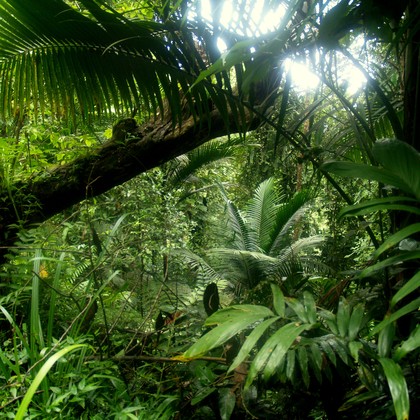
Humid lowland forest, secondary forest and forest edge with dense undergrowth, and neglected cacao, coffee and banana plantings; in Trinidad also pine plantations. It forages on the forest floor for seeds, fruit and invertebrates. The nest is a scrape on the ground among leaf litter or at the foot of a tree.
Where the bird is most at home, classified by the vegetation types of the Caribbean.


Range and movements
In the region only in Trinidad, in the forests of the Northern Range and in other wooded areas of the island. It is absent from Tobago and the other islands. Beyond the region from southern Mexico through Central America to northern and central South America, east of the Andes to Bolivia and Brazil.
- Resident
- dark = core range, pale = thinly spread
How and when to look
In Trinidad along forest trails in the Northern Range at dusk, when the whistled series sound from the undergrowth. The bird itself is best seen on quiet trails, where it sometimes walks slowly across the forest floor.
Conservation status
Not threatened; fairly common in most of its range. Little has been published on numbers in Trinidad. Tinamous are hunted throughout the range, and forest clearance affects the species locally, although it persists in secondary forest and old plantations.
Scientific name
Crypturellus soui | (Hermann, 1783)
Hermann described the species in 1783 as Tinamus Soui; because it was later moved to another genus, the author and year stand in brackets. The genus Crypturellus was introduced in 1914 by Brabourne, WWK-H & Chubb. Crypturellus is a diminutive of the older tinamou genus Crypturus (Greek kruptos 'hidden' and oura 'tail'): 'little hidden-tail'. soui is the onomatopoeic name Soui used by the Galibi around Cayenne for this tinamou. The specimen the first description was based on came from Cayenne, French Guiana.