All species › Waterfowl › Ducks and geese › Lesser Scaup
Lesser Scaup | Aythya affinis
Kleine topper | Porrón bola
The Lesser Scaup is one of the diving ducks seen most often in winter in the Caribbean, above all in the Bahamas, Cuba, Jamaica, Hispaniola and the Cayman Islands. Flocks rest on lagoons and ponds, sometimes on small waters close to buildings. In Cuba it is called pato morisco.
Voice
Usually silent in winter. The female gives a harsh, purring karr-karr, especially on take-off; the courting drake a soft whistled whee-oo.
Recording: Stanislas Wroza — CC BY-NC-SA 4.0 · converted to mono · xeno-canto
Identification
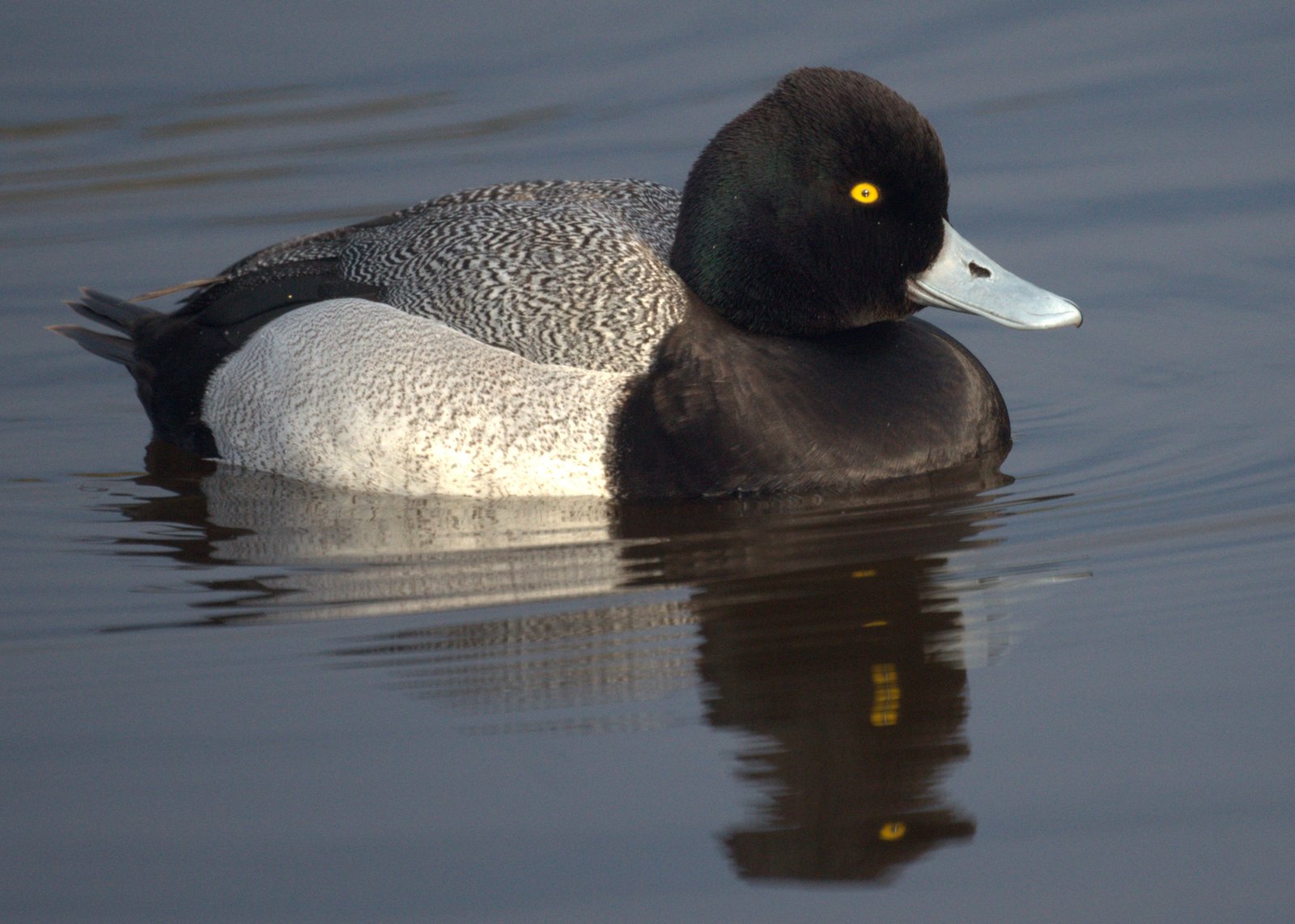
38–48 cm, a medium-sized diving duck with a small peak at the rear of the crown. The drake has a black head with a purple gloss, black breast and stern, a grey, finely barred back and whitish flanks, often with a grey wash. The eye is yellow and the bill blue-grey with a small black nail at the tip. The female is brown, with a sharply defined white patch around the bill base and a yellow eye. In flight a white stripe runs across the secondaries, turning grey on the primaries.
Confusion species
Greater Scaup Aythya marila, a vagrant in the region, is larger, with a rounder, green-glossed head, a broader bill with a larger black nail and a paler back; in flight the white wing stripe extends well onto the primaries. Head shape is the most reliable feature, but it too depends on posture. Ring-necked Duck Aythya collaris has a black back, a white ring on the bill and, in the drake, a white spur in front of the grey flanks; the female has a dark eye and no sharp white patch at the bill.
Habitat
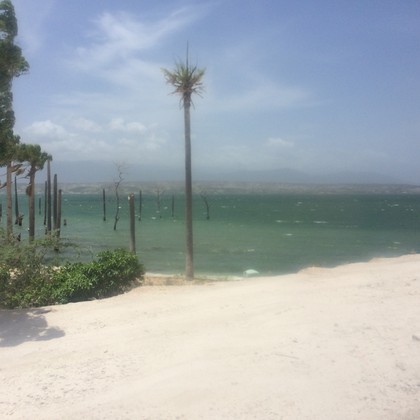
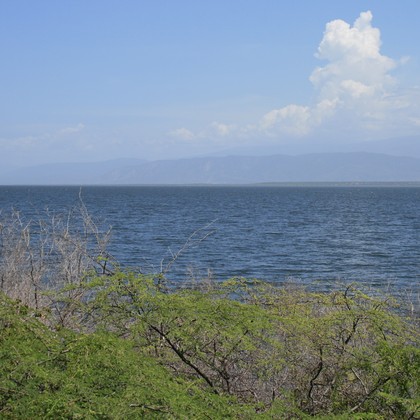
Fresh and brackish lagoons, ponds, lakes and reservoirs, salt pans with open water and sheltered coastal bays. It dives for molluscs, insects and other invertebrates and for aquatic plants. On some islands also on ponds at golf courses, hotels and housing estates.
Where the bird is most at home, classified by the vegetation types of the Caribbean.

Range and movements
Winter visitor to the western part of the region: the Bahamas, the Turks and Caicos Islands, Cuba, the Cayman Islands, Jamaica and Hispaniola (Haiti and the Dominican Republic). Scarcer eastwards: rare in Puerto Rico, irregular and in small numbers on Guadeloupe and other islands of the Lesser Antilles, a vagrant to Barbados and Trinidad and Tobago. Breeds in Alaska, western Canada and the northern United States; winters from the United States through Mexico and Central America to northern Colombia.
- Winter visitor (c. Apr–Sep)
- dark = core range, pale = thinly spread
How and when to look
Flocks can be found in winter on the larger lagoons and ponds of Cuba, the Bahamas and Grand Cayman. With a flock it pays to check each drake for head shape and gloss, with a Greater Scaup or Tufted Duck in mind.
Conservation status
Least Concern. The North American population has declined since the 1980s; the causes lie mainly on the breeding grounds and are not fully understood. Ducks are hunted on the Caribbean islands, and the wetlands are under pressure from draining and development.
Scientific name
Aythya affinis | (Eyton, 1838)
Eyton described the species in 1838 as Fuligula affinis; because it was later moved to another genus, the author and year stand in brackets. The genus Aythya was introduced in 1822 by Boie. Aythya is from Greek aithuia, an unidentified diving seabird mentioned by Aristotle and Hesychius. affinis is Latin for 'related to', after the close resemblance to the greater scaup. The specimen the first description was based on came from North America.