All species › Passerines › Finches › Lesser Antillean Euphonia
Lesser Antillean Euphonia | Chlorophonia flavifrons
Kleine-Antillenorganist | Eufonia de las Antillas Menores
The Lesser Antillean Euphonia is a small, compact finch that lives almost entirely on mistletoe berries. It was long treated as a subspecies of Antillean Euphonia; since 2016 that species has been split into three: the forms of Hispaniola, Puerto Rico and the Lesser Antilles. Unlike in those two relatives, male and female look alike. Like the other Antillean euphonias, it is now placed in the genus Chlorophonia.
Voice
A plaintive whistle and soft tuk-tuk notes in varying patterns. The song is a tinkling, trilling series interspersed with sharp whistles, sometimes in long, rambling bouts of up to twenty minutes.
No recording with a suitable Creative Commons licence is available for this species yet.
Identification
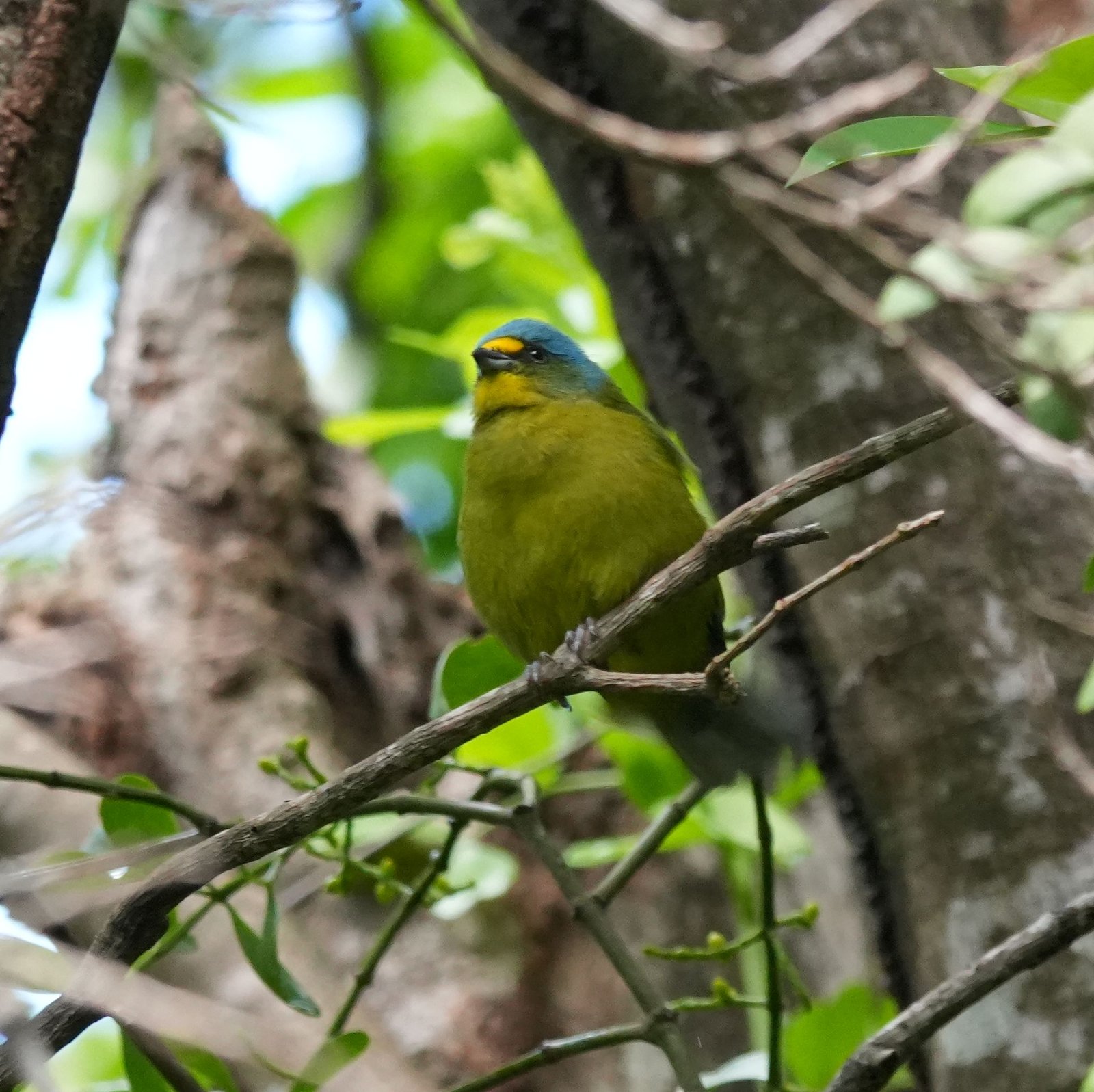
10–12 cm, rotund, with a short tail and a short thick bill. Both sexes have a yellow forehead, separated by a narrow black band from the sky-blue crown and nape; the blue extends below the ear coverts. The rest of the head is dark. Upperparts and tail are dark olive-green, with a yellow wash on the lower back and rump, and the underparts olive-yellow, darker on the breast. The male may have slightly blacker ear coverts. Juvenile plumage has not been well described.
Confusion species
No other euphonia lives in the Lesser Antilles. Bananaquit Coereba flaveola has a white supercilium and a thin, decurved bill. Female Lesser Antillean Bullfinch Loxigilla noctis is olive-brown without blue and has a heavier bill and an orange-brown undertail. Lesser Antillean Tanager Stilpnia cucullata of St. Vincent and Grenada is larger and golden-brown with blue-green wings. Lesser Antillean Saltator Saltator albicollis is much larger and grey-green with a white throat.
Habitat
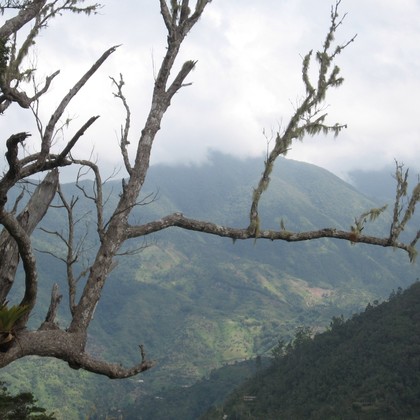
Moist evergreen forest, montane rainforest and cloud forest, also semi-evergreen and dry deciduous forest and scrub, especially where mistletoe is plentiful. It eats almost exclusively mistletoe berries, plus some other fruit. It usually forages in pairs high in the canopy and sometimes joins mixed flocks. Movements between elevations and between islands have been suggested.
Where the bird is most at home, classified by the vegetation types of the Caribbean.




Range and movements
Endemic to the Lesser Antilles: Barbuda, Antigua, Guadeloupe (including La Désirade), Dominica, Martinique, St. Lucia, St. Vincent and Grenada. It has been extirpated from Saba. On other islands it is a vagrant; the few records from Montserrat and Saint-Barthélemy in the map database belong to this category. It is scarce on Barbuda and Antigua. The related Hispaniolan Euphonia Chlorophonia musica lives on Hispaniola and Puerto Rican Euphonia Chlorophonia sclateri on Puerto Rico.
- Resident
- dark = core range, pale = thinly spread
How and when to look
Most records come from St. Lucia, Dominica, Martinique and Guadeloupe, in moist forest in the interior. The bird stays high in the canopy and is noticed mainly by its plaintive whistle and tinkling song; pairs keep returning to a mistletoe clump with ripe berries.
Conservation status
Not threatened. The range is small, the species is fairly scarce throughout and numbers are thought to be declining, but no immediate threats are known. It occurs in several national parks and other protected areas.
Scientific name
Chlorophonia flavifrons | (Sparrman, 1789) (GBIF: Euphonia musica)
Sparrman described the species in 1789 as Emberiza flavifrons; because it was later moved to another genus, the author and year stand in brackets. The genus Chlorophonia was introduced in 1851 by Bonaparte. Chlorophonia combines Greek khlōros 'green' with the genus name Euphonia, after the green plumage. flavifrons is Latin, from flavus 'yellow' and frons 'forehead', after the male's yellow forehead. The specimen the first description was based on came from Saint Barthélemy.