All species › Passerines › Tanagers › Lesser Antillean Bullfinch
Lesser Antillean Bullfinch | Loxigilla noctis
Antillendikbekje | Semillero gorjirrojo
The Lesser Antillean Bullfinch is one of the commonest and most familiar birds of the Lesser Antilles, from the Virgin Islands to Grenada. It is a sturdy, thick-billed finch that adapts to people and searches terraces for crumbs and sugar. Eight subspecies are recognised. The Barbados birds, formerly included in this species, are now treated as a separate species, Barbados Bullfinch Loxigilla barbadensis.
Voice
The call is a sharp chip, with a short, dry trill. The song is a simple, rapid series of high notes and trills.
Recording: David Boyle — CC BY-NC-SA 4.0 · shortened to the first 60 s, mono · xeno-canto
Identification
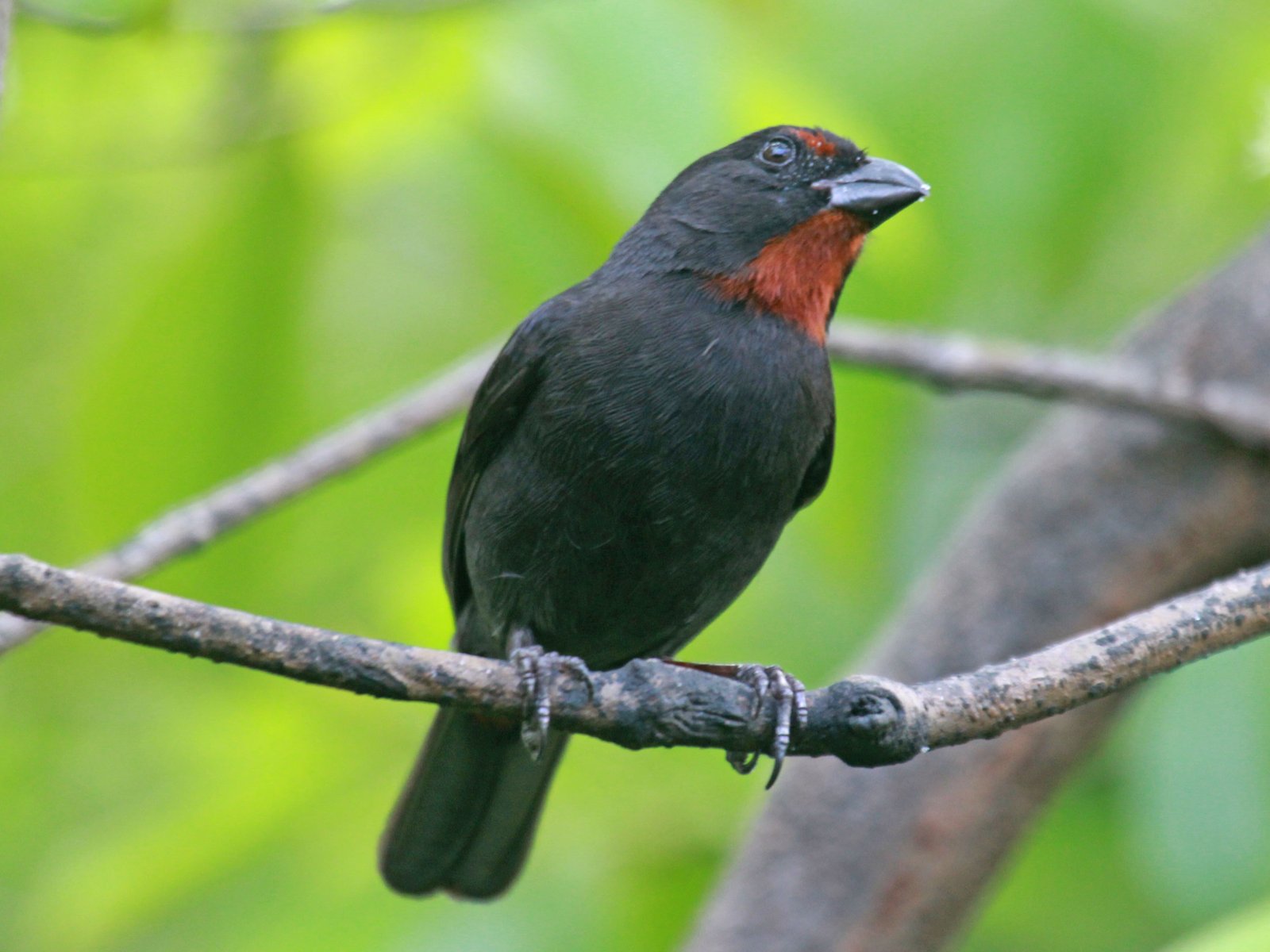
14–16 cm, with a thick, conical black bill. The male is black, with a rufous throat, a rufous spot above the lores and rufous undertail coverts. The female is olive-brown above and grey-brown below, with orange-brown undertail coverts. Juveniles resemble the female; young males acquire the black plumage gradually and may look patchy for some time.
Confusion species
In Saint Lucia the male St. Lucia Black Finch Melanospiza richardsoni is all black without rufous, with pink legs and a relatively heavier bill; its female has a grey crown contrasting with a brown back. In Saint Kitts the St. Kitts Bullfinch Melopyrrha grandis was clearly larger. Black-faced Grassquit Melanospiza bicolor is much smaller, with a slimmer bill and no rufous.
Habitat
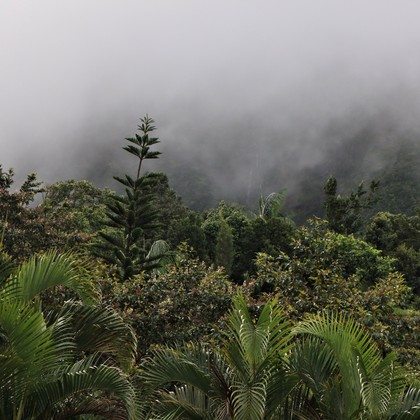
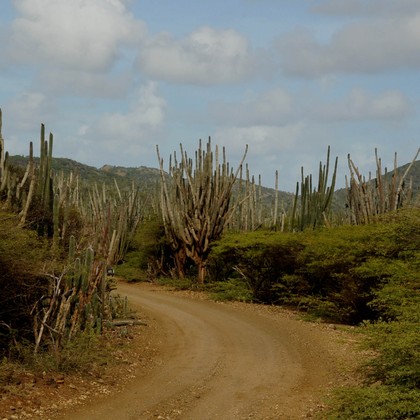
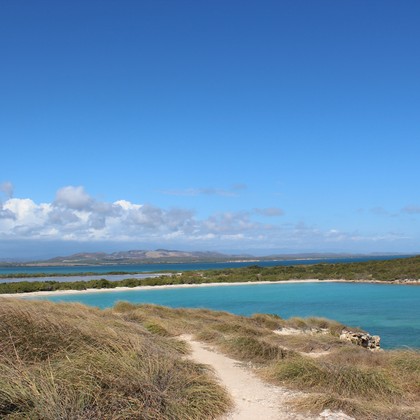
Almost any vegetated ground: dry forest and scrub, cactus scrub, coastal scrub, moist forest and montane rainforest up to about 900 m, plantations, gardens, parks and hotel grounds. It eats seeds, fruit, nectar, flower buds and insects, and near people also bread, sugar and other food. The nest is a globe with a side entrance in a tree or shrub; the clutch is usually two to four eggs.
Where the bird is most at home, classified by the vegetation types of the Caribbean.




Range and movements
Resident in the Virgin Islands (US and British), Anguilla, Sint Maarten/Saint-Martin, Saint-Barthélemy, Saba, Sint Eustatius, Saint Kitts and Nevis, Antigua and Barbuda, Montserrat, Guadeloupe with La Désirade and Marie-Galante, Dominica, Martinique, Saint Lucia, Saint Vincent and the Grenadines and Grenada. Absent from Barbados. Recently established on Vieques (Puerto Rico); only isolated records on mainland Puerto Rico. It does not occur outside the region.
- Resident
- dark = core range, pale = thinly spread
How and when to look
Almost every hotel terrace, garden and forest trail in the Lesser Antilles produces this species. In Saint Lucia black finches deserve a careful look: an all-black male with pink legs is the rarer St. Lucia Black Finch.
Conservation status
Not threatened. The species is common and widespread and benefits from gardens and other man-made habitats. The recent colonisation of Vieques points to a westward spread.
Scientific name
Loxigilla noctis | (Linnaeus, 1766)
Linnaeus described the species in 1766 as Fringilla noctis; because it was later moved to another genus, the author and year stand in brackets. The genus Loxigilla was introduced in 1831 by Lesson. Loxigilla is a blend of Loxia (crossbills) and Fringilla (finches). noctis comes from Latin nox 'night', probably after the male's night-black plumage. The specimen the first description was based on came from Jamaica, Mexico and Martinique (composite statement).