All species › Passerines › Finches › Hispaniolan Euphonia
Hispaniolan Euphonia | Chlorophonia musica
Antillenorganist | Eufonia de La Española
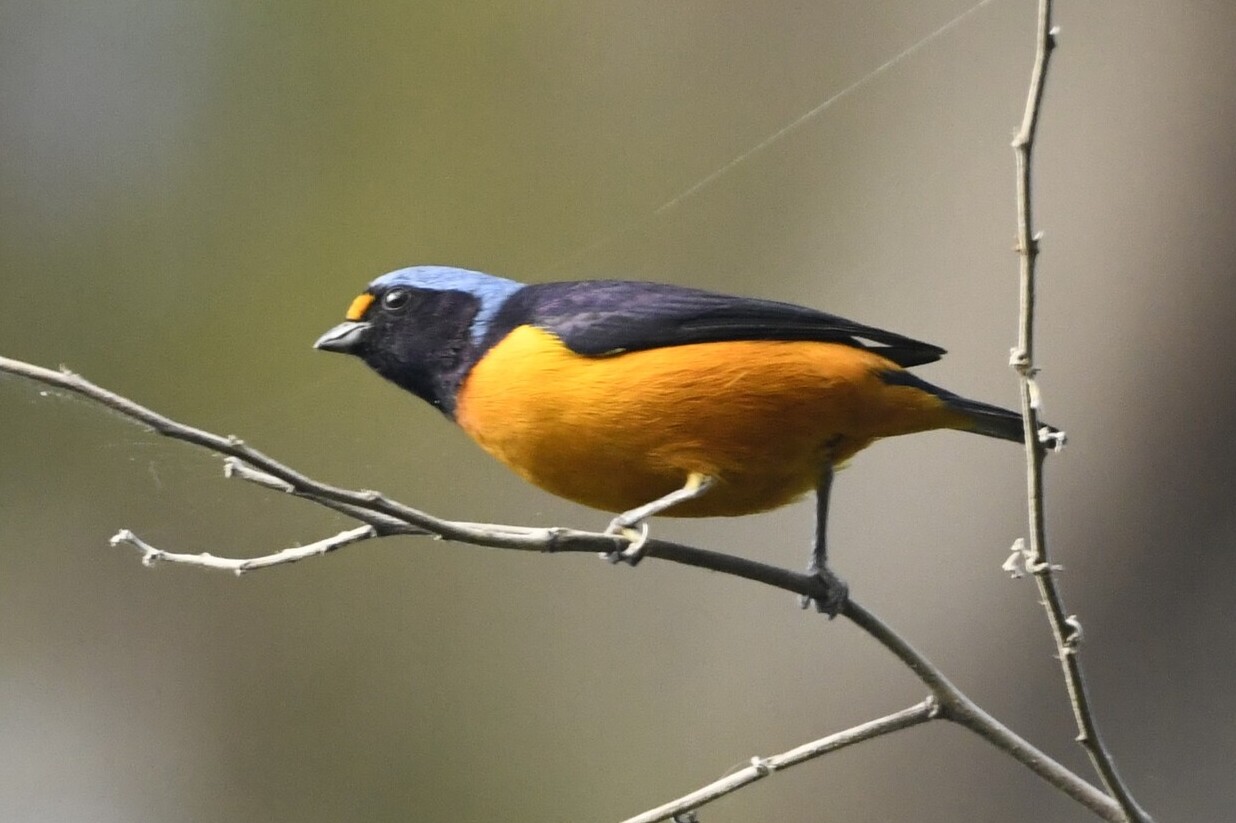
The Hispaniolan Euphonia is a small, compact finch that lives almost entirely on berries, especially mistletoe. For a long time it was treated as a single species ranging from Hispaniola to the Lesser Antilles; the birds of Puerto Rico and the Lesser Antilles are now regarded as separate species, leaving this name for the Hispaniolan form. Recently it was moved, with the other Antillean euphonias, to the genus Chlorophonia.
Voice
A plaintive whistled tee-oo, a soft tuk and a clear, tinkling chatter. The song is a long, tinkling and trilling series that can last for minutes.
Recording: Eric DeFonso — CC BY-NC-SA 4.0 · shortened to the first 60 s, mono · xeno-canto
Identification
10–12 cm, rotund, with a short tail and a short thick bill. The male has a sky-blue crown and nape, a yellow-orange forehead, a dark violet-black throat, head and back with a blue gloss, and warm yellow-orange underparts and rump. The female is olive-green with the same turquoise crown and nape, a yellow forehead and yellowish throat, an olive-yellow breast and a yellow belly. Juveniles resemble the female, with less blue on the head.
Confusion species
On Hispaniola the blue crown is diagnostic in both sexes; no other euphonia occurs there. Male Antillean Siskin Spinus dominicensis is also black and yellow, but has a black head without blue, an olive-green back, yellow wing patches and a pointed bill. Hispaniolan Spindalis Spindalis dominicensis is larger, with white stripes on the head. The related euphonias of Puerto Rico and the Lesser Antilles do not occur on Hispaniola.
Habitat
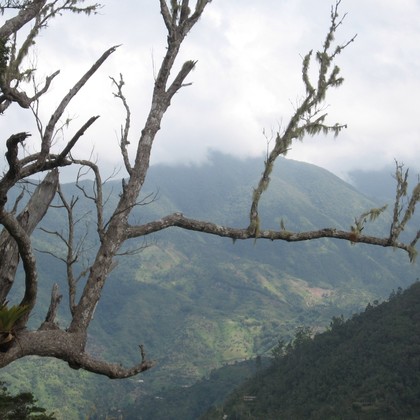
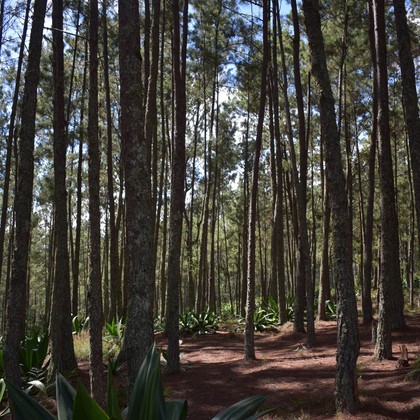
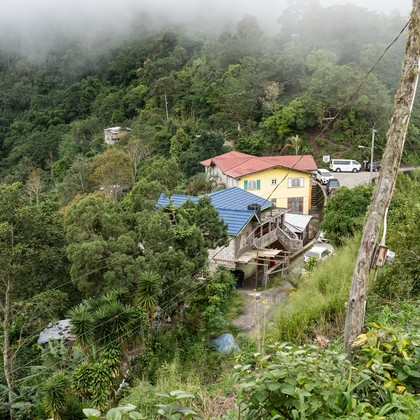
Almost every forest type, from dry and semi-evergreen lowland forest to moist montane forest, cloud forest and pine forest high in the mountains. Also in shade coffee, forest edges and disturbed woodland, as long as there are trees with mistletoe. It eats almost exclusively small berries and so spreads mistletoe seeds. It lives in pairs or small groups, often high in the canopy.
Where the bird is most at home, classified by the vegetation types of the Caribbean.



Range and movements
Endemic to Hispaniola, in both the Dominican Republic and Haiti, and on Gonâve, from sea level to the highest mountains. Occurrence is local and irregular, depending on fruiting mistletoe. The related Puerto Rican Euphonia Chlorophonia sclateri and Lesser Antillean Euphonia Chlorophonia flavifrons live on Puerto Rico and from Barbuda and Antigua to Grenada.
- Resident
- dark = core range, pale = thinly spread
How and when to look
In the Dominican Republic, for instance, in the Sierra de Bahoruco and the Cordillera Central. The tinkling call usually gives the bird away before it is seen; small groups return to the same mistletoe clump in a tree crown, where patience brings good views.
Conservation status
Not threatened, but numbers are declining through the loss of forest to farming and logging. The species is locally fairly common and persists in disturbed forest and coffee plantations.
Scientific name
Chlorophonia musica | (Gmelin, 1789) (GBIF: Euphonia musica)
Gmelin described the species in 1789 as Pipra musica; because it was later moved to another genus, the author and year stand in brackets. The genus Chlorophonia was introduced in 1851 by Bonaparte. Chlorophonia combines Greek khlōros 'green' with the genus name Euphonia, after the green plumage. musica is Latin for 'musical', after the melodious calls and song. The specimen the first description was based on came from Hispaniola.