All species › Passerines › Tyrant flycatchers › Hispaniolan Elaenia
Hispaniolan Elaenia | Elaenia cherriei
Hispaniola-elenia | Fiofío de La Española
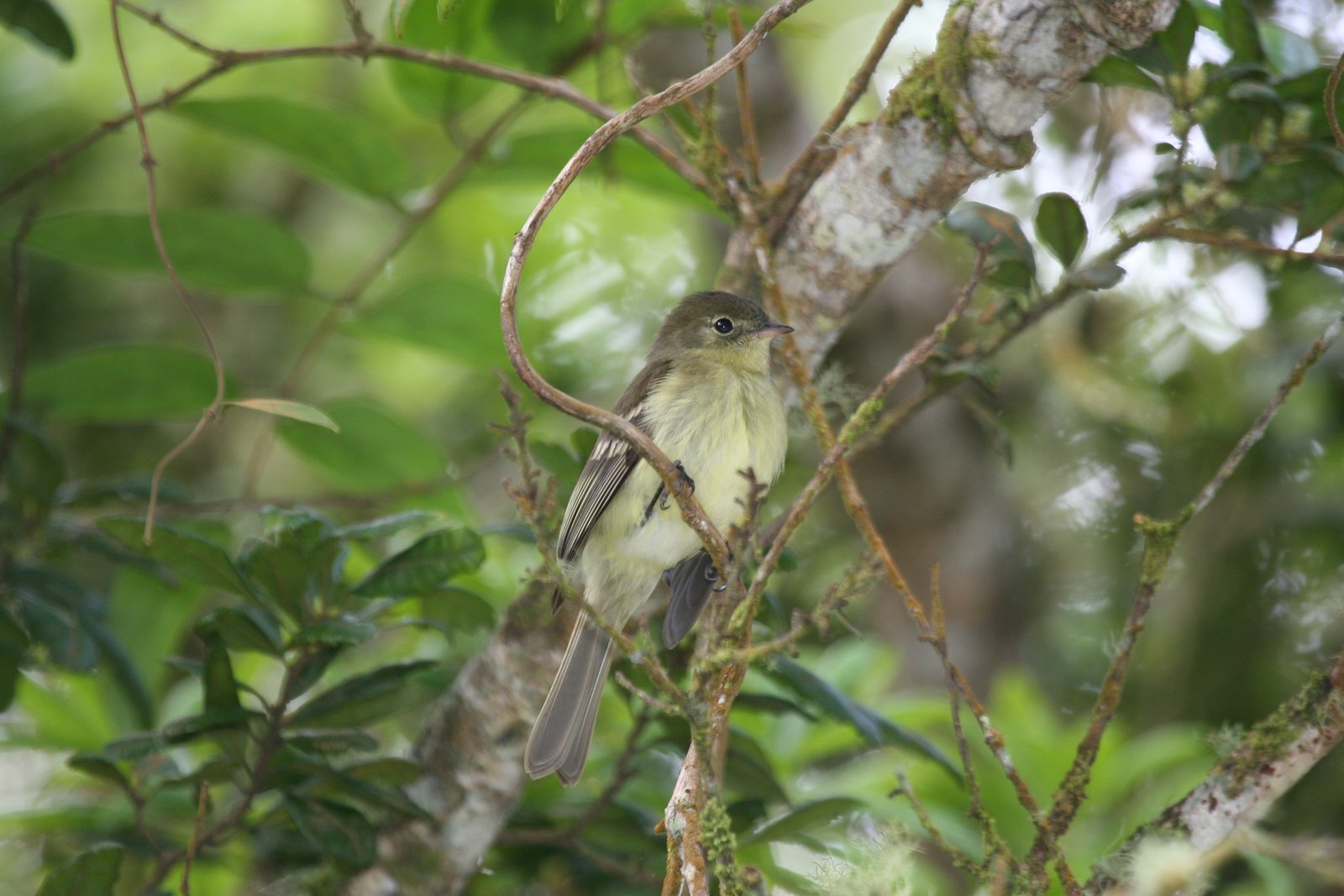
The Hispaniolan Elaenia is a small, olive-grey flycatcher of the montane forests of Hispaniola. For a long time it was treated as a subspecies of Greater Antillean Elaenia, together with Blue Mountain Elaenia Elaenia fallax of Jamaica. In 2025 the two populations were recognised as separate species on the basis of DNA studies, small plumage differences and, above all, clear differences in voice.
Voice
Calls and song differ clearly from those of Blue Mountain Elaenia in Jamaica and were a key argument for the split. It gives high, thin, partly buzzy calls and short, repeated phrases, mainly in the early morning.
Recording: Zac Peterson — CC BY 4.0 · Converted to mp3, mono, full length · iNaturalist
Identification
About 15 cm, slim, with a short, narrow bill whose lower mandible has a pale base. The upperparts are greyish olive, the head slightly greyer, with a small crest in which a white crown patch is usually concealed. Lores and a narrow eye-ring are pale. The wing shows two distinct white wing bars and pale edges to the tertials. Throat and breast are greyish white, the belly and undertail coverts pale yellow. The sexes are alike.
Confusion species
Hispaniolan Pewee Contopus hispaniolensis is darker and plainer, without obvious wing bars, has a broader bill and sallies after insects from a fixed lookout. Stolid Flycatcher Myiarchus stolidus is larger, with a heavier bill, a yellower belly and pale edges to the flight feathers. Pine Warbler Setophaga pinus shares the pine forest and also has white wing bars, but has a fine, pointed warbler bill and a yellowish throat and breast, and forages more restlessly.
Habitat
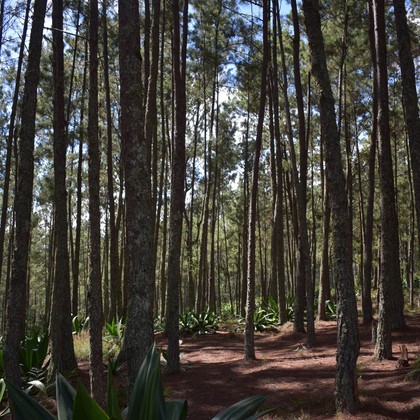
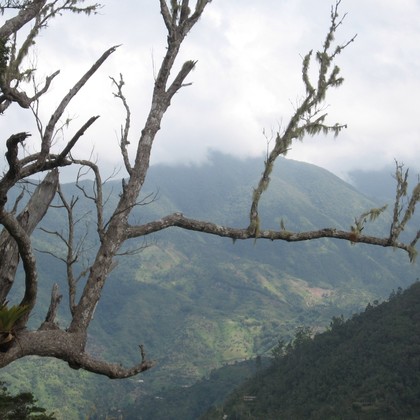
Pine forest and the edges and clearings of moist broadleaf and cloud forest in the mountains; it is largely absent from the lowlands. It feeds on insects and small fruit, gleaned from leaves, taken in a hover or caught in short sallies, alone, in pairs or in mixed flocks with other forest birds. Little has been published on the breeding biology of this species.
Where the bird is most at home, classified by the vegetation types of the Caribbean.


Range and movements
Only on Hispaniola. In the Dominican Republic mainly in the Cordillera Central and the Sierra de Bahoruco, in Haiti in the Massif de la Selle and the Massif de la Hotte. It does not occur outside Hispaniola; the related Blue Mountain Elaenia lives in Jamaica.
- Resident
- dark = core range, pale = thinly spread
How and when to look
The pine forest of the Sierra de Bahoruco and the higher parts of the Cordillera Central, for example around Valle Nuevo, are the best areas. Birds are most active in the early morning and often travel with mixed flocks; the white wing bars and short bill then separate them from pewees and warblers.
Conservation status
Not threatened. The montane forest of Hispaniola is, however, under pressure from logging, forest fires and expanding agriculture, especially in Haiti, where little forest remains.
Scientific name
Elaenia cherriei | Cory, 1895
Cory described the species in 1895 and placed it straight away in the genus where it still stands. The genus Elaenia was introduced in 1836 by Sundevall. Elaenia comes from Greek elaineos 'oily, olive-coloured', after the olive-green plumage. cherriei honours the American ornithologist and collector George Kruck Cherrie (1865–1948). The specimen the first description was based on came from Catare, Dominican Republic.