All species › Passerines › Tyrant flycatchers › Grenada Flycatcher
Grenada Flycatcher | Myiarchus nugator
Grenadatiran | Copetón de Granada
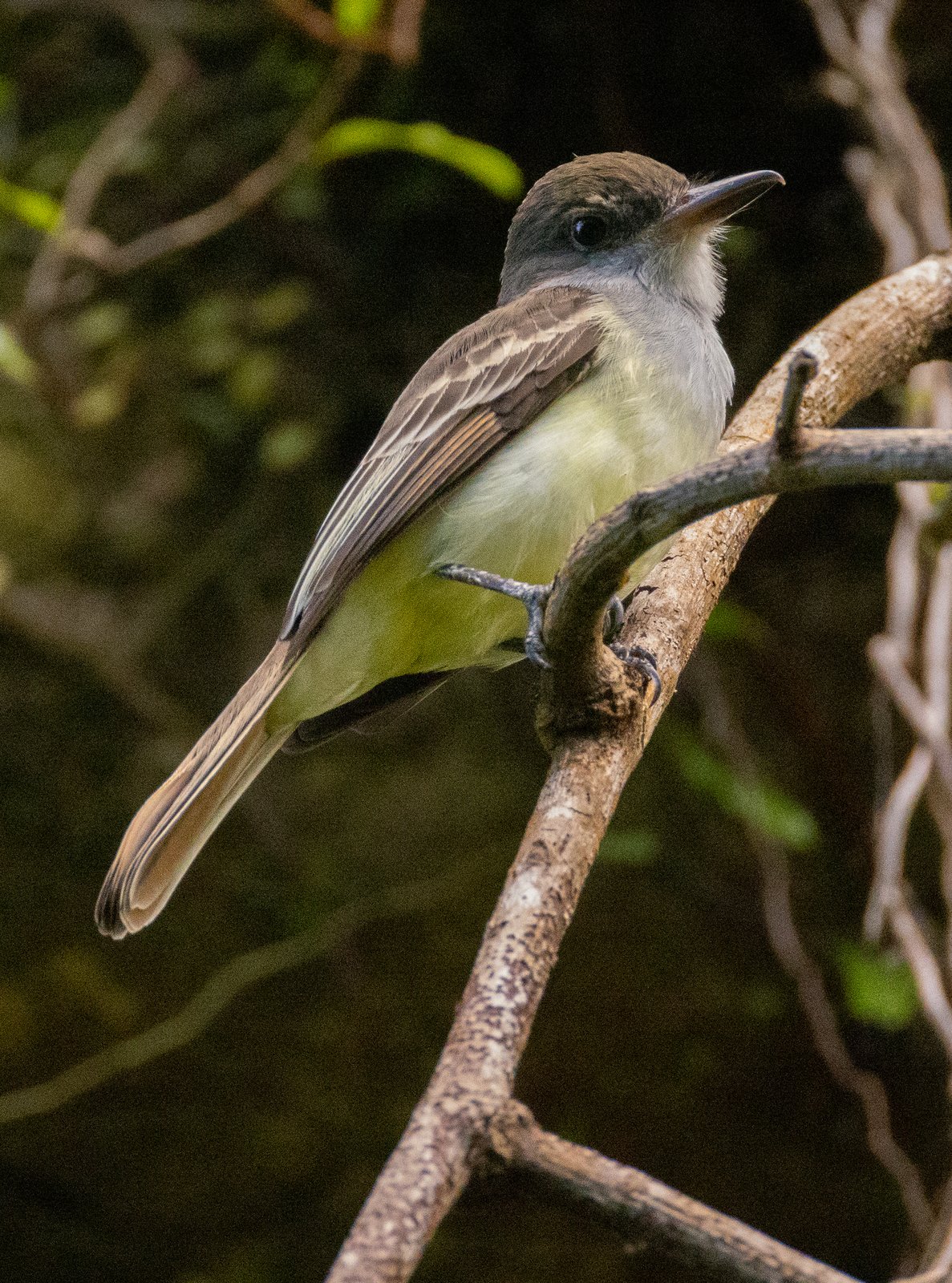
The Grenada Flycatcher is a large Myiarchus found only on Grenada, St Vincent and the Grenadines between them. It was long treated as a subspecies of Brown-crested Flycatcher Myiarchus tyrannulus, which it closely resembles in shape and plumage. On the islands where it lives it is the only Myiarchus and one of the commonest woodland birds.
Voice
A loud quip and a harsh queuk, often repeated from a sheltered perch in the canopy.
Recording: Suhei Castro — CC BY-NC 4.0 · Converted to mp3, mono, full length · iNaturalist
Identification
19–21 cm, sturdy, with a small crest and a heavy dark bill with a pinkish base to the lower mandible. Head and upperparts are brown to olive-brown, the face greyish. The wings are dark, with cinnamon-rufous edges to the primaries and paler edges to the secondaries and coverts. The tail has rufous inner webs, obvious from below. Throat and breast are grey, the belly pale yellow. The iris is brown. The sexes are alike.
Confusion species
No other Myiarchus in its range. Lesser Antillean Flycatcher Myiarchus oberi lives further north, on St Lucia and the islands beyond, and is more olive above. Tropical Kingbird Tyrannus melancholicus and Grey Kingbird Tyrannus dominicensis lack a crest and rufous in wings and tail, and perch in the open on wires and bare branches. Caribbean Elaenia Elaenia martinica is smaller, with white wing bars and no rufous.
Habitat
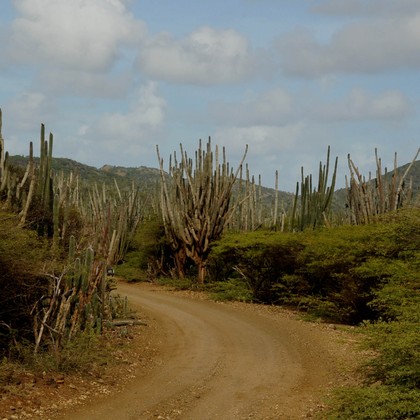
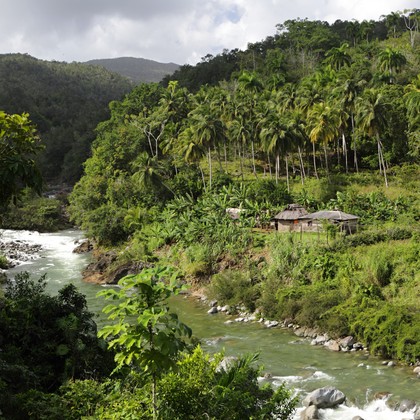
Almost any vegetated land: dry coastal woodland and thorn scrub, moist deciduous forest, montane forest up to about 1,200 m, plantations and the trees in villages and gardens. Bare rocky ground without trees is avoided. It hunts large insects from a perch and also eats fruit. It nests in tree cavities.
Where the bird is most at home, classified by the vegetation types of the Caribbean.




Range and movements
Grenada, St Vincent and most vegetated Grenadines in between, such as Carriacou, Union Island, Canouan, Mustique and Bequia. Commonest on Grenada. It occurs nowhere else.
- Resident
- dark = core range, pale = thinly spread
How and when to look
On Grenada practically anywhere with trees, including gardens and roadsides inland; on St Vincent in the wooded valleys. The loud call is usually the first sign of its presence.
Conservation status
Not threatened. The species is common and tolerates disturbed land. Its range is small, so deforestation, hurricanes and introduced predators could become a risk in the longer term.
Scientific name
Myiarchus nugator | Riley, 1904
Riley described the species in 1904 and placed it straight away in the genus where it still stands. The genus Myiarchus was introduced in 1844 by Cabanis. Myiarchus is Greek, from muia 'fly' and arkhos 'ruler': 'fly-ruler'. nugator is Latin for 'joker, trifler'; probably after the noisy calls, but the reason is not recorded. The specimen the first description was based on came from Grenada.