All species › Passerines › Tanagers › Greater Antillean Bullfinch
Greater Antillean Bullfinch | Melopyrrha violacea
Bahamadikbekje | Gallito prieto
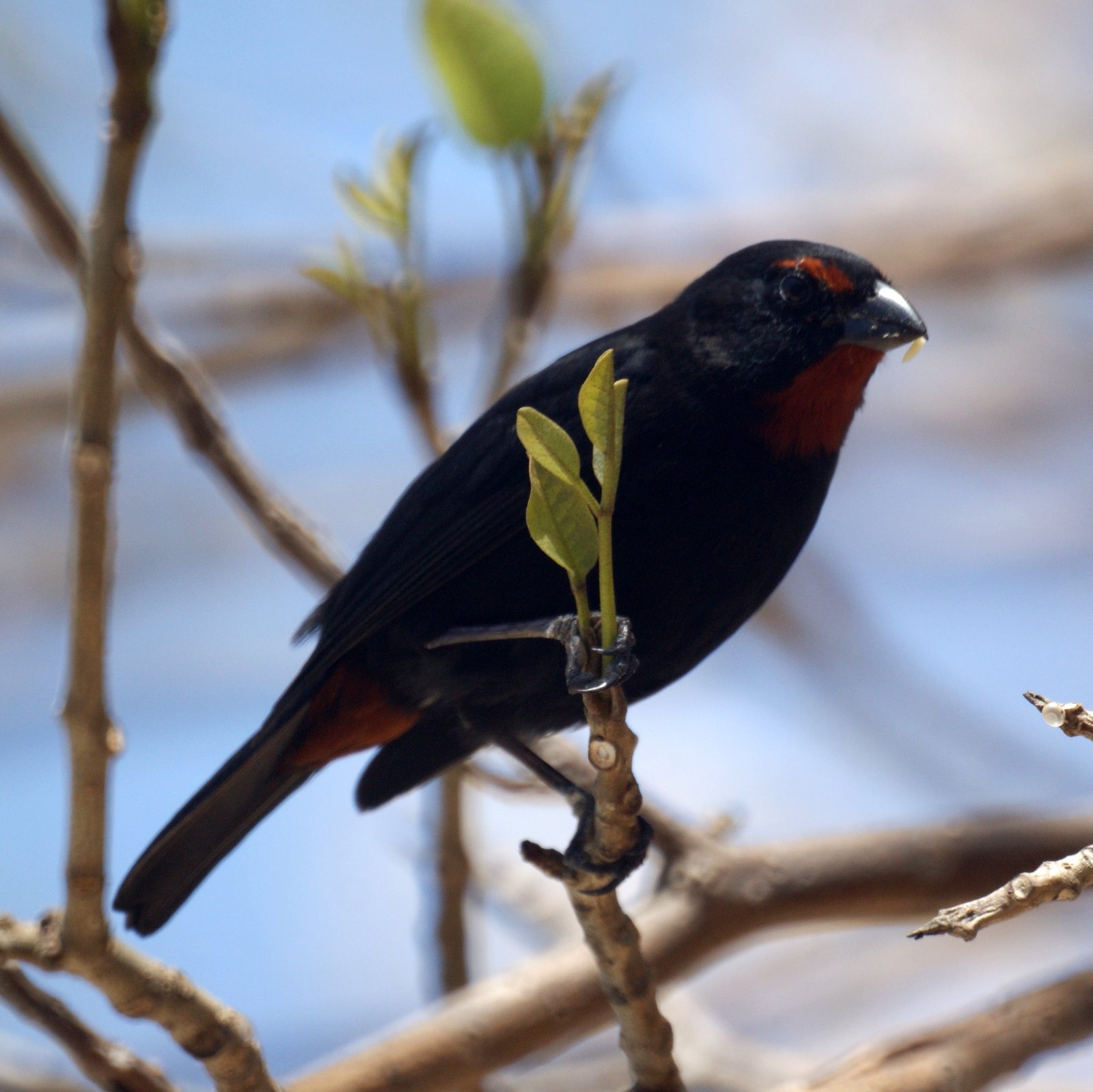
The Greater Antillean Bullfinch is the most widespread of the large Antillean bullfinches, with a heavy bill used to crack hard seeds. It lives in the Bahamas, the Turks and Caicos Islands, Jamaica and Hispaniola. In the Dominican Republic it is called gallito prieto.
Voice
Thin, high, rather insect-like calls, such as tseet. The song is a short series of similar thin, buzzy notes.
Recording: Paul Driver — CC BY-NC-SA 4.0 · shortened to the first 60 s, mono · xeno-canto
Identification
13–18 cm, with a heavy, conical black bill. The male is black with an orange-red supercilium, an orange-red throat and orange-red undertail coverts. The female is similar but duller. Juveniles show the same pattern, but are grey to olive instead of black. There are five subspecies, differing mainly in size and the shade of the red.
Confusion species
Little confusion is likely within its range. Shiny Cowbird Molothrus bonariensis is glossy black with no red and a more pointed bill; Greater Antillean Grackle Quiscalus niger is much larger, with a long tail and pale eyes. Cuban Bullfinch Melopyrrha nigra is smaller, with no red and white along the wing; Puerto Rican Bullfinch Melopyrrha portoricensis and Lesser Antillean Bullfinch Loxigilla noctis are very similar but occur outside its range.
Habitat
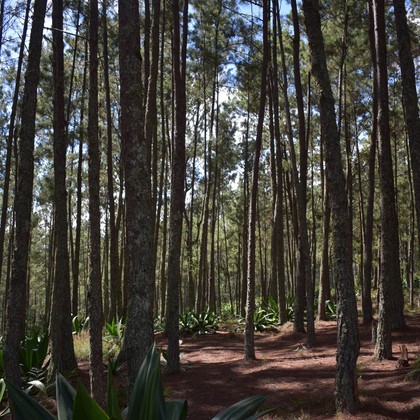
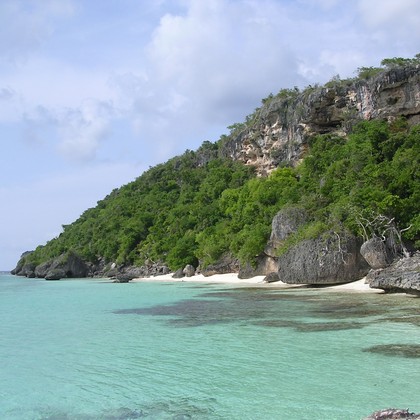
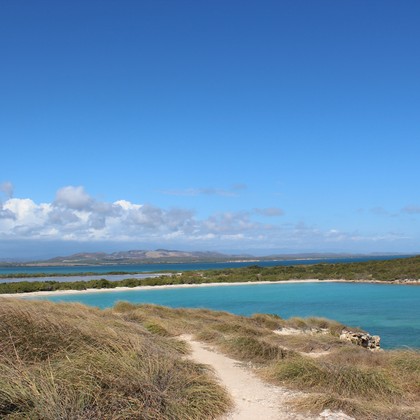
Forest undergrowth, especially at middle and high elevations in Jamaica and Hispaniola: moist and semi-evergreen forest, montane rainforest and cloud forest, pine forest and dry forest; in the Bahamas and the Turks and Caicos mainly dense dry broadleaf forest and coastal vegetation. Also in heavily degraded former forest. It eats fruit, flower buds and seeds, which it cracks with its heavy bill.
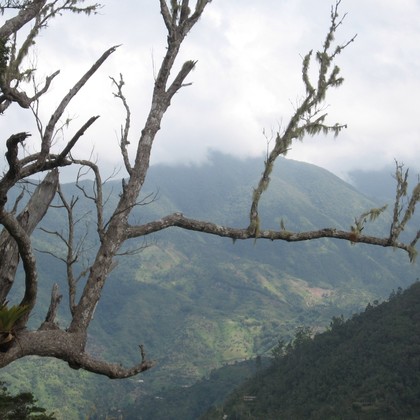
Where the bird is most at home, classified by the vegetation types of the Caribbean.



Range and movements
Resident in the northern and central Bahamas (subspecies violacea), the southern Bahamas and the central and eastern Turks and Caicos Islands (ofella), Jamaica (ruficollis) and Hispaniola (Haiti and the Dominican Republic) with its satellite islands, including Tortuga, Gonâve, Saona, Beata and Île-à-Vache (affinis and maurella). The species does not occur outside the region.
- Resident
- dark = core range, pale = thinly spread
How and when to look
In Jamaica common in the Blue Mountains and Cockpit Country; in the Dominican Republic in the forests of the Sierra de Bahoruco. In the Bahamas best looked for in dense broadleaf forest. The bird often feeds low and quietly; it is best seen at fruiting shrubs or when calling at close range.
Conservation status
Not threatened. The species is widespread and also adapts to secondary forest and degraded woodland.
Scientific name
Melopyrrha violacea | (Linnaeus, 1758)
Linnaeus described the species in 1758 as Loxia violacea; because it was later moved to another genus, the author and year stand in brackets. The genus Melopyrrha was introduced in 1853 by Bonaparte. Melopyrrha combines Greek melas 'black' with Pyrrhula, the bullfinch genus: a 'black bullfinch'. violacea is Latin for 'violet', after the purplish gloss on the black plumage. The specimen the first description was based on came from the Bahamas.