All species › Waders, gulls and terns › Gulls and terns › Great Black-backed Gull
Great Black-backed Gull | Larus marinus
Grote mantelmeeuw | Gavión atlántico
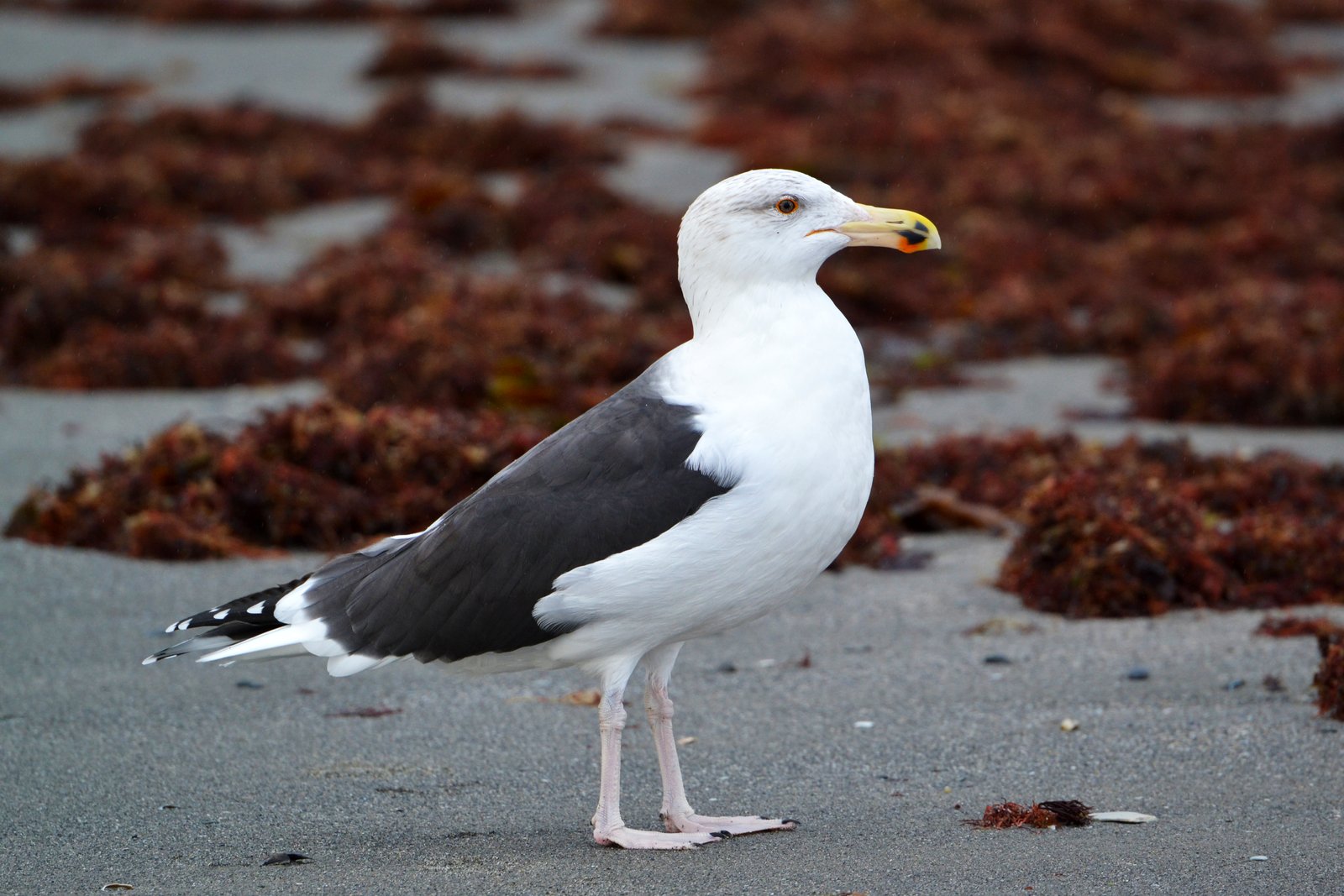
Great Black-backed Gull is the largest gull in the world and a bird of the cold coasts of the North Atlantic. In the Caribbean it is a rare winter visitor, mainly young birds reaching the northern islands. The number of records has increased in recent decades, in line with its expansion along the eastern seaboard of the United States.
Voice
A deep, hoarse owk-owk-owk and a short, low kok; clearly deeper and slower than Herring Gull.
Recording: Corentin Rivière — CC BY-NC-SA 4.0 · converted to mono · xeno-canto
Identification
64–79 cm, very large and heavy, with a broad chest, broad wings and a massive bill. Adults have a black mantle and upperwing, a white head that stays almost unstreaked in winter, large white wingtips, a yellow bill with a red spot and pale pink legs. Adult plumage is reached in the fourth year. Young birds are white with coarsely chequered blackish-brown upperparts, a pale head and underparts, a white rump and a tail with a narrow, irregular dark terminal band; the bill is black and heavy. In flight the wings look long and broad.
Confusion species
Lesser Black-backed Gull Larus fuscus is much smaller and slimmer, with a slate to blackish-grey mantle, smaller white wingtips and yellow legs; young birds are darker and browner, with dark inner primaries. Young American Herring Gulls Larus smithsonianus are smaller and more uniformly dark brown, with a brown, barred rump and a largely dark tail. Kelp Gull Larus dominicanus, recorded on Trinidad, is smaller, with shorter wings, small white wingtips and greenish-yellow legs.
Habitat
Coasts, harbours, estuaries, tidal flats and beaches; in the region mainly in harbours and at fish landing sites, often among other gulls. A powerful predator and scavenger that eats fish, crabs, birds, eggs and refuse and robs other gulls of their food.
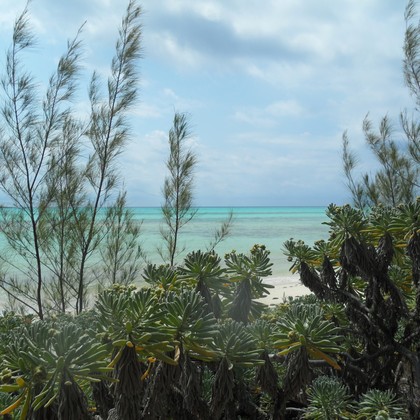
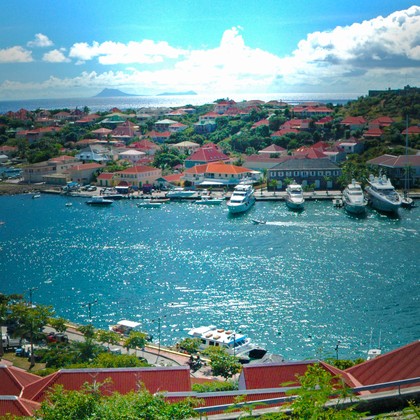
Where the bird is most at home, classified by the vegetation types of the Caribbean.

Range and movements
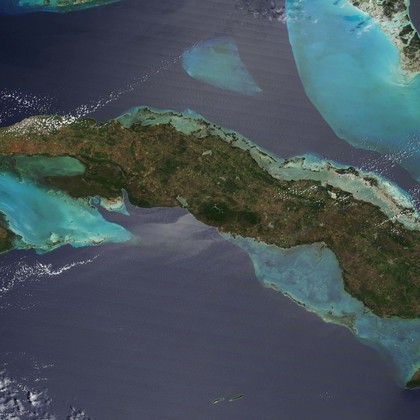
Rare in the northern half of the region: a very rare winter visitor to Cuba, where it is called gallegón, a rare winter visitor to the Bahamas and a few records from Puerto Rico, including San Juan harbour; also recorded on Trinidad and Tobago. Few or no records elsewhere. Outside the region it breeds on the coasts of north-eastern North America, Greenland, Iceland and north-western Europe and winters south to Florida and Portugal.
- Resident
- Winter visitor (c. Apr–Sep)
- dark = core range, pale = thinly spread
How and when to look
Records usually concern a single young bird staying for weeks in a harbour or at a fish landing site. Large, pale young gulls among Herring and Ring-billed Gulls are worth checking; look at size, the heavy black bill and the white rump.
Conservation status
Not threatened. After persecution in the nineteenth century the species increased strongly and expanded its breeding range, but numbers have recently declined again in parts of Europe and North America.
Scientific name
Larus marinus | Linnaeus, 1758
Linnaeus described the species in 1758 and placed it straight away in the genus where it still stands. He introduced the genus Larus in that same work. Larus is Latin, from Ancient Greek laros, and appears to have referred to a gull or another large seabird. marinus is Latin for 'marine', the whole name meaning 'sea gull'. The specimen the first description was based on came from Gotland, Sweden.