All species › Passerines › Tyrant flycatchers › Giant Kingbird
Giant Kingbird | Tyrannus cubensis
Cubaanse koningstiran | Pitirre real
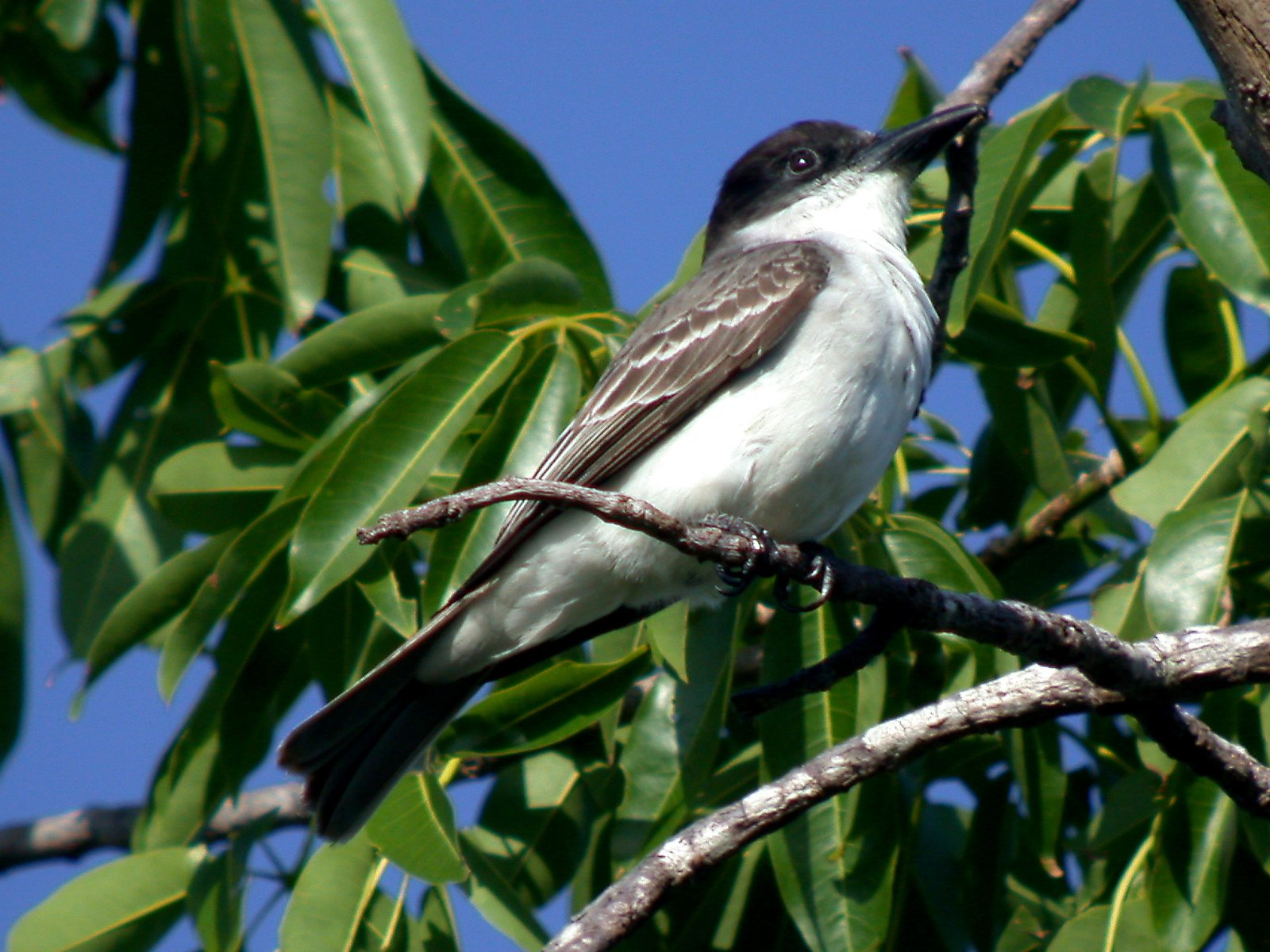
The Giant Kingbird is the largest kingbird and one of Cuba's rarest birds. It still occurs scattered across the island in small, isolated populations. It formerly also bred on Great Inagua and in the Caicos Islands, where the last record dates from 1891, and fossil remains show that it once lived in the northern Bahamas as well.
Voice
A loud, burry chatter, rendered tooe-tooe-tooee-tooee-tooee, lower and rougher than the call of Grey Kingbird. Pairs sometimes call in duet.
Recording: Johan DM — CC BY-NC-SA 4.0 · converted to mono · xeno-canto
Identification
23–26 cm, bulky, with a large head and a massive black bill with an arched culmen. The head is blackish with white cheeks; an orange crown patch is usually concealed. Upperparts mid to sooty grey, the wing coverts edged white, forming two wing bars. The tail is blackish and slightly notched, with narrow white tips in fresh plumage. Underparts white, sometimes with a grey wash on the breast. Legs blackish. The sexes are alike.
Confusion species
Grey Kingbird Tyrannus dominicensis is smaller and paler grey above, with a clear black eye mask, a smaller bill and a more deeply notched tail. Loggerhead Kingbird Tyrannus caudifasciatus is slightly smaller and more olive-brown above, with a dark cap lacking white cheeks and usually a pale tail band. The huge bill and the white cheeks below the black cap are the best features of Giant Kingbird.
Habitat
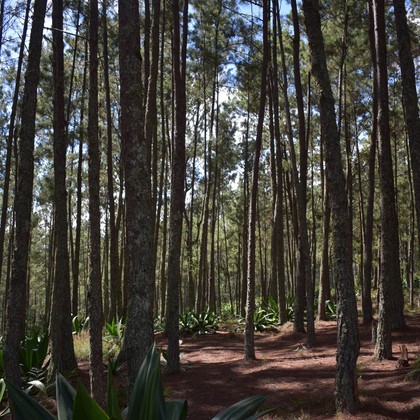
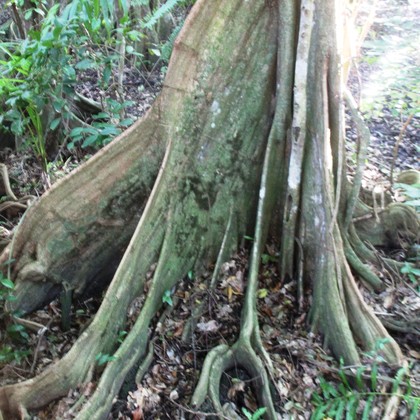
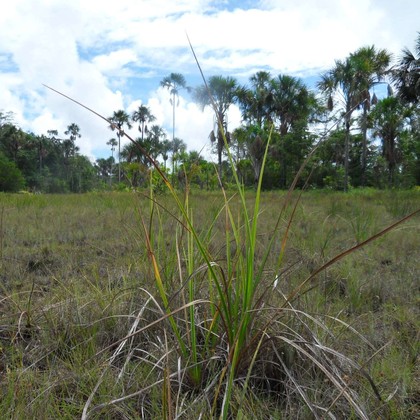
Tall lowland forest, forest edges along rivers and swamps, pine and mixed woodland, and open country or savanna with scattered tall trees, including palm groves near farmland. It appears to need trees at least about thirteen metres tall and ranges from sea level to around 1,100 m. It hunts large insects, lizards and even small birds from a high perch, and also takes fruit.
Where the bird is most at home, classified by the vegetation types of the Caribbean.



Range and movements
Endemic to Cuba, with a highly fragmented distribution: locally along the north-western and south-eastern coasts and at a few inland sites; it has also been reported from the Isla de la Juventud. Extinct on Great Inagua (Bahamas) and in the Caicos Islands. Outside Cuba known only as a vagrant, for instance to Mexico.
- Resident
- dark = core range, pale = thinly spread
How and when to look
Known sites lie in the east of the island and in the interior of Camagüey, where local guides know territories. The bird often perches high and in the open on a dead branch in the crown of a large tree; the heavy bill and loud, harsh calls help separate it from the common Grey Kingbird.
Conservation status
Endangered. The population is estimated at 250 to 1,000 mature individuals, severely fragmented and probably declining. The main causes are the loss of forest and of large nest trees to logging and conversion to farmland.
Scientific name
Tyrannus cubensis | Richmond, 1898
Richmond described the species in 1898 and placed it straight away in the genus where it still stands. The genus Tyrannus was introduced in 1799 by De Lacépède. Tyrannus is Latin (from Greek turannos) for 'tyrant, despot', after the aggressive way these birds drive off even raptors. cubensis means 'of Cuba', after its country of origin. The specimen the first description was based on came from Cuba.