All species › Waterfowl › Ducks and geese › Eurasian Wigeon
Eurasian Wigeon | Mareca penelope
Smient | Silbón europeo
The Eurasian Wigeon is a Eurasian duck and in the Caribbean a vagrant, not a native species. Birds turning up here probably come with flocks of American Wigeons from North America, where the species winters in small numbers on both coasts, or have crossed the ocean. In Cuba it is called pato eurasiático.
Voice
The male gives a piercing two-note whistle, whee-oo; the female a hoarse, growling krr. A Eurasian Wigeon's whistle stands out among the three-note whistles of American Wigeons.
Recording: Stanislas Wroza — CC BY-NC-SA 4.0 · shortened to the first 60 s, mono · xeno-canto
Identification
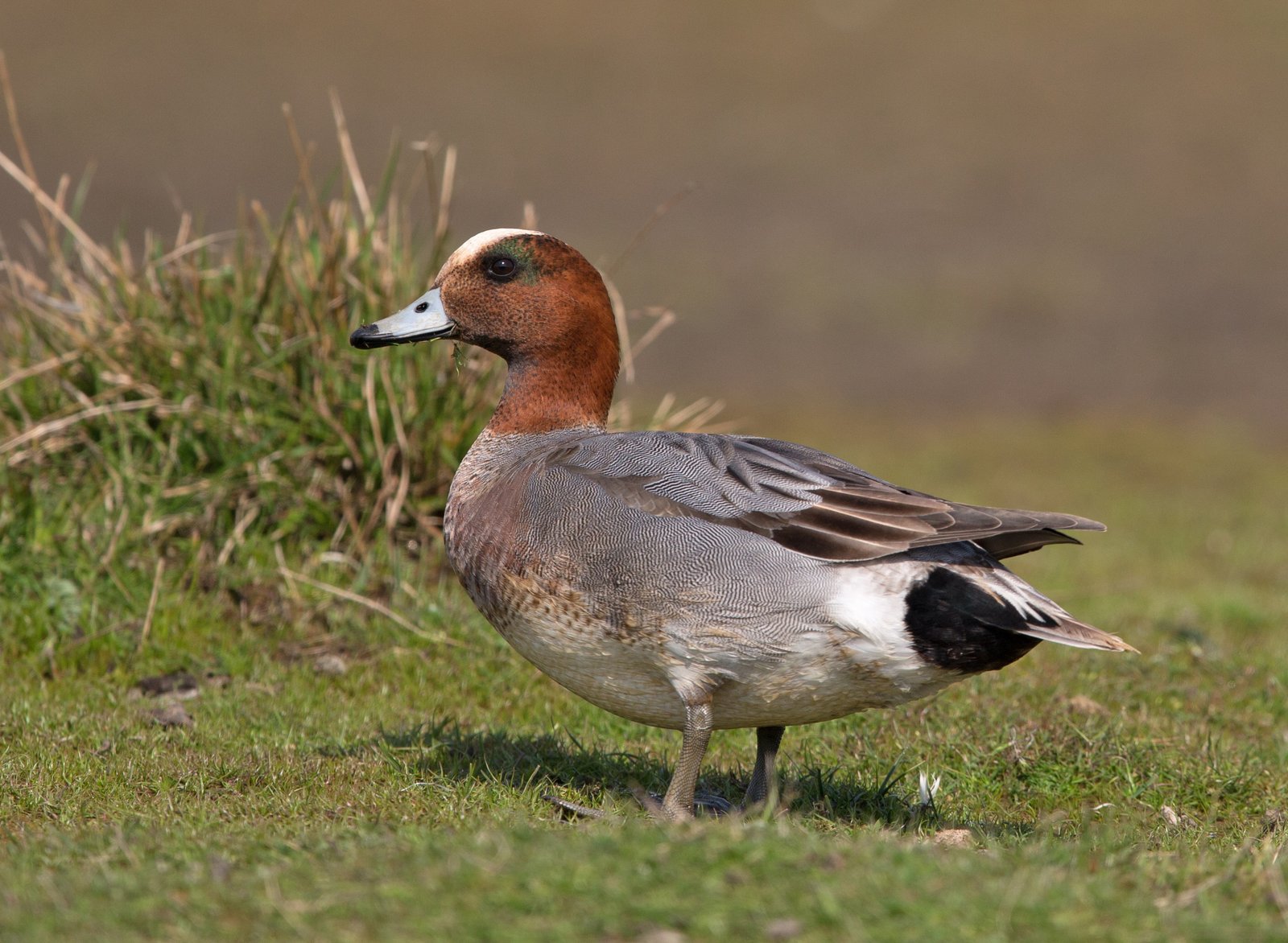
42–52 cm, compact, with a round head, a short blue-grey bill with a black tip and a pointed tail. The male has a chestnut head with a creamy-yellow blaze from bill to crown, a pinkish breast, a finely vermiculated grey body and a black rear end with a white patch in front of it. The female is rufous-brown with a plain head. In flight the male shows a large white patch on the forewing; the axillaries are grey and speckled in both sexes.
Confusion species
American Wigeon Mareca americana is the only species it can be confused with, and the one it usually turns up among. The male of that species has a white crown and a green band behind the eye on a grey head, and cinnamon flanks. Females are more similar: Eurasian has a warmer brown head that does not contrast with the breast, American a greyer head. The most reliable feature in flight is the axillaries: grey in Eurasian, bright white in American. Hybrids between the two occur.
Habitat
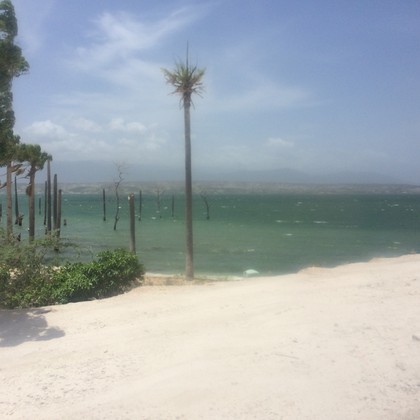
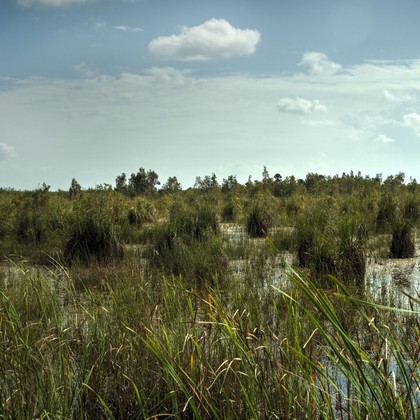
The same places as American Wigeon: shallow freshwater lakes, ponds, marshes and brackish lagoons, also grassland and lawns by water, where wigeons graze.
Where the bird is most at home, classified by the vegetation types of the Caribbean.

Range and movements
A very rare, casual visitor; there are records from Cuba, the Bahamas, Puerto Rico, Guadeloupe, Martinique, Barbados and Tobago, but the number of occurrences in the region is small. Breeds in northern Eurasia and winters in Europe, North Africa and southern Asia; in North America a scarce but regular winter visitor along both coasts.
How and when to look
Flocks of American Wigeons are the place to look for one; a male with a rufous head is what stands out first. Females and young birds can only be identified with certainty with good views of the head and axillaries.
Conservation status
Least Concern globally. In the Caribbean a vagrant with no regular presence; there is no evidence of any trend.
Scientific name
Mareca penelope | (Linnaeus, 1758)
Linnaeus described the species in 1758 as Anas Penelope; because it was later moved to another genus, the author and year stand in brackets. The genus Mareca was introduced in 1824 by Stephens. Mareca comes from the Portuguese marreco, a word for a small duck. penelope refers to the duck said in Greek tradition to have saved Penelope when she was thrown into the sea; her name is from pene 'thread' and ops 'appearance', after the weaving ruse with which she kept her suitors at bay. The specimen the first description was based on came from Sweden.