All species › Passerines › New World sparrows › Clay-colored Sparrow
Clay-colored Sparrow | Spizella pallida
Bleke gors | Chimbito pálido
The Clay-colored Sparrow is a small, buff-brown sparrow of the shrubby prairies of central North America that winters in Texas and Mexico. In the Caribbean it is a vagrant; only in the Bahamas is it seen in small numbers in most winters. It is closely related to Chipping Sparrow and closely resembles that species in winter plumage.
Voice
The song consists of two to four flat, insect-like buzzes, bzzz bzzz bzzz, but is rarely heard in winter. The call is a soft tsip.
Recording: Stanislas Wroza — CC BY-NC-SA 4.0 · shortened to the first 60 s, mono · xeno-canto
Identification
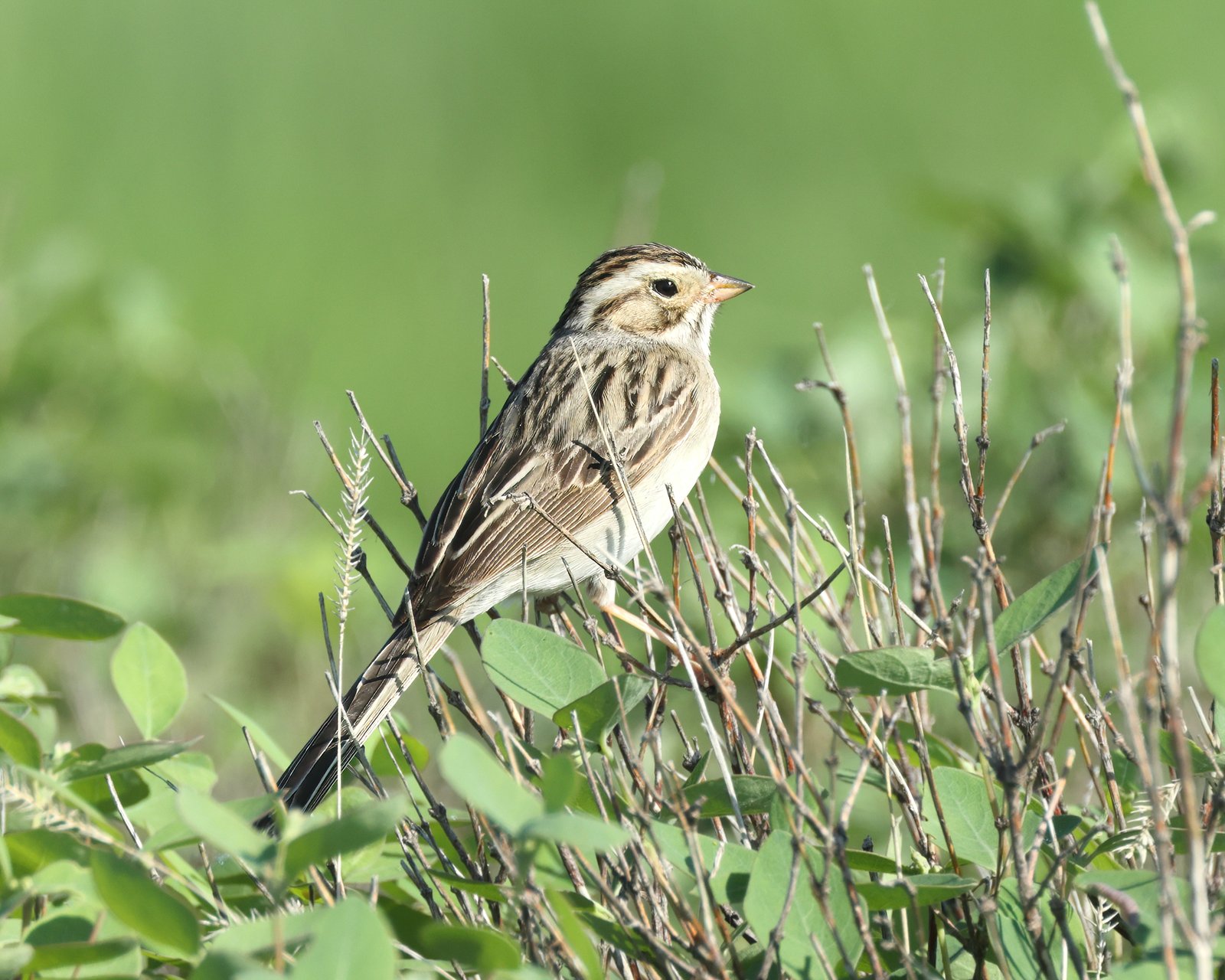
13–15 cm, slender and fairly long-tailed, with a small pink bill with a dark tip. The crown is brown with black streaks and a pale central stripe. A broad whitish supercilium separates the crown from a plain brown ear patch, outlined above and below by dark lines; below that are a pale moustachial stripe and a fine dark malar line. The lores are pale. The nape is grey, forming a contrasting collar. The upperparts are buff-brown with dark streaks, the rump buffy-brown. The underparts are unstreaked, with a buff breast and white belly. The wing shows two pale wing-bars. The sexes are alike; juveniles have fine streaks on the breast.
Confusion species
Chipping Sparrow Spizella passerina in winter plumage has dark lores, so the eye-stripe continues to the bill, a less sharply outlined cheek, a less contrasting nape and a grey rump. Savannah Sparrow Passerculus sandwichensis is streaked on the breast and flanks and shorter-tailed. Grasshopper Sparrow Ammodramus savannarum has a flat head, a larger bill and a short, pointed tail.
Habitat
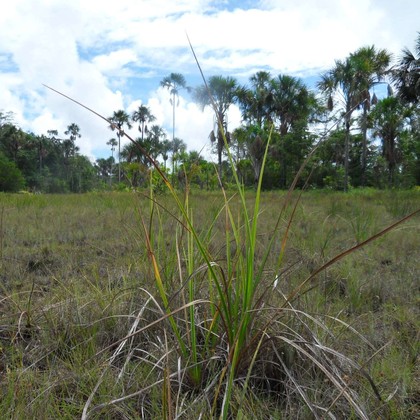
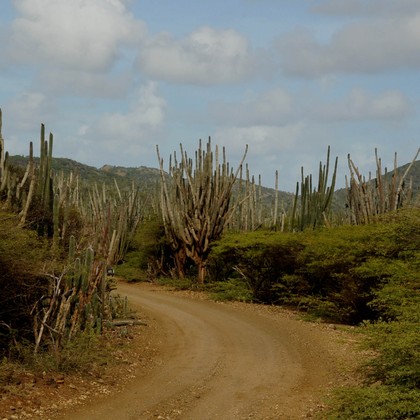
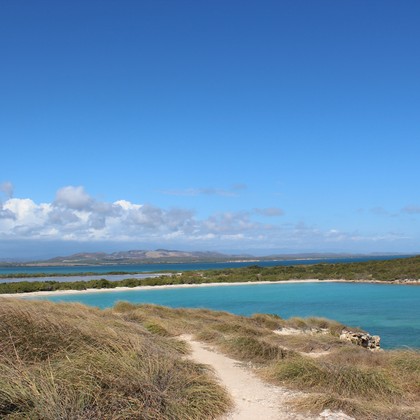
Dry, open country with bushes: shrubby grassland, thorn and coastal scrub, roadsides and pastures with hedges. It feeds on seeds on the ground and in low vegetation, often with other sparrows.
Where the bird is most at home, classified by the vegetation types of the Caribbean.

Range and movements
In the Bahamas a rare but fairly regular winter visitor, with a few sightings each year, including on Andros; elsewhere in the region a vagrant, with records from Cuba. It breeds in southern Canada and the northern and central United States and winters in Texas and Mexico.
How and when to look
Shrubby rough ground and roadsides in the Bahamas between October and April, often with other sparrows or grassquits. For a small, unstreaked sparrow with pale lores, an outlined ear patch and a grey nape, Clay-colored Sparrow is the first candidate.
Conservation status
Not globally threatened. In the Caribbean a scarce visitor with no regular presence.
Scientific name
Spizella pallida | (Swainson, 1832)
Swainson described the species in 1832 as Emberiza pallida; because it was later moved to another genus, the author and year stand in brackets. The genus Spizella was introduced in 1831 by Bonaparte. Spizella is a diminutive of the Greek spiza 'finch': 'little finch'. pallida is Latin for 'pale', after the pale, sandy plumage. The specimen the first description was based on came from Carlton House, Saskatchewan (Canada).