All species › Passerines › New World sparrows › Chipping Sparrow
Chipping Sparrow | Spizella passerina
Musgors | Chimbito común
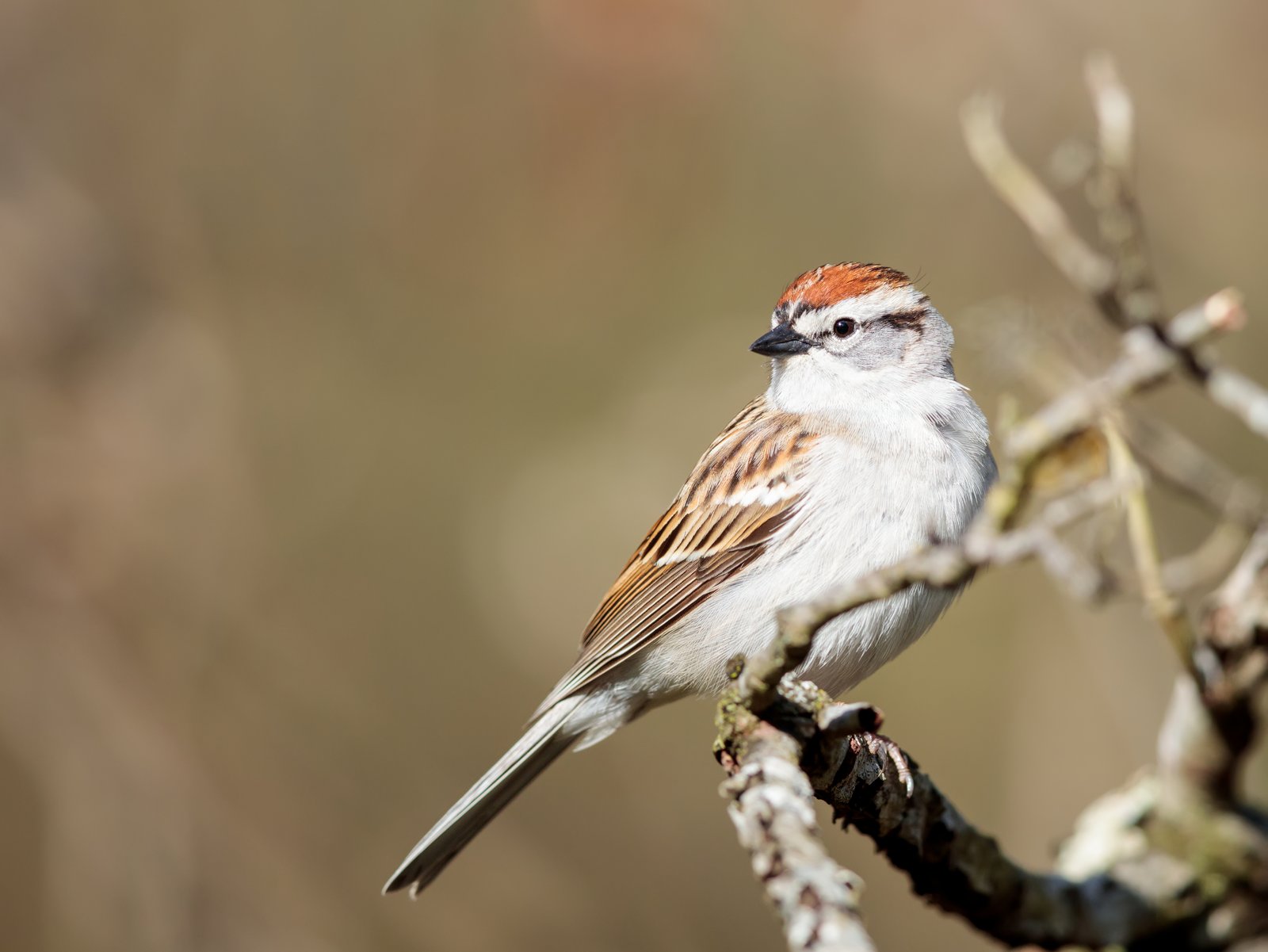
The Chipping Sparrow is one of the commonest sparrows in North America, a slim little sparrow of open woodland, parks and gardens. Northern birds winter in the southern United States and Mexico; in the Caribbean it occurs only as a rare winter visitor in the north, and otherwise as a vagrant. In winter it wears a plain plumage, which invites confusion with Clay-colored Sparrow.
Voice
The song, rarely heard in winter, is a dry, mechanical trill on a single pitch. The call is a short, sharp chip; in flight a thin tseet.
Recording: Richard E. Webster — CC BY-NC-SA 4.0 · converted to mono · xeno-canto
Identification
12–15 cm, slender, with a fairly long notched tail and a small pointed bill. In breeding plumage, which may already appear in spring, it has a bright rufous crown, a white supercilium, a black eye-stripe running through to the bill, and plain grey cheeks, nape and underparts. In winter plumage the crown is brown with fine streaks and often a hint of rufous, the supercilium greyish-buff and the eye-stripe dark; even then the dark line continues in front of the eye to the bill. The rump is grey and the underparts are unstreaked grey-buff. The wing shows two pale wing-bars. Juveniles have a streaked breast.
Confusion species
Clay-colored Sparrow Spizella pallida has pale lores, so the eye-stripe starts only behind the eye, an outlined brown ear patch, a grey nape that contrasts with the brown crown, and a buffy-brown rather than grey rump. Savannah Sparrow Passerculus sandwichensis and Grasshopper Sparrow Ammodramus savannarum are shorter-tailed with a different head pattern; Savannah Sparrow is streaked on the breast and flanks. House Sparrow Passer domesticus is bulkier, with a thicker bill.
Habitat
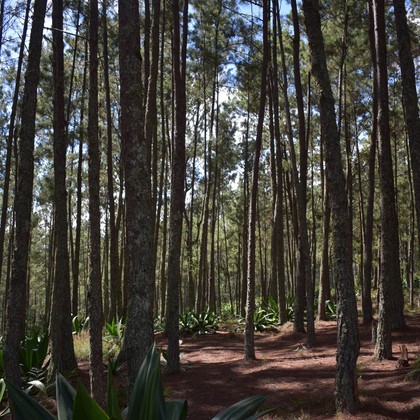
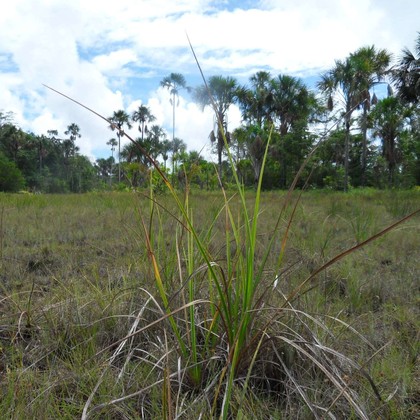
Open pine woodland with a grassy understorey, parks, golf courses, gardens and grassland with trees or bushes nearby. It feeds on the ground on seeds, often in small flocks or with other sparrows, and flies up into a tree or bush when disturbed.
Where the bird is most at home, classified by the vegetation types of the Caribbean.


Range and movements
A rare winter visitor to the northern Bahamas, for example in the pine forests of Grand Bahama, Abaco and Andros, and to Cuba; there are only isolated records from other islands. It breeds from Alaska and Canada into Central America; northern birds winter in the southern United States and Mexico, while populations in Mexico and Central America are resident.
- Winter visitor (c. Apr–Sep)
- Passage (Mar–Apr, Oct–Nov)
- dark = core range, pale = thinly spread
How and when to look
Small groups of sparrows on lawns and grassy spots in or near pine forest in the northern Bahamas are the best place to search, from October to April. In a winter-plumaged bird, the lores and the rump colour decide between Chipping and Clay-colored Sparrow.
Conservation status
Not threatened; a very numerous species in North America. In the Caribbean scarce and irregular, with no known trend.
Scientific name
Spizella passerina | (Bechstein, 1798)
Bechstein described the species in 1798 as Fringilla passerina; because it was later moved to another genus, the author and year stand in brackets. The genus Spizella was introduced in 1831 by Bonaparte. Spizella is a diminutive of the Greek spiza 'finch': 'little finch'. passerina is Latin for 'sparrow-like', from passer 'sparrow'. The specimen the first description was based on came from Quebec City, Canada.