All species › Passerines › Swallows and martins › Blue-and-white Swallow
Blue-and-white Swallow | Pygochelidon cyanoleuca
Blauwwitte zwaluw | Golondrina azul y blanca
The Blue-and-white Swallow is one of the commonest swallows of South America, from the lowlands to high in the Andes. In the Caribbean it is a rare visitor: birds of the southern form Pygochelidon cyanoleuca patagonica move to northern South America in the austral winter and reach Trinidad in the process. The northern nominate form may once have bred on Trinidad.
Voice
A buzzing dzzzhreeee and soft twittering in flight.
Recording: Mauricio Cuéllar Ramírez — CC BY-NC-SA 4.0 · converted to mono · xeno-canto
Identification
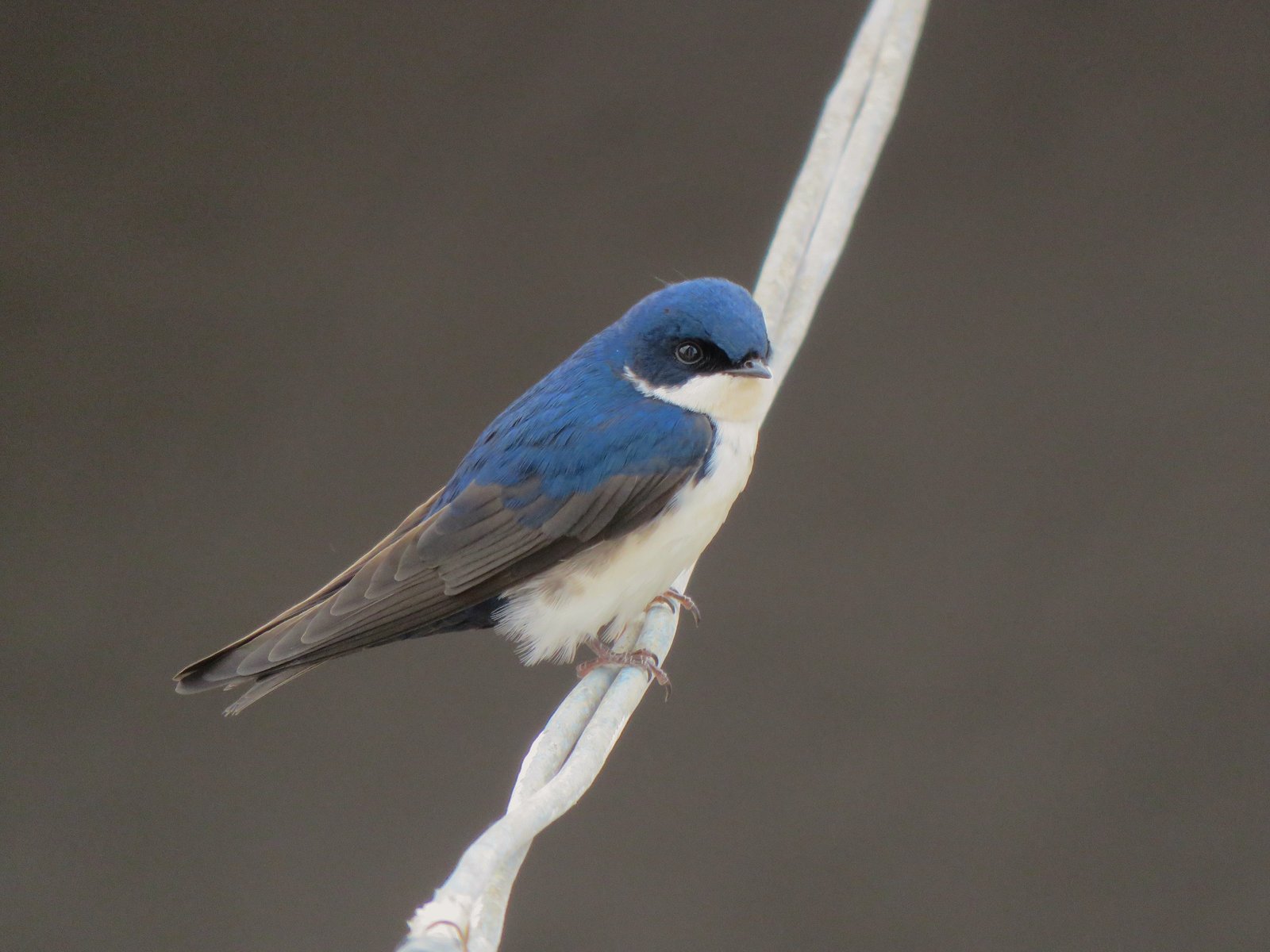
11–12 cm, small and slim, with a forked tail; the southern form is slightly larger, up to about 13.5 cm. The upperparts are dark steel-blue, the underparts white. The underwing is blackish and the undertail coverts are black, so the tail looks wholly dark from below; in the southern form the underwings are paler and the bases of the undertail coverts are white. The sexes are alike. Juveniles are brownish above with an ochre wash below.
Confusion species
White-winged Swallow Tachycineta albiventer, common on Trinidad, has a white rump and a large white wing patch. Tree Swallow Tachycineta bicolor is larger, with white undertail coverts, and occurs mainly in the north of the region. Grey-breasted Martin Progne chalybea and Caribbean Martin Progne dominicensis are much larger, with broader wings.
Habitat
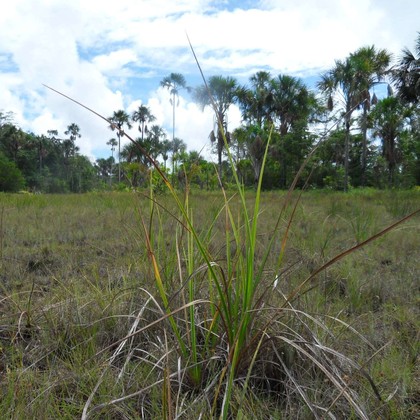
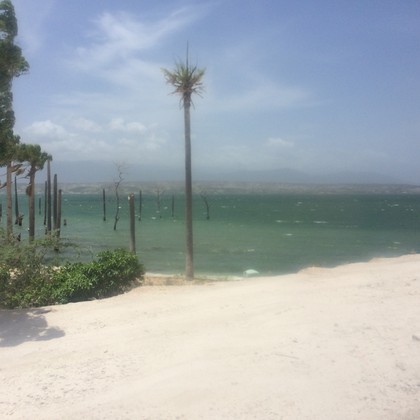
Open country, pastures, riverbanks, forest edges and built-up areas; in South America often in towns and villages. It hunts small flying insects low and with agile flight. It breeds in cavities in banks, walls and buildings.
Where the bird is most at home, classified by the vegetation types of the Caribbean.


Range and movements
A rare visitor to Trinidad during the austral winter; there are also a few records from Bonaire. Not recorded elsewhere in the region. Breeds from Nicaragua through much of South America to Argentina, except deserts and the Amazon basin; southern birds move north in the austral winter.
- Resident
- Summer visitor (c. Oct–Mar)
- Winter visitor (c. Apr–Sep)
- dark = core range, pale = thinly spread
How and when to look
On Trinidad during the austral winter, check swallow flocks over open ground and water for a small blue-black swallow with white underparts, no white rump and a dark underside to the tail.
Conservation status
Least Concern. A very common and widespread species that does well in man-made landscapes.
Scientific name
Pygochelidon cyanoleuca | (Vieillot, 1817) (GBIF: Notiochelidon cyanoleuca)
Vieillot described the species in 1817 as Hirundo cyanoleuca; because it was later moved to another genus, the author and year stand in brackets. The genus Pygochelidon was introduced in 1865 by Baird. Pygochelidon is Greek, from pugē 'rump' and khelidōn 'swallow': 'rump-swallow'. cyanoleuca is Greek, from kuanos 'dark blue' and leukos 'white', after the blue upperparts and white underparts. The specimen the first description was based on came from Paraguay.