All species › Waders, gulls and terns › Gulls and terns › Black Noddy
Black Noddy | Anous minutus
Witkapnoddy | Tiñosa negra
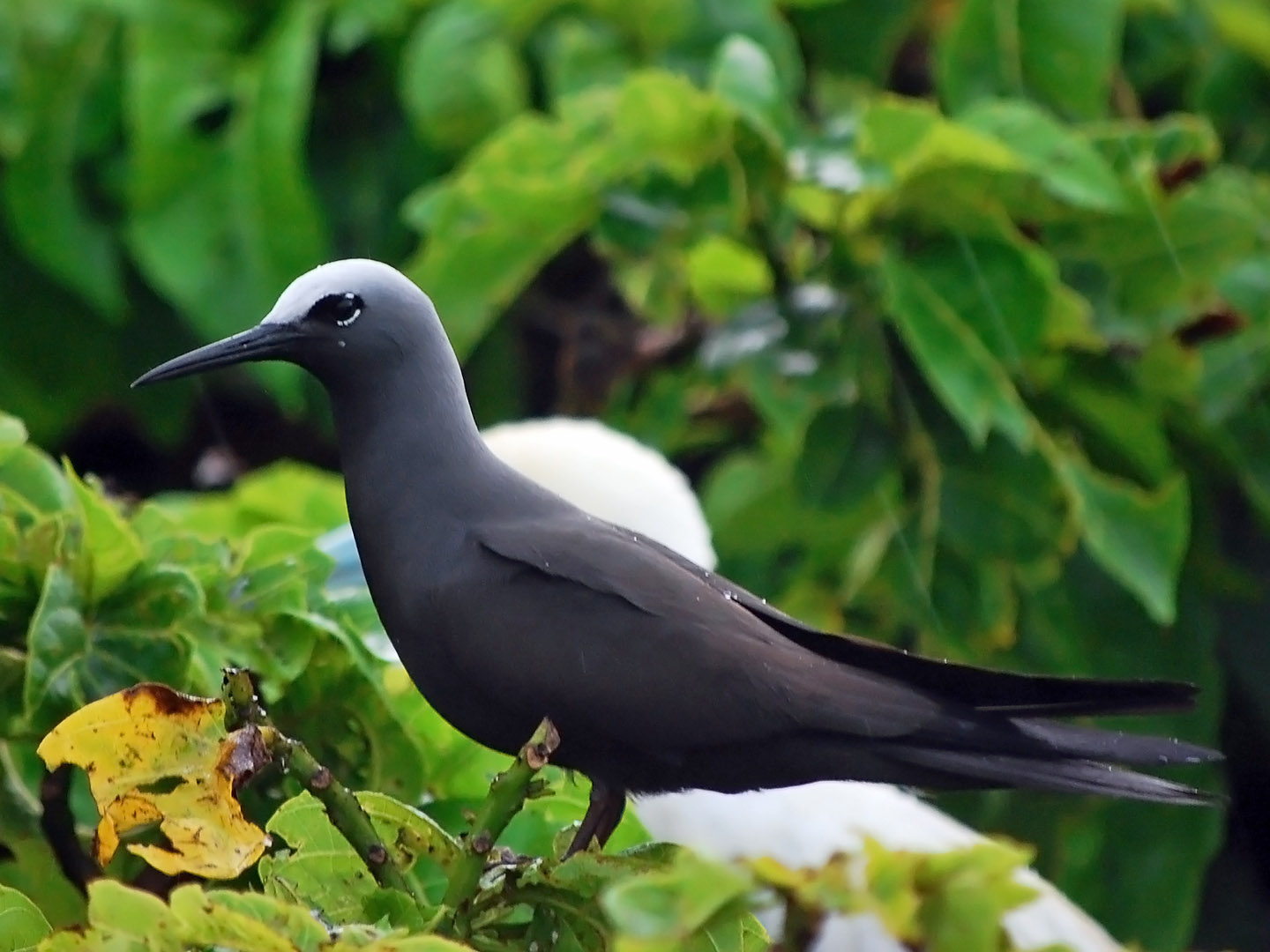
The Black Noddy is a small, almost black noddy with a bright white cap. The Caribbean subspecies A. m. americanus breeds on islets off Central America and Venezuela, outside the region of this guide. On the islands themselves it is a rare visitor; many reports are uncertain because of its similarity to the far commoner Brown Noddy.
Voice
A dry, rattling krrr and chattering calls, higher and less raw than those of Brown Noddy; mostly silent away from colonies.
Recording: Sreekar — CC BY-NC-SA 4.0 · converted to mono · xeno-canto
Identification
35–37 cm, slender, sooty black with a brownish tinge, and a bright white cap that contrasts sharply with the dark lores and nape. A narrow white crescent below the eye. The bill is black, long and thin, longer than the head. The tail is wedge-shaped and relatively short, with a greyish tone. The sexes are alike. Juveniles have an even more sharply defined white cap and pale fringes above.
Confusion species
Brown Noddy Anous stolidus is larger and warmer brown, with a shorter, thicker bill, a less sharply defined, greyish crown, a paler underwing and a longer tail. Among Brown Noddies, a Black Noddy shows its smaller size, quicker wingbeats and white cap. Juvenile Sooty Terns Onychoprion fuscatus have white spots above and a forked tail.
Habitat
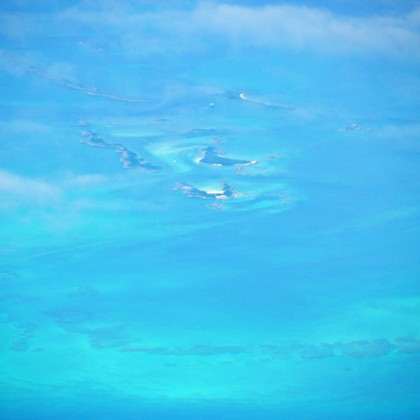
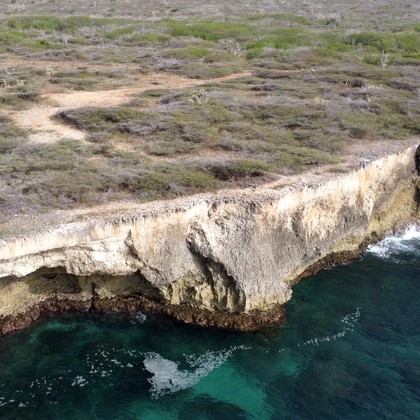
Open sea and coastal waters, often with Brown Noddies and terns over shoals of fish. In its breeding range it nests in shrubs and trees or on rock ledges of small islands.
Where the bird is most at home, classified by the vegetation types of the Caribbean.

Range and movements
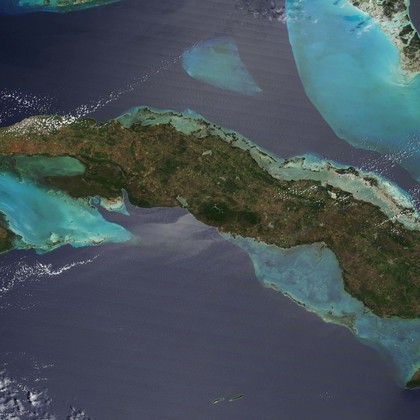
Rarely, and partly uncertainly, reported around Aruba, Bonaire and Curaçao, around St Vincent and the Grenadines and off Puerto Rico, Guadeloupe, the Bahamas and Trinidad. Beyond the region the subspecies americanus breeds on islets in the western and southern Caribbean Sea; other subspecies breed in the tropical Atlantic, including St Helena, and widely in the tropical Pacific.
- Summer visitor (c. Oct–Mar)
- Passage (Mar–Apr, Oct–Nov)
- dark = core range, pale = thinly spread
How and when to look
Every noddy in flocks over open water is worth checking, especially around the ABC Islands. Size, bill length and the sharply defined white cap need to be judged together; a photograph is all but essential for a record.
Conservation status
Not threatened. The world population is large. On breeding islands introduced rats and loss of nesting trees are the main threats. Within the region of this guide it is a rare visitor with no regular presence.
Scientific name
Anous minutus | Boie, 1844
Boie described the species in 1844 and placed it straight away in the genus where it still stands. The genus Anous was introduced in 1826 by Stephens. Anous is Greek for 'stupid, silly' — for the tameness with which noddies allowed sailors to approach and catch them. minutus is Latin for 'small', as it is smaller than the Brown Noddy (Anous stolidus). The specimen the first description was based on came from Raine Island, Australia.