All species › Waders, gulls and terns › Gulls and terns › Black-headed Gull
Black-headed Gull | Chroicocephalus ridibundus
Kokmeeuw | Gaviota reidora
The Black-headed Gull is the most familiar small gull of Europe and Asia. Since the last century it has also bred in small numbers in eastern Canada, and some of the birds that cross the Atlantic reach the Caribbean. There it is a rare but almost annual visitor, most often in the east of the island chain.
Voice
A harsh, grating kree-ar and short kek calls; in the region it usually calls little, as birds are often alone.
Recording: Grzegorz Lorek — CC BY-NC-SA 4.0 · converted to mono · xeno-canto
Identification
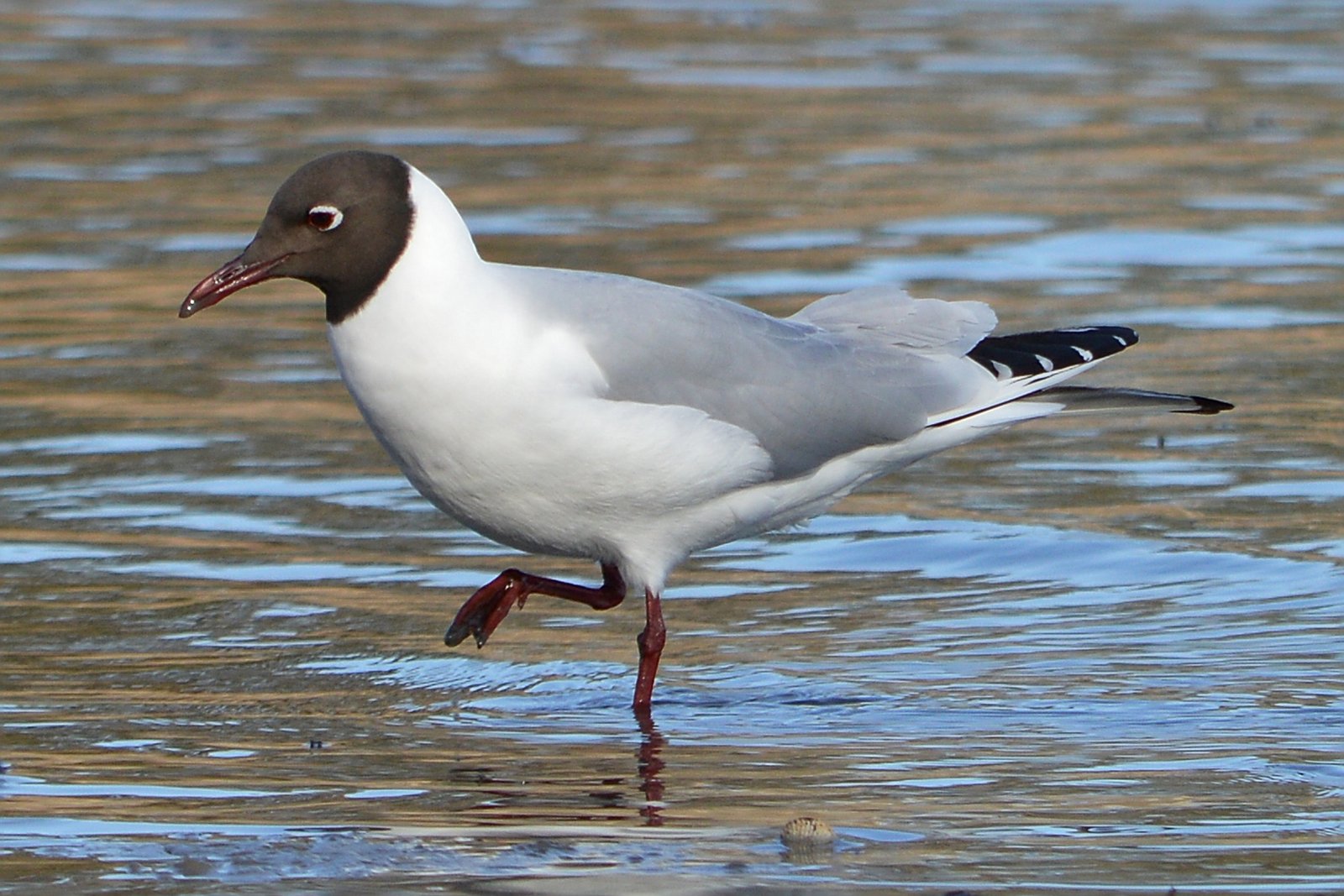
34–39 cm, with a red to dark red bill and red legs. Adults have a pale grey mantle and a white wedge on the leading edge of the outer primaries; from below the middle primaries are dark grey, so the white leading edge stands out sharply. In breeding plumage the head is chocolate-brown, not black, with a narrow white eye-ring; in winter the head is white with a dark ear spot and the bill tip is dark. First-year birds have an orangey, dark-tipped bill, a brown band across the wing coverts, a dark trailing edge to the wing and a black tail band.
Confusion species
Bonaparte's Gull Chroicocephalus philadelphia is smaller, with a fine black bill and pale, translucent primaries from below. Laughing Gull Leucophaeus atricilla and Franklin's Gull Leucophaeus pipixcan are darker grey, with black wing tips and no white leading edge. Ring-billed Gull Larus delawarensis is larger, with a yellow bill bearing a black ring.
Habitat
Harbours, sheltered bays, lagoons, salt pans, beaches and freshwater pools near the coast. It feeds while walking, swimming and flying, and often joins flocks of Laughing Gulls or terns.
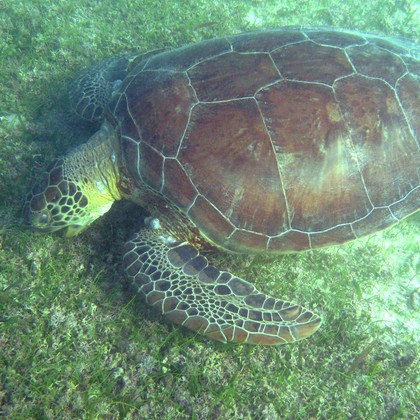
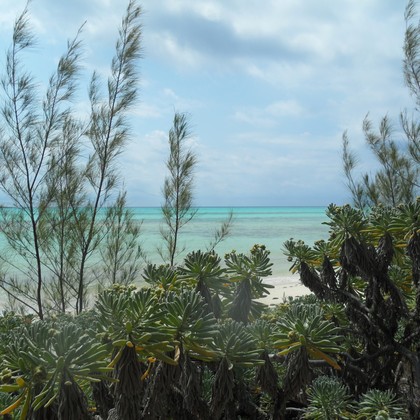
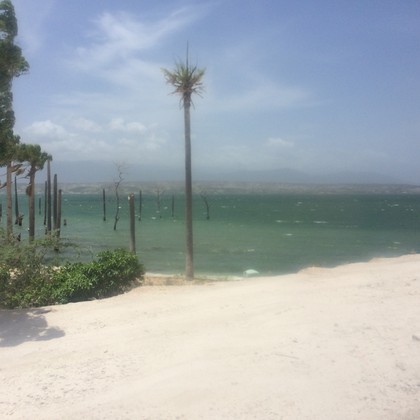
Where the bird is most at home, classified by the vegetation types of the Caribbean.



Range and movements
Rare winter visitor, most regular on Barbados, Puerto Rico, Guadeloupe, Martinique and Trinidad and Tobago, with scattered records from the Bahamas, Cuba, Hispaniola, the Virgin Islands, other islands of the Lesser Antilles and the ABC Islands. Beyond the region it breeds from Iceland and Europe to eastern Asia, with a small population in eastern Canada, and winters from western Europe and North Africa to southern Asia and in small numbers along the Atlantic coast of North America.
How and when to look
Scanning flocks of Laughing Gulls in harbours and bays on the eastern islands gives the best chance. A paler gull with a white leading edge to the wing and a red bill stands out at once in flight.
Conservation status
Not threatened globally. In the Caribbean a rare visitor with no established population.
Scientific name
Chroicocephalus ridibundus | (Linnaeus, 1766)
Linnaeus described the species in 1766 as Larus ridibundus; because it was later moved to another genus, the author and year stand in brackets. The genus Chroicocephalus was introduced in 1836 by Eyton. Chroicocephalus combines the Ancient Greek khrōikos 'coloured' with -kephalos '-headed'. ridibundus is Latin for 'laughing', after the strident call. The specimen the first description was based on came from European seas.