All species › Tubenoses › Petrels and shearwaters › Black-capped Petrel
Black-capped Petrel | Pterodroma hasitata
Zwartkapstormvogel | Petrel antillano
The Black-capped Petrel, known as diablotin in French and Spanish, is the only Pterodroma species still known for certain to breed in the Caribbean. It nests in burrows on steep mountain slopes, visited only at night, and feeds on the open sea, especially in the Gulf Stream off the south-eastern United States. With a few thousand birds it is among the rarest seabirds of the Atlantic.
Voice
Usually silent at sea; when competing for food a series of yapping, puppy-like notes. Over the breeding sites at night, long, drawn-out, harsh, crow-like calls, rendered as aaa-aw, eek, and a softer, swelling oooow-uk.
No recording with a suitable Creative Commons licence is available for this species yet.
Identification
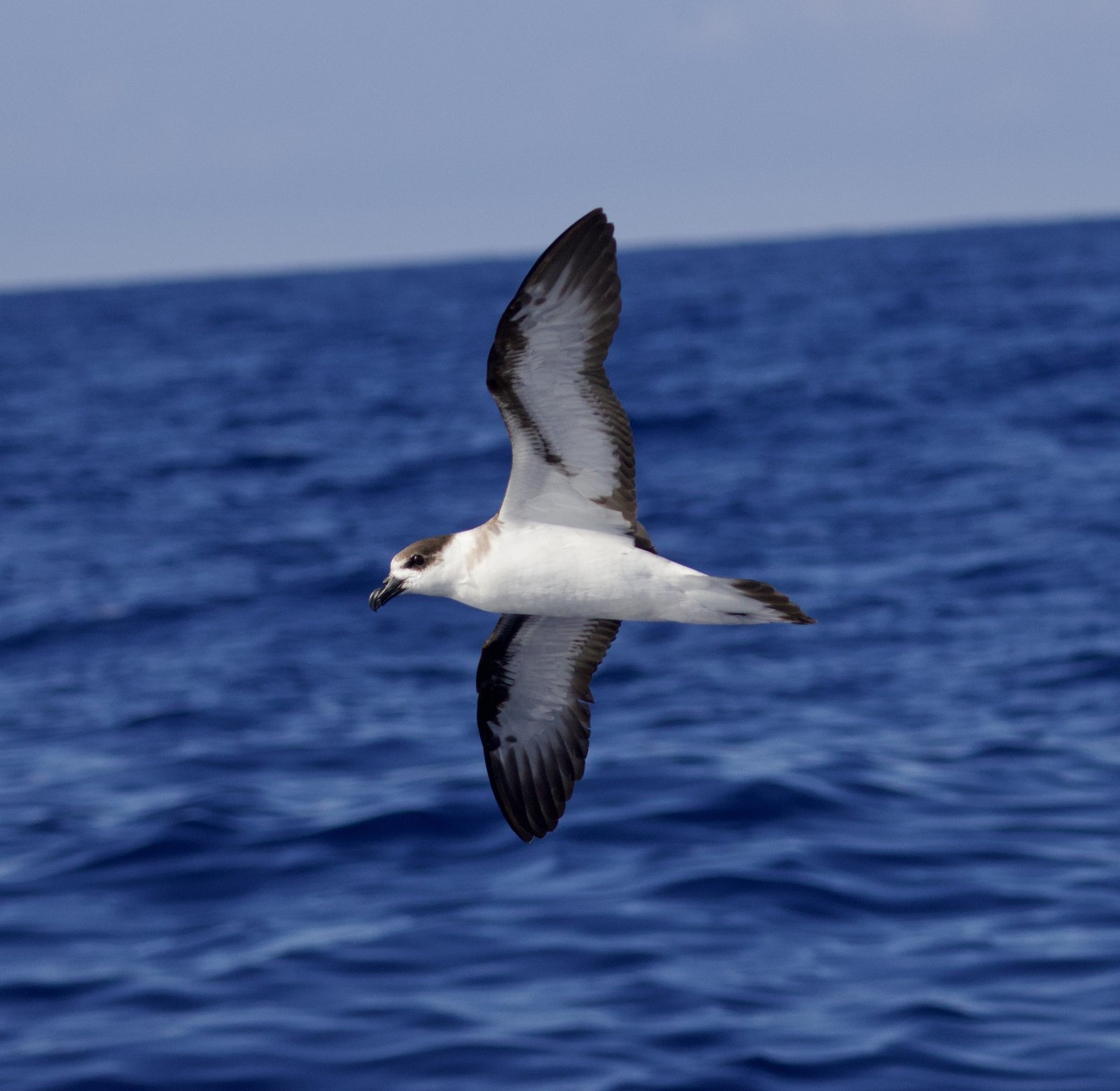
35–40 cm. A medium-sized, powerfully built petrel with long wings angled at the carpal and a short, thick, black bill. Upperparts dark grey-brown with a blackish cap, which in pale birds contrasts with a white forehead, a white hindneck and a broad white rump. Underparts white. The underwing is white, with a dark trailing edge and a dark bar running diagonally across the wing from the carpal. In the dark form the cap and nape are more extensively dark, with less white on hindneck and rump. It flies in high, swinging arcs with few wingbeats.
Confusion species
Great Shearwater Ardenna gravis also has a dark cap and a white band on the rump, but is larger, with a slender bill, a dark belly patch, a narrow white rump band and a flatter flight. Bermuda Petrel Pterodroma cahow, not documented from the region, has little or no white on hindneck and rump. Pale Trindade Petrels Pterodroma arminjoniana have a dark head, breast band and rump.
Habitat
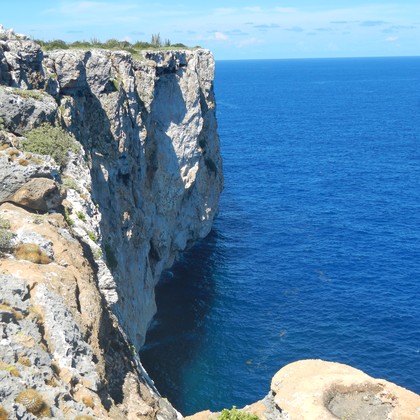
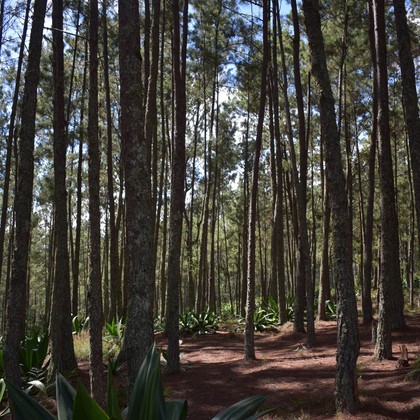
At sea over deep water and along the edges of warm currents, especially the Gulf Stream; in the region also in the channels around Hispaniola. It eats squid, fish and crustaceans, taken at the surface mainly at dusk and at night. It breeds in burrows and rock crevices on steep forested slopes and cliffs high in the mountains, in pine forest and humid montane forest.
Where the bird is most at home, classified by the vegetation types of the Caribbean.


Range and movements
Breeds on Hispaniola: in Haiti in the Massif de la Selle and Massif de la Hotte, in the Dominican Republic in the Sierra de Bahoruco and Valle Nuevo. Breeding on Dominica was confirmed in 2015. In Cuba it is very rare and breeding is suspected. It formerly bred on Guadeloupe and Martinique but has disappeared there. At sea it is seen mainly around Hispaniola and in the waters between Hispaniola, Cuba and Jamaica. Beyond the region it feeds mainly in the Gulf Stream between Florida and North Carolina. The range map mainly shows records at sea.
- Resident
- dark = core range, pale = thinly spread
How and when to look
At sea best looked for on pelagic trips around Hispaniola. In the breeding season calling birds can be heard after dark over the breeding slopes in the Sierra de Bahoruco. The breeding sites are vulnerable and are best visited with local guides or conservation organisations.
Conservation status
Endangered. The world population is estimated at 2,000–4,000 birds. Deforestation, fires and farming on the breeding slopes, especially in Haiti, introduced predators, the taking of birds for food and light pollution have caused a steep decline. At sea, oil and gas extraction in the Gulf Stream is a potential risk.
Scientific name
Pterodroma hasitata | (Kuhl, 1820)
Kuhl described the species in 1820 as Procellaria hasitata; because it was later moved to another genus, the author and year stand in brackets. The genus Pterodroma was introduced in 1856 by Bonaparte. Pterodroma is Greek, from pteron 'wing' and dromos 'runner', after the fast, sweeping flight. hasitata is probably a misspelling of Latin haesitata 'hesitating', as Kuhl was unsure of the species' status. The specimen the first description was based on came from unknown (no locality given).