All species › Woodpeckers and allies › Woodpeckers › Antillean Piculet
Antillean Piculet | Nesoctites micromegas
Antillendwergspecht | Carpinterito antillano
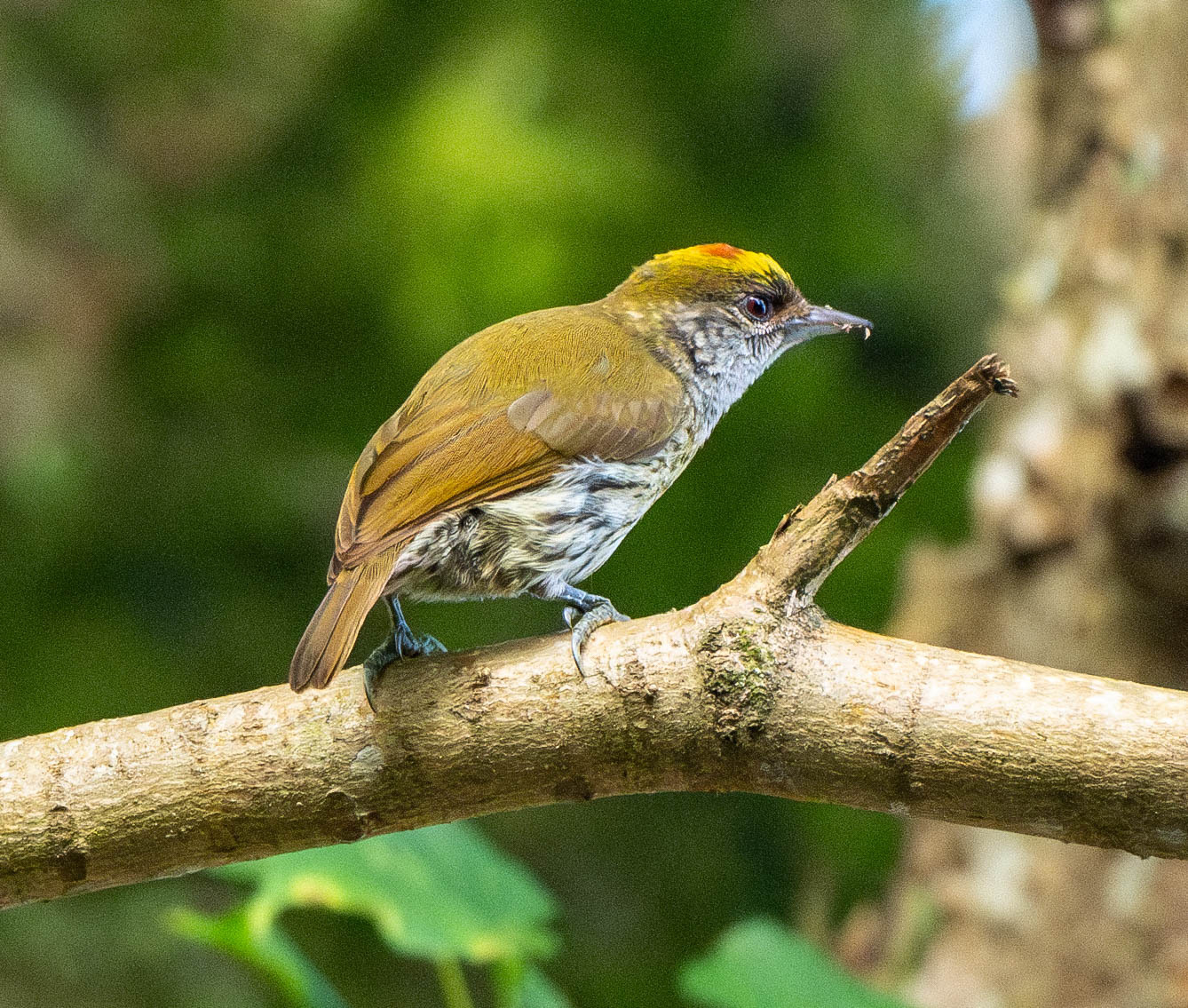
The Antillean Piculet occurs only on Hispaniola and is the only member of the genus Nesoctites, an old, distinct branch of the woodpeckers. It is the largest piculet, but behaves little like a woodpecker: it hardly excavates, does not drum and does not use its short tail as a prop. It usually searches dense thickets and vines for insects, more like a warbler than a woodpecker.
Voice
A loud, rapid, somewhat cackling series kuk-ki-ki-ki-ke-ku-kuk, used as a contact and territorial call and often the first sign of the bird. When alarmed, dry pit and pew notes. It does not drum.
Recording: Johan Chaves — CC BY-NC-SA 4.0 · converted to mono · xeno-canto
Identification
14–16 cm, compact, with a short tail and a short, pointed dark bill. The upperparts are olive-green. The underparts are pale yellow, heavily streaked and spotted dark olive. The face is greyish with fine streaks. The male has a lemon-yellow crown with an orange-red central patch; the female is slightly larger and has a yellow crown without red. Juveniles are duller and show vague barring rather than streaks below.
Confusion species
Hispaniolan Woodpecker Melanerpes striatus is much larger, with a black-and-yellow barred back, red on the head and a long bill, and works on trunks. Yellow-bellied Sapsucker Sphyrapicus varius, a winter visitor, has a black-and-white head pattern and a white wing stripe. The olive-green upperparts and streaked yellow underparts may suggest a warbler or vireo, but the shape and crown pattern are distinctive.
Habitat
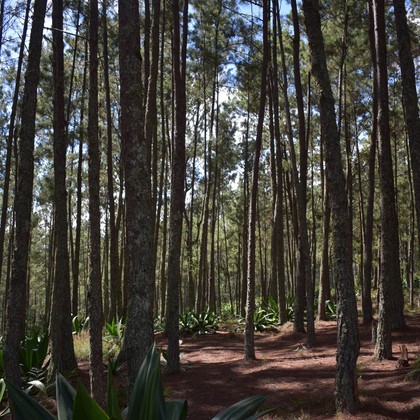
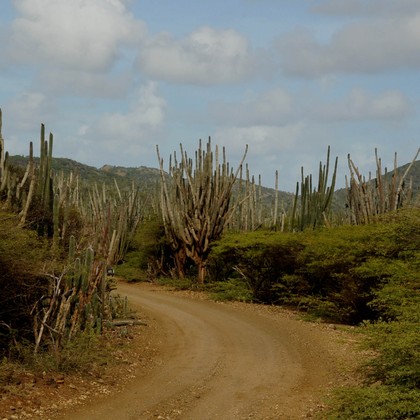
Dry and moist broadleaf forest, pine forest, semi-arid scrub and thorn forest, also mangroves and sometimes orchards; especially where there is dense undergrowth and vines. It searches thin branches and twigs in the lower storeys for insects, mainly ants and beetles, gleaning them from the surface rather than digging them out. It breeds from February to July in a self-excavated hole, usually low above the ground.
Where the bird is most at home, classified by the vegetation types of the Caribbean.



Range and movements
Only on Hispaniola, in Haiti and the Dominican Republic, where the nominate subspecies occurs across the island wherever there is forest or scrub. The subspecies Nesoctites micromegas abbotti lives on the Haitian island of Gonâve. The species does not occur outside Hispaniola.
- Resident
- dark = core range, pale = thinly spread
How and when to look
Best found by its call in dry forest and scrub, for example in the south-west of the Dominican Republic. The bird often stays hidden in dense growth; patience with a calling bird is needed before it shows.
Conservation status
Not threatened. The species is fairly common and also occurs in secondary forest and scrub, although much forest on Hispaniola is being lost.
Scientific name
Nesoctites micromegas | (Sundevall, 1866)
Sundevall described the species in 1866 as Picumnus micromegas; because it was later moved to another genus, the author and year stand in brackets. The genus Nesoctites was introduced in 1890 by Hargitt. Nesoctites is Greek, from nēsos 'island' and probably oikētēs 'inhabitant': 'island-dweller', after its occurrence on Hispaniola. micromegas is Greek, from mikros 'small' and megas 'large': 'small-large', a playful name for this large piculet. The specimen the first description was based on came from Hispaniola (originally given in error as 'Brazil').