All species › Cranes, rails and allies › Rails and crakes › American Coot
American Coot | Fulica americana
Amerikaanse meerkoet | Gallareta americana
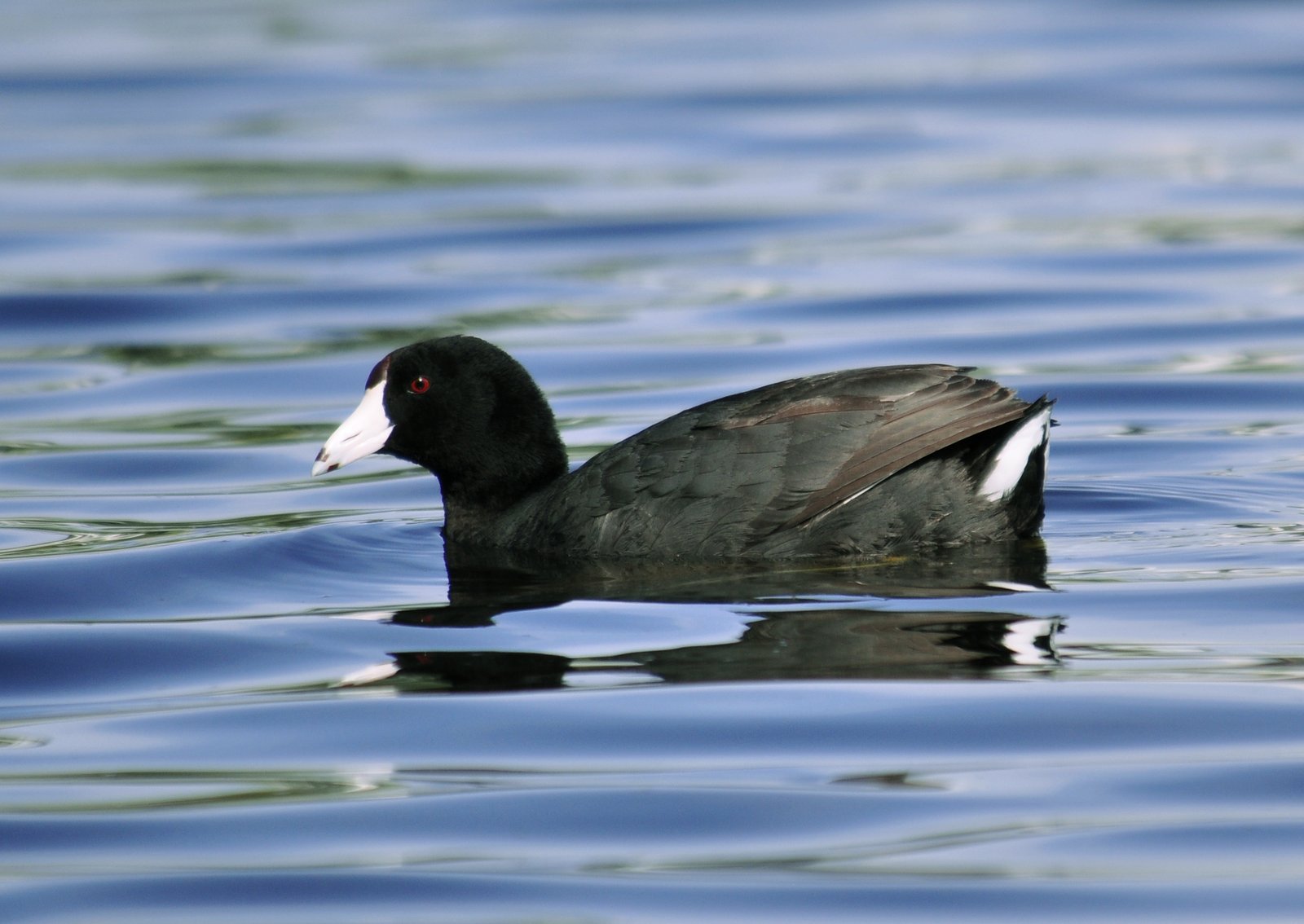
The American Coot is a compact, slate-grey rail with a white bill that swims and dives on open water like a duck. The islands hold a resident population in which many birds have an all-white frontal shield; it was long treated as a separate species, Caribbean Coot, but has been included in American Coot since 2016, because the feature also occurs on the mainland. In winter, migrants from North America join them.
Voice
A varied repertoire of short, muffled and grunting calls, such as a dry puhk or poonk, and series of cackling notes. Rapid, shrill series are heard around the nest and in squabbles on the water; the birds also call at night.
Recording: Max Noack — CC BY-NC-SA 4.0 · converted to mono · xeno-canto
Identification
34–43 cm, rounded and short-tailed, with a small head. The plumage is uniformly dark slate grey, the head and neck almost black. The bill is white with a dark band just behind the tip. The frontal shield is white or has a reddish-brown swelling at the top; in the island birds it is often wholly white and larger, extending further onto the crown. White undertail coverts show either side of the tail. The legs are greenish yellow, with lobed toes. In flight the wing shows a narrow white trailing edge. Juveniles are paler grey, with a greyish-white throat and neck and a dull bill; downy chicks are black with an orange-red head.
Confusion species
Common Moorhen Gallinula chloropus is smaller, with a red bill and shield, a white flank line and a brown back. Pied-billed Grebe Podilymbus podiceps swims and dives on the same ponds, but is brown, has a thick pale bill and sits low in the water with a flat back.
Habitat
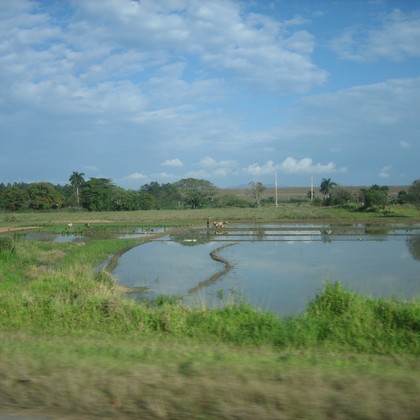
Open freshwater lakes and ponds, reservoirs, sewage ponds, brackish and saline lagoons and inland lakes, and the open parts of marshes and rice fields. It swims and dives for aquatic plants and also grazes on grass along the shore. Outside the breeding season often in flocks, sometimes hundreds together on larger waters. The nest is a floating platform of plant material anchored in reeds or sedges.
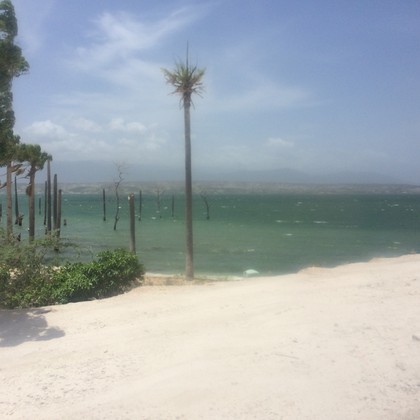
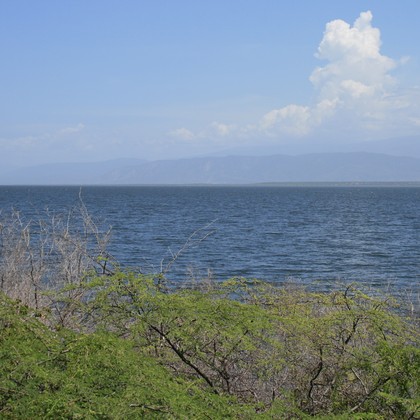
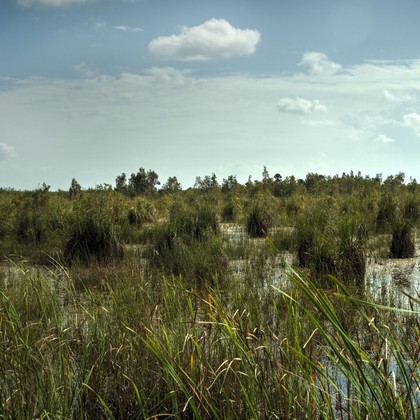
Where the bird is most at home, classified by the vegetation types of the Caribbean.

Range and movements
Resident in the Bahamas, Cuba, the Cayman Islands, Jamaica, Hispaniola (Haiti and the Dominican Republic), Puerto Rico, the Virgin Islands, the ABC Islands and San Andrés, and locally in the Lesser Antilles, including Sint Maarten, Guadeloupe, Antigua and Barbados. Winter visitors from North America mainly in the north of the region, in the Bahamas and Cuba. Scarce and irregular in Trinidad and Tobago. Outside the region from southern Canada through the United States and Mexico to Central America.
- Resident
- Summer visitor (c. Oct–Mar)
- Winter visitor (c. Apr–Sep)
- Passage (Mar–Apr, Oct–Nov)
- dark = core range, pale = thinly spread
How and when to look
Larger open ponds, reservoirs and sewage ponds offer the best chance; flocks there are largest in winter. The shield is best seen on birds grazing on the bank. Resident birds with an all-white shield cannot simply be told from North American winter visitors, as these too may have a white shield.
Conservation status
Not threatened. The Caribbean residents are scarce on a number of islands and lose habitat locally through the draining and building over of wetlands; hunting and disturbance also play a part. On the other hand the species makes use of reservoirs and sewage ponds.
Scientific name
Fulica americana | Gmelin, 1789
Gmelin described the species in 1789 and placed it straight away in the genus where it still stands. The genus Fulica was introduced in 1758 by Linnaeus. Fulica is the Latin word for a coot. americana is Latin for 'American'. The specimen the first description was based on came from North America.