All species › Waterfowl › Ducks, geese and swans › Velvet Scoter
Velvet Scoter | Melanitta fusca
Grote zee-eend | Negrón especulado
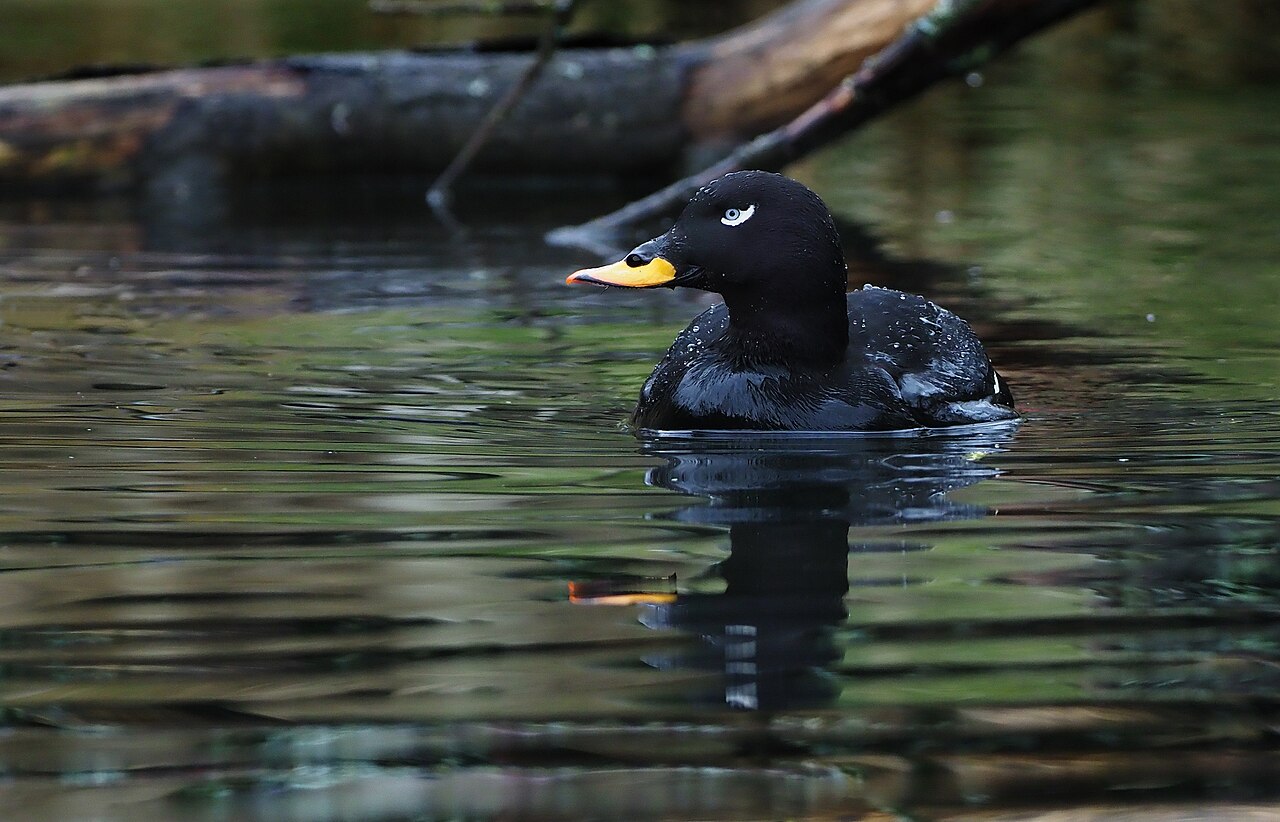
The heaviest of the scoters, bulky, with a long wedge-shaped head profile, riding the swell in dark rafts offshore. The moment a bird opens its wings a white patch flashes, and that settles the identification at long range.
Click a thumbnail to switch the photo above.
Voice
Largely silent away from the breeding grounds. In display the male whistles a soft, plaintive, rising pyu-ee while the female gives a hoarse grating brah-brah. At sea you are far more likely to hear the rush of wings from low-flying parties; the display calls belong mainly to March and April.
Recording: Stanislas Wroza — CC BY-NC-SA 4.0 · Wikimedia Commons
Identification
A large, heavy duck with a long wedge-shaped head-and-bill profile and a steep forehead. The drake is velvet black with a small white hook below and behind the eye, orange-red feet and a yellow-sided bill with a black knob at the base. The female is sooty brown with two pale patches on the cheek. Both sexes show a white secondary panel, glimpsed even when swimming birds flap.
Confusion species
Common Scoter is the one that matters. The white secondary panel is decisive but is usually hidden on swimming birds, so wait until they flush or stretch. Velvet is also bulkier and more angular-headed, and the female shows two separate pale cheek patches rather than one evenly pale cheek.
Habitat
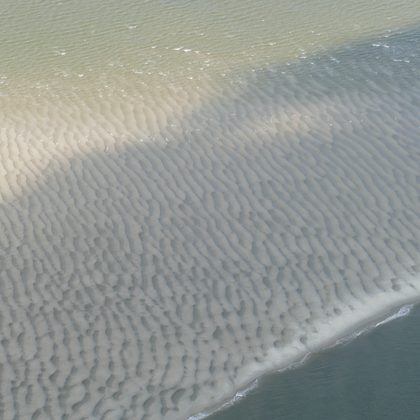
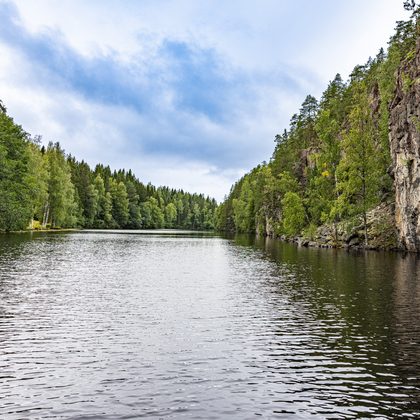
Winters over shallow coastal seas with sand and shellfish banks, usually a little further offshore and in deeper water than Common Scoter. Breeds on boreal lakes, in the birch zone and on Baltic islets. Dives for mussels, crabs and other bottom-dwelling animals.
Where the bird is most at home, classified with EUNIS — the European standard for habitats.
Range and movements
A breeder of Fennoscandia, the Baltic and north-west Siberia, with a separate small population in the Caucasus. It winters mainly in the Baltic and scattered through the North Sea; along the coasts of north-west Europe — the Holland coast, the Wadden islands — it is a scarce winter visitor, usually among Common Scoter. Inland in central Europe the odd bird turns up on lakes and rivers; on the Atlantic north coast of Iberia it is a genuine rarity.
- Resident
- Breeding (summer)
- Winter
- Passage
- dark = core range, pale = thinly spread
How and when to look
Seawatch from a headland or pier on the North Sea in November and December, ideally in a firm north-westerly and during the first hours after sunrise. In flat calm weather it pays instead to scope the resting rafts offshore and wait for birds to stretch their wings.
Conservation status
Assessed as Vulnerable after a steep decline of the wintering Baltic population. Bycatch in gillnets, oil pollution, deterioration of shellfish banks and nest predation by mink and gulls weigh heaviest. Disturbance from shipping and offshore construction adds pressure in the wintering areas.
Scientific name
Melanitta fusca | (Linnaeus, 1758)
Linnaeus described the species in 1758 as Anas fusca; because it was later moved to another genus, the author and year stand in brackets. The genus Melanitta was introduced in 1822 by Boie. Melanitta is Greek, from melas 'black' and netta 'duck'. fusca is Latin for 'dusky' or 'brownish black'. The specimen the first description was based on came from the coast of Sweden.