All species › Gamebirds › Pheasants and partridges › Ring-Necked Pheasant
Ring-Necked Pheasant | Phasianus colchicus
Fazant | Faisán vulgar
The Pheasant is the most conspicuous introduced bird of European farmland, a long-tailed gamebird that explodes noisily from a ditch bank. It was brought from Asia centuries ago and has been released ever since.
Click a thumbnail to switch the photo above.
Voice
The cock crows an explosive, hoarse, two-part kork-kok, immediately followed by a drumming whirr of the wings. Flushed birds give a hard rattling ketuk-ketuk-ketuk of alarm. Crowing can be heard all year but peaks at dawn and dusk from March to June.
Recording: Marie-Lan Taÿ Pamart — CC BY-SA 4.0 · Wikimedia Commons
Identification
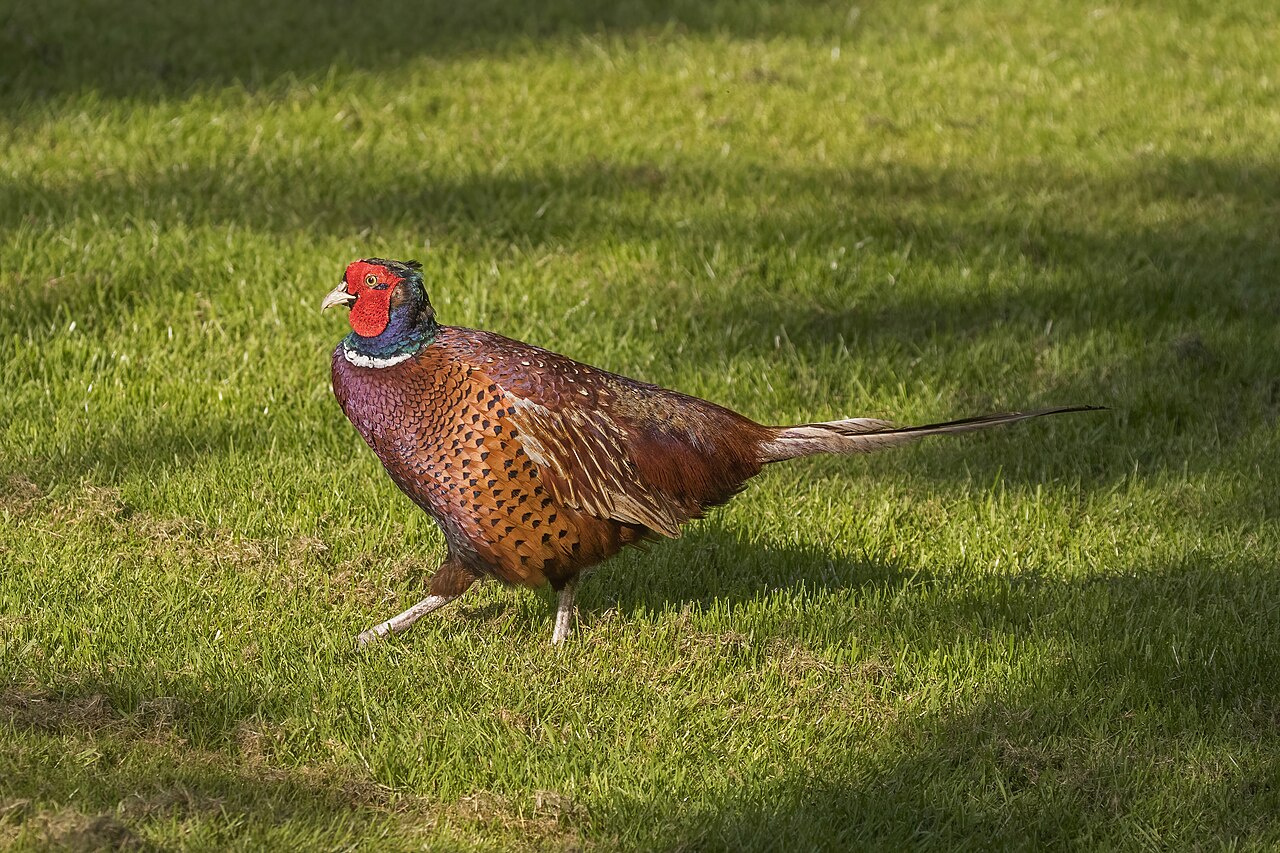
The cock is unmistakable: coppery brown with black scaling, a glossy green head with red wattles and small ear tufts, usually a white neck ring, and a very long barred tail. The hen is sandy brown with dark spots and a shorter but equally pointed tail. Flight is a short burst of fast beats followed by long low glides.
Confusion species
Confusion is rare, but a brief view of a hen can suggest a grouse or a large partridge; the long, tapering tail settles it. Golden, Lady Amherst's and Reeves's Pheasants escape from parks and estates, all far more gaudy or longer-tailed. Dark cocks without a white neck ring are still Pheasants.
Habitat
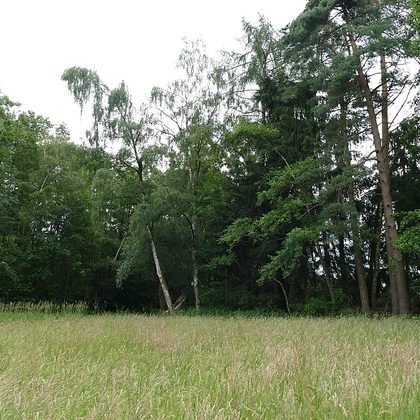
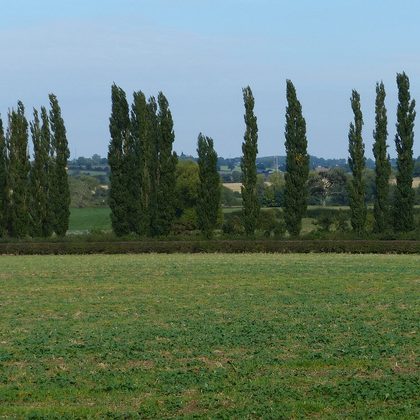
Small-scale farmland with hedges, rough margins, reed fringes and woodland edges, plus dune scrub, osier beds and the untidy corners of polders. Roosts in bushes or low trees and feeds on the ground on seeds, berries and insects. Avoids bare open arable land without cover.
Where the bird is most at home, classified with EUNIS — the European standard for habitats.


Range and movements
Native to Asia from the Caucasus to East Asia, and brought to Europe as early as Roman and medieval times. It is now found almost everywhere in Europe, maintained in many countries by releases for shooting. Common in the polders, dunes and river valleys of north-west and central Europe; around the Mediterranean far more local, in Iberia chiefly in northern farmland and on hunting estates.
- Resident
- Breeding (summer)
- Winter
- Passage
- dark = core range, pale = thinly spread
How and when to look
Walk hedges and reed fringes in March and April during the first hour after sunrise, when cocks crow and wing-whirr from raised spots. Drive or cycle farm lanes in late afternoon, when the birds come out onto the verges to feed and dust-bathe.
Conservation status
Not globally threatened (IUCN: Least Concern). In many parts of Europe numbers depend heavily on releases, while genuinely wild populations are declining. Field enlargement, the loss of hedges and rough margins, early and repeated mowing and predation cost clutches and chicks. Where field margins and odd corners survive, the species holds its own without restocking.
Scientific name
Phasianus colchicus | Linnaeus, 1758
Linnaeus described the species in 1758 and placed it straight away in the genus where it still stands. He introduced the genus Phasianus in that same work. Phasianus is Latin for 'pheasant', borrowed from Greek phasianos '(bird) of the Phasis', the river now called the Rioni, which flows to the Black Sea in western Georgia. colchicus means 'of Colchis', the region on the Black Sea in what is now western Georgia where Europeans came to know the pheasant. The specimen the first description was based on came from Rioni, Georgia.