All species › Flamingos › Flamingos › Greater Flamingo
Greater Flamingo | Phoenicopterus roseus
Flamingo | Flamenco común
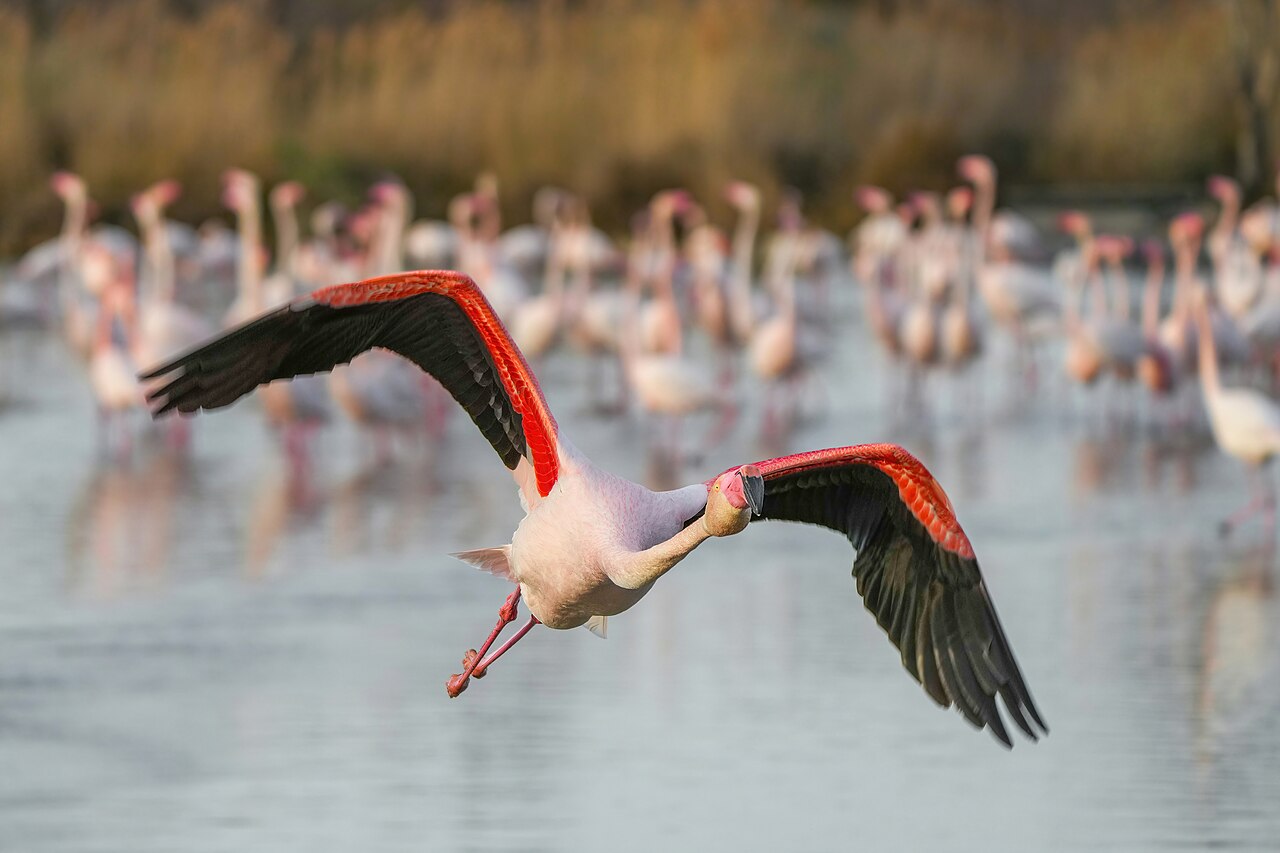
The Greater Flamingo is the most conspicuous bird of European saltpans: long-legged, pink-washed and armed with a unique kinked filter bill. A small, partly feral colony breeds in north-west Europe.
Click a thumbnail to switch the photo above.
Voice
Goose-like: a nasal bleating ka-ha and a low gabbling murmur from feeding flocks that carries far over flat water. Flying parties are as noisy as geese. Audible year-round, loudest around colonies in spring.
Recording: Joost van Bruggen — CC BY-SA 4.0 · Wikimedia Commons
Identification
Very large, extremely long-legged and long-necked, mostly pale pinkish white with crimson coverts and black flight feathers that only really show in flight. The bill is pink with a sharply cut black tip and a strong downward kink; legs pink. Juveniles are grey-brown with grey bill and legs, taking several years to turn pink.
Confusion species
Lesser Flamingo is smaller, deeper pink, with a dark red bill that looks all black at range. Chilean Flamingo, widely kept in collections, has grey legs with red joints. North-west European flocks contain all three, so always check bill pattern and leg colour.
Habitat
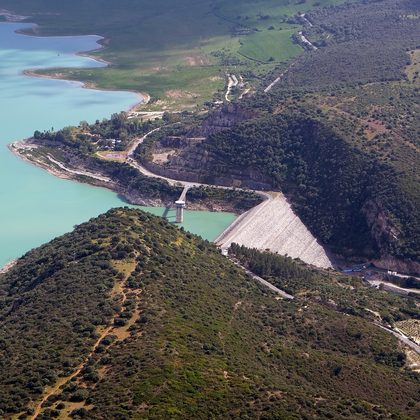
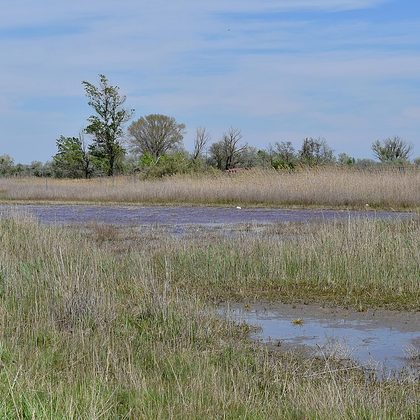
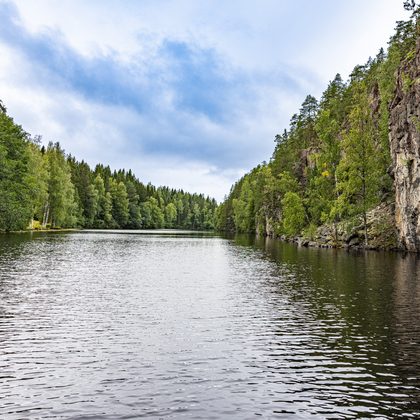
Shallow saline and brackish water without vegetation: saltpans, coastal lagoons, estuaries and commercial salinas, where it filters the mud with its head upside down. Breeds on mud cones on islets out of reach of ground predators, and needs stable water levels through the season.
Where the bird is most at home, classified with EUNIS — the European standard for habitats.

Range and movements
Centred on the Mediterranean: Fuente de Piedra, Doñana, the Ebro delta, the salinas of Santa Pola and the Camargue, with much interchange between colonies; also along the coasts of North Africa, Anatolia and the Levant. In north-west Europe a mixed colony breeds at Zwillbrocker Venn, with birds feeding in the Delta and on the Wadden; elsewhere in the north it is a scarce vagrant.
- Resident
- Breeding (summer)
- Winter
- Passage
- dark = core range, pale = thinly spread
How and when to look
Fuente de Piedra in April and May, when thousands breed: arrive early, before heat haze wrecks the view. In winter the salinas of Santa Pola and the Ebro delta offer short range and good evening light. In north-west Europe, August to October in the Delta are the best months, when low evening light makes the pink glow.
Conservation status
Increased in Europe since the key colonies were strictly protected and salt-working sites were kept in use. It remains vulnerable through dependence on very few breeding sites: one dry year or one serious disturbance can cost a whole season. Lead poisoning and water-level management matter locally.
Scientific name
Phoenicopterus roseus | Pallas, 1811
Pallas described the species in 1811 and placed it straight away in the genus where it still stands. The genus Phoenicopterus was introduced in 1758 by Linnaeus. Phoenicopterus is Greek, from phoinix 'crimson' and pteron 'feather', thus 'red-feathered'. roseus is Latin for 'rose-coloured', after the pale pink plumage. The specimen the first description was based on came from the Ural River.