All species › Waders, gulls and terns › Gulls and terns › Armenian Gull
Armenian Gull | Larus armenicus
Armeense meeuw | Gaviota armenia
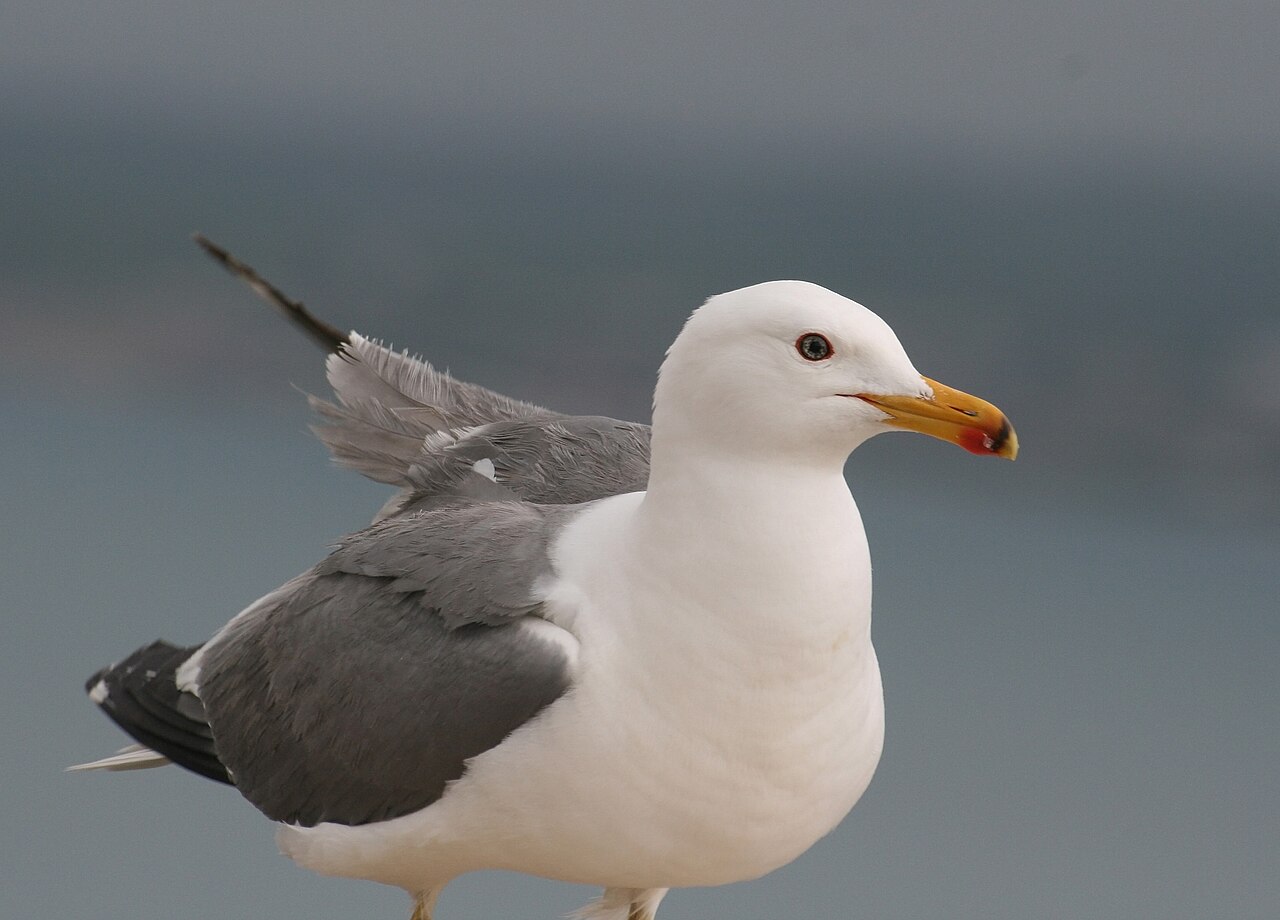
The large gull of the mountain lakes of eastern Anatolia and the southern Caucasus: more compact and darker than a Yellow-Legged Gull, with a dark eye. It has been treated as a full species since the 1990s and is the reason many birders make the trip to Lake Van or Lake Sevan.
Click a thumbnail to switch the photo above.
Voice
Higher and audibly hoarser than Yellow-Legged Gull, with a fast, barking laugh that stops abruptly. A colony on the islets of Lake Sevan keeps up a nasal, complaining chorus, and the same racket is the first thing you notice at the Yerevan rubbish tips. The long call is delivered with the head thrown back rather less far than in Yellow-Legged Gull.
Recording: Magnus Hellström — CC BY-NC-SA 4.0 · Wikimedia Commons
Identification
A medium-sized, compact gull with a steep forehead, rounded crown and fairly short legs. The mantle is clearly darker slate-grey than Yellow-Legged Gull, approaching Lesser Black-Backed. The bill is short and deep with a broad black band just before the tip, usually crossing both mandibles completely, and a small red spot behind it. The eye is dark within a red orbital ring. The wingtip carries extensive black with only one small mirror on p10. Winter adults keep an almost white head with at most fine streaking behind the eye; first-years are dark and neatly scaled with a crisp black tail band.
Confusion species
Yellow-Legged Gull is larger and longer-legged, with a pale yellow eye, a longer bill whose red gonydeal spot lacks a complete black band, and a paler grey mantle. Caspian Gull is long and pear-shaped, with a parallel-sided bill, a sloping forehead and much white in the outer primary. Armenian Gull is the shortest and most compact of the three, with the dark eye, the short bill with its clear black band, the darker grey mantle and a mirror that stays small. Work in that order: eye first, then bill pattern, then mantle tone against a neighbouring bird, and only then the wingtip.
Habitat
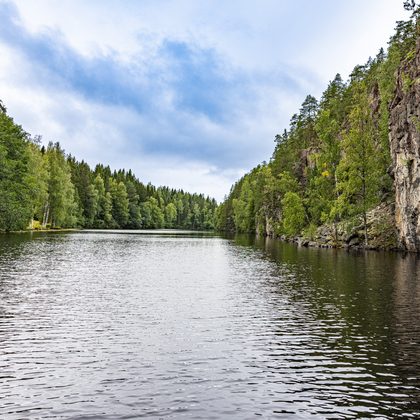
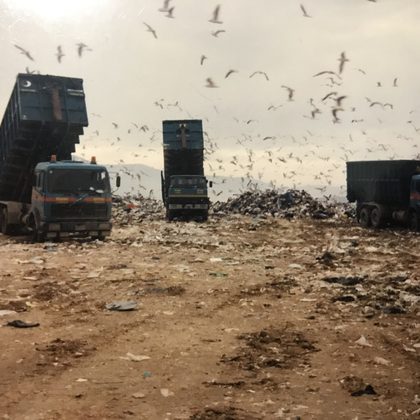
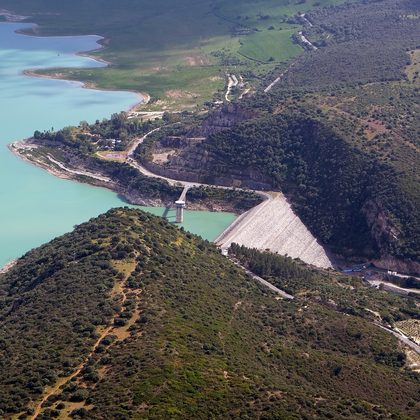
Large mountain lakes, from Lake Van at nearly 1650 metres to Lake Sevan at over 1900 metres, with colonies on rocky islets and steep shores. Food is fish and insects, but in summer chiefly refuse from open tips, along with fish ponds and reservoirs; outside the breeding season it moves to the mudflats and harbours of the Levant.
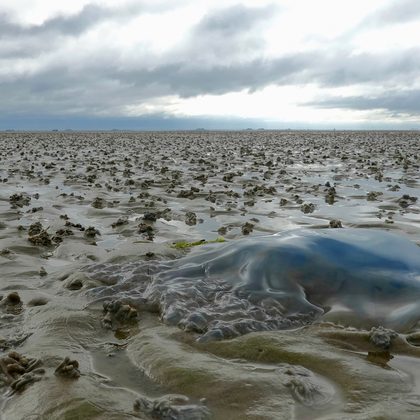
Where the bird is most at home, classified with EUNIS — the European standard for habitats.
Range and movements
Breeds in eastern Anatolia, the southern Caucasus and the north-west of the Iranian plateau, the core being Lake Van, Lake Sevan, Lake Arpi and Çıldır. Few large gulls have so small and so high a breeding range. In winter most birds move to the coasts of the Levant and the Nile delta, and to Cyprus, gathering at fish ponds and harbours. West of the Caucasus and outside the eastern Mediterranean the species is an exception.
- Resident
- Winter
- Passage
- dark = core range, pale = thinly spread
How and when to look
In the breeding season Sevanavank on Lake Sevan in June is the address: birds stand beside the car park and on the rocks at ten metres, close enough to judge eye colour, bill band and mantle shade without a scope; on Lake Van the shores at Ahlat and Erciş and the fishing harbours work well. In winter the fish ponds of the Bet She'an valley and the harbours from Ashdod to Eilat are the best setting, with Armenian Gulls beside Caspian, Baltic and steppe gulls. Always keep a Yellow-Legged Gull in the same field of view: only side by side do the darker mantle and the small bill become obvious.
Conservation status
Listed as Least Concern, but the species occupies very few sites and is vulnerable for that reason alone. Water levels at Lake Sevan and Lake Van swing widely through abstraction and drought, connecting breeding islets to the shore and opening them to dogs and foxes. Closing and capping open rubbish tips removes a large part of the summer food supply at short notice, and disturbance by fishing and recreation affects colonies on both lakes.
Scientific name
Larus armenicus | Buturlin, 1934
Buturlin described the species in 1934 and placed it straight away in the genus where it still stands. The genus Larus was introduced in 1758 by Linnaeus. Larus is Latin, from Ancient Greek laros, and appears to have referred to a gull or another large seabird. armenicus means 'Armenian', after Armenia, where the species breeds.