All species › Waders, gulls and terns › Sandpipers and allies › Wilson's Snipe
Wilson's Snipe | Gallinago delicata
Amerikaanse watersnip | Agachadiza de Wilson
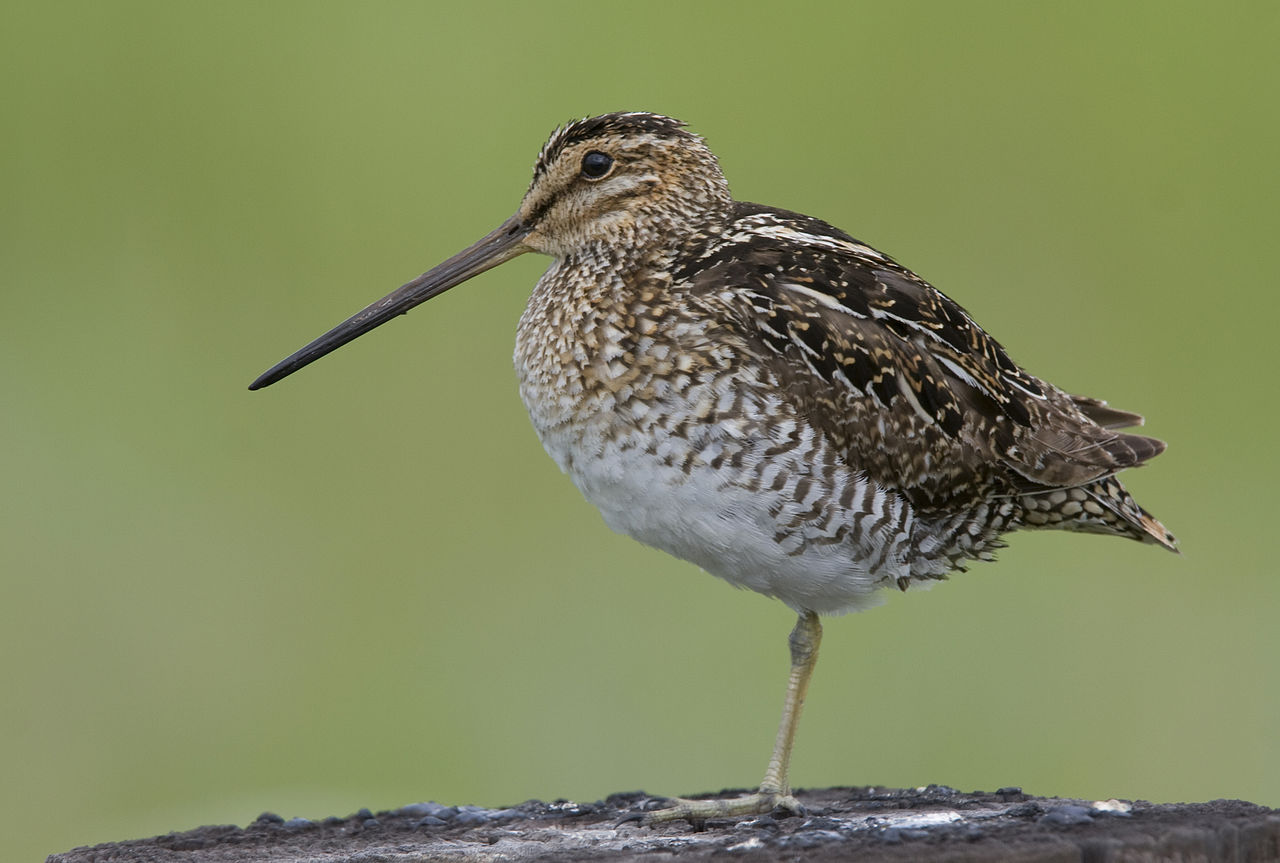
A squat marsh bird with a straight bill that takes up almost a third of its length, patterned so that it goes unnoticed in wet grass until it flies up from under your feet. At dusk in spring it circles high above the marsh and gives a humming sound that comes not from the throat but from the air passing over its outer tail feathers. Until 2002 it was held to be the same species as the Common Snipe of Eurasia.
Voice
Over the breeding marsh at dusk comes a humming, swelling woo-woo-woo-woo that rises in strength and then dies away; it arises as air streams past the spread, narrow outer tail feathers while the bird dives in a wide arc. Both male and female fly this way, above all in low light, and on the longest days sometimes right through the night. From a post, a fence or a treetop comes a hard, monotonous chek-chek-chek that is kept up for minutes on end. Flush one and you hear a short rasping scaip as the bird shoots away in a zigzag. Outside the breeding season that is nearly the only sound it makes.
Recording: Dag Österlund — CC BY-NC-SA 4.0 · Storsjö, Berg Municipality, Jämtlands län, Sweden · xeno-canto
Identification
A short, heavy bird on short legs, with a straight bill of six to seven centimetres and a big head with a dark crown crossed by a pale central stripe. Four cream stripes run down the back like braces against the black-brown mosaic beneath; the flanks are heavily barred black and the belly is white. The wings are pointed and dark, the underwing is densely barred and the white edge along the trailing edge is narrow. In flight the tail is short and orange with a black band, and the take-off goes in a fast, angular zigzag. Male and female look alike, and after a few weeks juveniles can no longer be told from adults.
Confusion species
Common Snipe (Gallinago gallinago) of Eurasia, in North America a visitor to western Alaska only, has seven pairs of tail feathers against eight in this species, a broader white edge along the trailing edge of the wing and a largely white underwing instead of a densely barred one. Both give an equally harsh note on take-off, so that call settles nothing; the difference lies in the display flight, which sounds higher and thinner in this species because the outer tail feathers are narrower. Long-billed Dowitcher (Limnodromus scolopaceus) has longer legs, probes in flocks in shallow water with an up-and-down motion, and shows a white wedge up the back in flight. American Woodcock (Scolopax minor) is rounder, has broad blunt wings and a plain orange underside, and sits in woodland and not in marsh.
Compare sandpipers, snipes and allies: bill, legs, wing bar and rump
Habitat
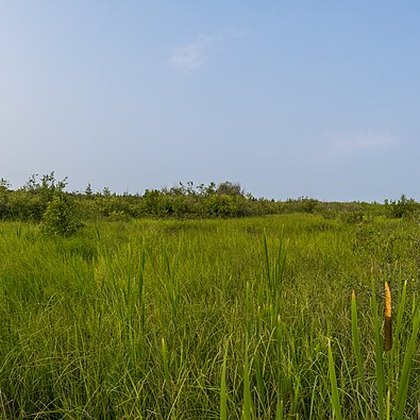
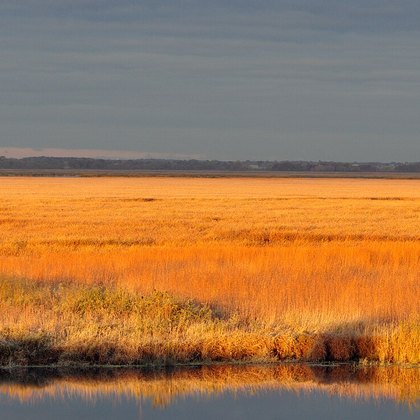
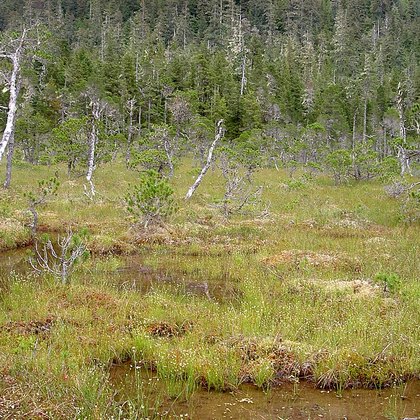
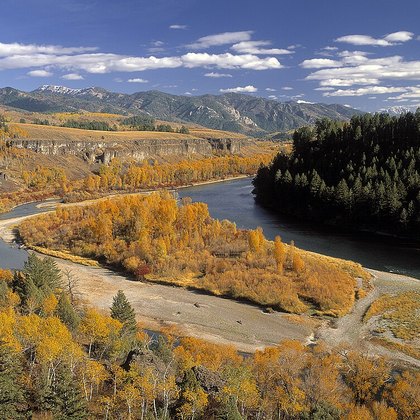
Wet sedge meadows, peatland and muskeg (boggy peatland with spruce, typical of boreal Canada), and the soggy edges of ditches, pools and streams: anywhere a soft, sodden soil lies under a low, open sward. It needs two things at once — grass or sedge to sit out the day in, and open mud to probe with the long bill; it avoids tall dense reed and dry ground. In winter it moves on to flooded fields, rice fields, roadside ditches and the margins of reservoirs, right down into the tropics. It seldom uses bare mudflats without cover, unlike most other waders.
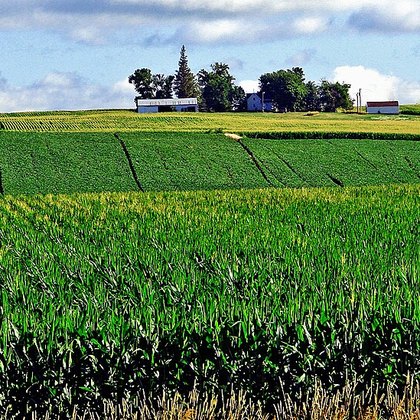
Where the bird is most often found, arranged by the USNVC — the vegetation classification of the United States and Canada — and CMECS for sea and coast.
Range and movements
It breeds from western Alaska across the whole of Canada to Newfoundland and south into the northern states, with outliers in the mountains of Colorado and California. The winter range runs from the southern half of the United States through the whole of Mexico and Central America into northern South America, and across the Greater Antilles. In a broad band along the Pacific and through the Great Basin birds stay all year. It migrates at night, alone or in loose parties, north in March and April and back from September to November. The draining of wet meadows and the straightening of streams thinned its breeding range in the lowlands of the Midwest and East through the twentieth century.
- Resident
- Breeding (summer)
- Winter
- Passage
- dark = core range, pale = thinly spread
Where and when to look
Go out to a wet meadow or bog at sunset in May or June and stand still: the humming of the display flight comes from high above you and seems to come from every side at once, and only when the bird dives do you see where it is. Outside the breeding season, walk slowly along the edge of a flooded field or a ditch; it lets you come within a few metres and then goes off in a zigzag with a rasping call. Look at that moment for the short orange tail — often it is all you get to see of it.
Conservation
The Red List holds the species as Least Concern (LC); Partners in Flight puts the breeding population at two million birds, and the counts between 1966 and 2019 show no direction. It is a game bird: from 2019 to 2021 about 93,000 were shot each year. The greatest pressure comes from the loss of wet meadows and marshes; besides that, migrating birds are killed at night against masts, wires and lit buildings.
Scientific name
Gallinago delicata | (Ord, 1825)
George Ord described the species in 1825 as Scolopax delicata, in the ninth volume of Alexander Wilson's American Ornithology; because it was later moved to another genus, author and year stand in parentheses. The genus Gallinago was introduced by Brisson in 1760; it is a Latin word for a snipe, formed on gallina, 'hen'. delicata is Latin for 'fine' or 'dainty'. The described specimen came from Pennsylvania. The English name honours Wilson, whose book Ord completed after his death.