All species › Swifts › Swifts › White-throated Swift
White-throated Swift | Aeronautes saxatalis
Bonte gierzwaluw | Vencejo gorjiblanco
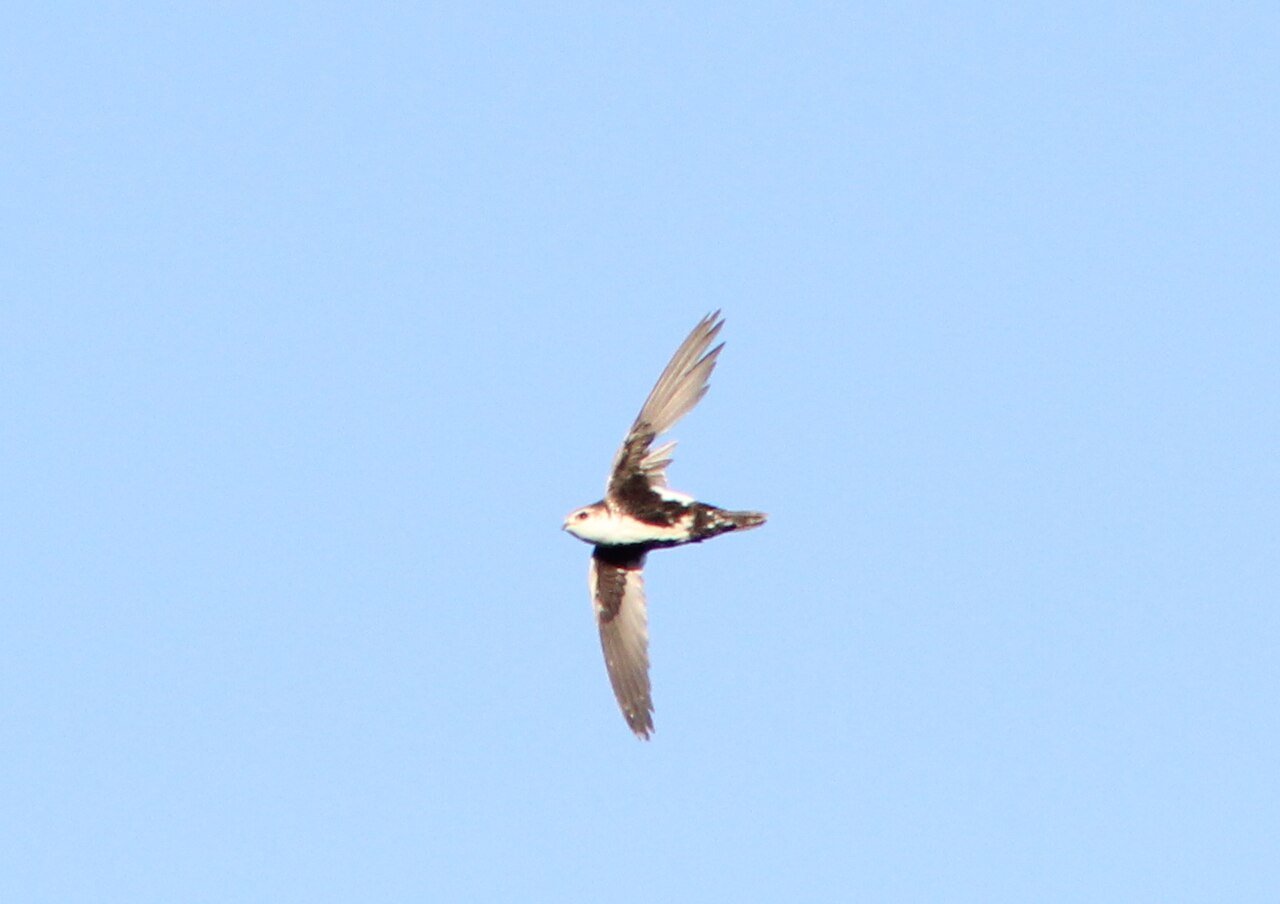
White-throated Swift is the only North American swift with a bold black-and-white pattern: a blackish-brown back set against a pure white throat, chest and flank. It nests in rock crevices on cliffs and canyon walls right across the west, from sea level to well above treeline, and ranks among the fastest fliers of any small bird. Courting pairs sometimes plunge together in a joint dive of hundreds of metres, clinging to each other until just above the ground.
Voice
The call is a series of piercing, almost grating notes, usually given in a falling, accelerating series and carrying well off canyon walls. At a communal roost in a rock crevice, dusk brings a steady chattering hubbub from dozens or hundreds of birds at once. In flight over open country the call is often the first sign of the bird's presence, heard before it is seen.
Recording: Paul Marvin — CC BY-NC-SA 4.0 · Kwaamii Point, near Mt. Laguna, San Diego County, California, United States · xeno-canto
Identification
A fairly large, slender swift with long, narrow, scythe-shaped wings. The upperparts are blackish brown, the throat, chest and a stripe down the centre of the belly pure white, with white spots on the flanks and a white trailing edge to the inner wing. Males and females look alike. Flight is fast and direct, in short bursts of stiff beats broken by glides, different from the more wheeling flight of most other swifts.
Confusion species
Black Swift and Vaux's Swift both entirely lack the White-throated Swift's sharp white markings; the former is uniformly dark, the latter has only a pale throat. At a distance the species is sometimes confused with Violet-green Swallow, which shows a similar dark-and-white combination but has a much more direct flight with faster, less stiff wingbeats and a forked tail rather than sickle-shaped wings. Groups hunting together above the same canyon rim regularly mix both species.
Habitat
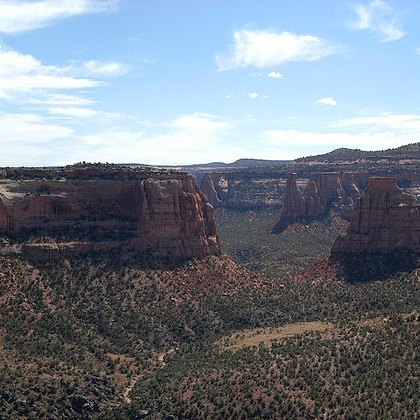
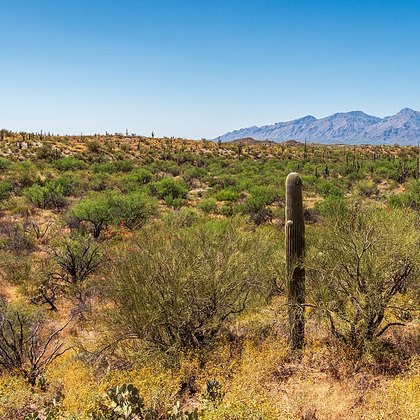
Cliffs and canyon walls in almost any dry mountain or desert landscape of the west, from two hundred metres below sea level in Death Valley to above three thousand metres. Where natural rock crevices are lacking, the species turns to bridges, overpasses and quarry walls. It forages over almost any terrain within reach of the nest site — forest, meadow, canyon rim — often concentrated where rising air gathers insects.
Where the bird is most often found, arranged by the USNVC — the vegetation classification of the United States and Canada — and CMECS for sea and coast.


Range and movements
Present year-round in California, Arizona, New Mexico, Texas and much of Mexico, south into the highlands of Guatemala and Honduras; further north, from southern British Columbia to Washington, Oregon, Idaho, Nevada, Utah, Colorado and Wyoming, it is only a summer breeder, and most of the population withdraws south for the winter. Migration is visibly less massed and less far-reaching than in other North American swifts, and in mild winters groups sometimes remain even in the northern part of the range.
- Resident
- Breeding (summer)
- Winter
- Passage
- dark = core range, pale = thinly spread
Where and when to look
Find a canyon or cliff in the west on a windy afternoon: White-throated Swift often hunts low along the rock face, where rising air concentrates insects, and the combination of scythe-shaped wings and sharp white underparts is visible at any distance. At sunset dozens of birds sometimes gather calling at the entrance to a communal roost.
Conservation
The North American population has fallen by nearly half since 1970, despite an estimated total of over three million birds worldwide, which still classifies the species as of Least Concern (LC). A decline in flying insects, possibly linked in part to pesticides, is seen as the likely cause; use of bridges and quarries as substitute nest sites only partly offsets the loss of natural cliffs.
Scientific name
Aeronautes saxatalis | (Woodhouse, 1853)
Woodhouse described the species in 1853 as Acanthylis saxatalis, during the Sitgreaves Expedition surveying a route from the Zuni River to the Pacific; it has since been moved to another genus, hence the parentheses around author and year. Hartert introduced the current genus Aeronautes in 1892, from the Greek aer, 'air', and nautes, 'sailor' — an 'air sailor'. saxatalis is Latin for 'living among rocks', after the cliffs and canyon walls in which the species nests. The type locality is Inscription Rock in New Mexico, a rock formation where generations of travellers carved their names.