All species › Pelicans, herons and ibises › Herons, egrets and bitterns › Tricolored Heron
Tricolored Heron | Egretta tricolor
Witbuikreiger | Garceta Tricolor
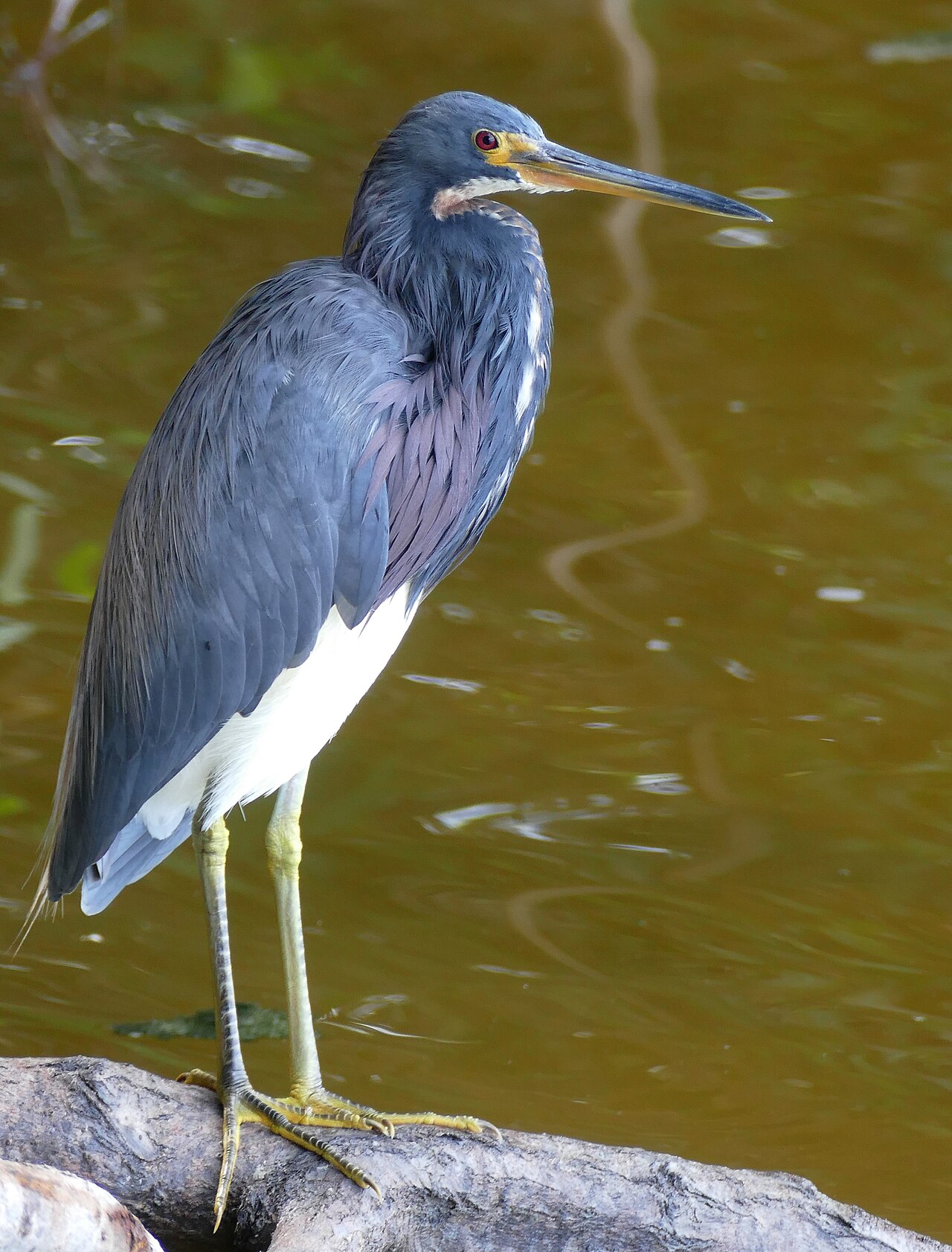
The Tricolored Heron is a slim, slender heron in slate-grey, purple and white, with a longer, thinner neck and bill than most of its family. A sharply contrasting white belly and a white stripe down the front of the neck make it, despite its dark base colour, distinctive among coastal herons. It breeds and winters largely in the same place, along the coast of the southeastern United States.
Voice
Both sexes give a quivering, hoarse, nasal call, mostly within the colony or during courtship. Disturbance or a clash with another bird brings a short, guttural throat call. Displaying males give a deep, dull whomp during circling flights over the nest, produced by heavy, deliberately slow wingbeats, and clack their bills while winding their necks around their partner's.
Recording: GABRIEL LEITE — CC BY-NC-SA 4.0 · Guamutal, Cienaga de Zapata, Matanzas, Cuba · xeno-canto
Identification
From head to back the Tricolored Heron is slate-grey with a purple sheen, with a white stripe down the front of the neck and sharply defined white underparts from the belly down — the feature behind its name and the mark that sets it apart from other dark herons at any distance. In breeding plumage it grows long, thin plumes on head, neck and back, and the base of the bill turns blue with a pink flush. The legs are yellow-green to grey-green, the bill long, thin and pointed, yellow to grey with a dark tip. Young birds are duller and more rufous-brown on the neck and wing coverts, but show the same white belly as the adult.
Confusion species
Little Blue Heron (Egretta caerulea) is uniformly dark from head to tail with no white on the belly and no white neck stripe, and looks stockier with a relatively heavier bill. The dark morph of Reddish Egret (Egretta rufescens) is larger and heavier, with a shaggy, unkempt neck and an active, dancing hunting style of running and flaring its wings; the Tricolored Heron also hunts actively, but with a more stretched-out, less theatrical motion.
Habitat
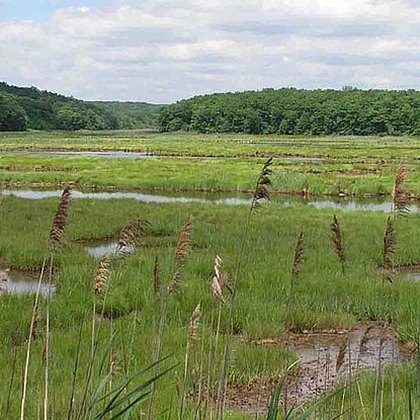
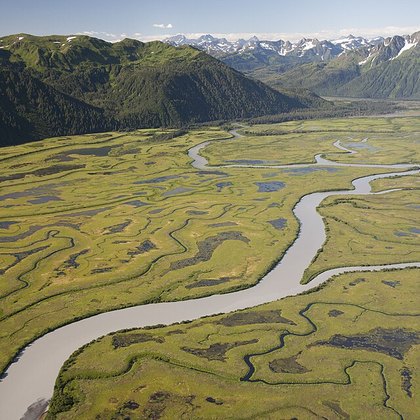
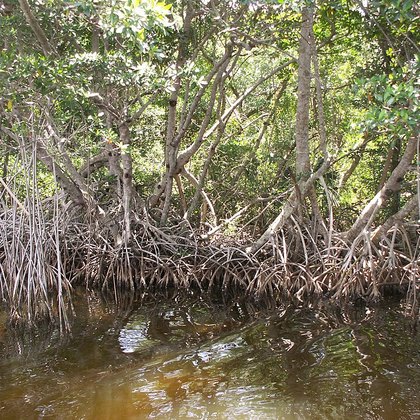
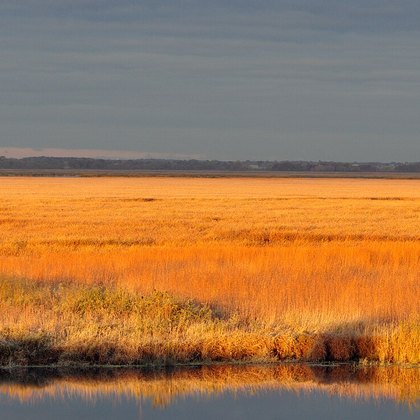
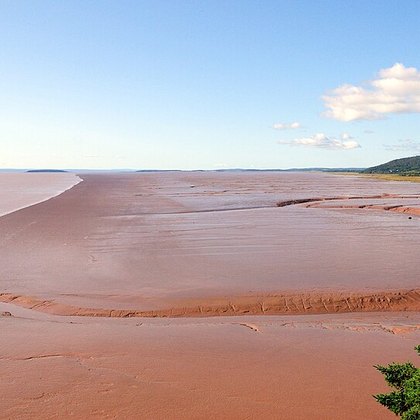
In the breeding season the Tricolored Heron seeks out coastal waters: estuaries, salt marshes, mangroves and lagoons, nesting in low trees and shrubs on islands. Outside the breeding season it also shifts to freshwater marsh, lake edges, canals and ditches inland. More than most herons it hunts by actively running with wings spread after small fish, rather than standing motionless, and favours open, shallow water over dense cover.
Where the bird is most often found, arranged by the USNVC — the vegetation classification of the United States and Canada — and CMECS for sea and coast.
Range and movements
Breeds along the coast of the southeastern United States, from the Gulf Coast and Florida north along the Atlantic seaboard, with a range that has gradually shifted northward during the twentieth century into new, more inland nesting sites. In southern Florida and along much of the Gulf Coast the species is present year-round; northern breeders withdraw less markedly than is usual for other coastal herons, though birds ringed in South Carolina have been recovered as far as Cuba and Panama. Outside the United States the species breeds on through Mexico, Central America, the Caribbean and, along the Pacific, south to Peru. In the Florida Everglades the population fell by more than seventy per cent between 1996 and 2010, prompting the state of Florida to list the species as threatened.
- Resident
- Breeding (summer)
- Winter
- Passage
- dark = core range, pale = thinly spread
Where and when to look
Look for the Tricolored Heron on open water in a salt marsh or lagoon, where it gives itself away by its active hunting: it runs, stops abruptly, and sometimes spreads its wings as a shade canopy over the water, a trick borrowed from Reddish Egret. When in doubt, always check the belly first — white means Tricolored Heron, however dark the rest of the bird looks against the light.
Conservation
Worldwide the IUCN rates the species as Least Concern (LC), but locally the trend can differ sharply from that reassuring picture: the Everglades population crashed by more than seventy per cent between 1996 and 2010, mainly through changes to freshwater flow into the coastal marshes. Loss and salinisation of coastal marsh remain the main risks, partly offset by the creation of artificial wetlands.
Scientific name
Egretta tricolor | (Müller, 1776)
Müller described the species in 1776 as Ardea tricolor, in the old catch-all genus for herons; it has since been moved to another genus, hence the parentheses around author and year. The genus Egretta was introduced by Forster in 1817, derived from the Provençal French aigrette, 'little heron'. The epithet tricolor is compound Latin for 'three colours', after the combination of slate-grey, purple and white in the plumage. The type locality is Cayenne, French Guiana, based on Buffon's description — far south of the North American range this guide covers.