All species › Tubenoses › Petrels, shearwaters and diving petrels › Sargasso Shearwater
Sargasso Shearwater | Puffinus lherminieri
Sargassopijlstormvogel | Pardela de Sargazo
Sargasso Shearwater is the smallest shearwater in this guide, a tropical bird of the Bahamas and the wider Bahama archipelago that spends most of its non-breeding time over the Sargasso Sea and the Gulf Stream. Until recently it was treated as one and the same widespread species together with relatives from the Cape Verde Islands to the Indian Ocean; since the recent split, only this Caribbean form still carries the original scientific name.
Voice
At sea the species is silent. At the breeding colony, twittering and mewing calls come from the burrows and rock crevices at night; during the day, while the birds forage far out at sea, nothing of this can be heard.
Recording: William Mackin — CC BY-NC-SA 4.0 · Long Cay, Exuma Cays, Bahamas · xeno-canto
Identification
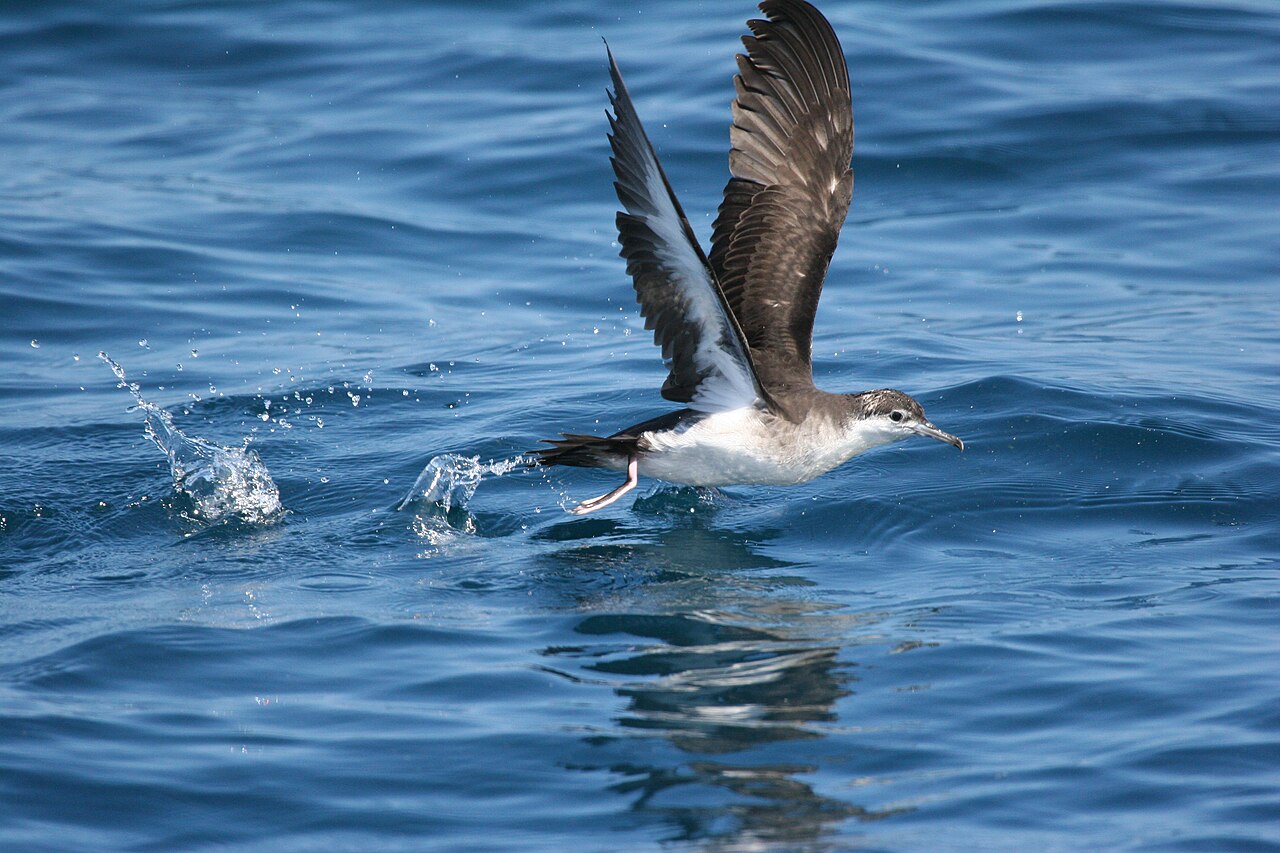
A small shearwater, blackish-brown above and on the tail and undertail coverts, white below and on the face down to below the eye. The legs are dull pink with a blackish wash and black toenails, the bill grey with a darker tip and a pinkish flush. Males and females cannot be told apart, and young birds resemble adults; chicks are covered in grey down with a pale belly.
Confusion species
Manx Shearwater is distinctly larger, with a shorter tail, white undertail coverts and more white under the wing than this species. Small shearwaters from the former combined species, such as those from the Cape Verde Islands and Madeira, are to be expected in the eastern Atlantic and reach North American waters at most as extreme rarities.
Habitat
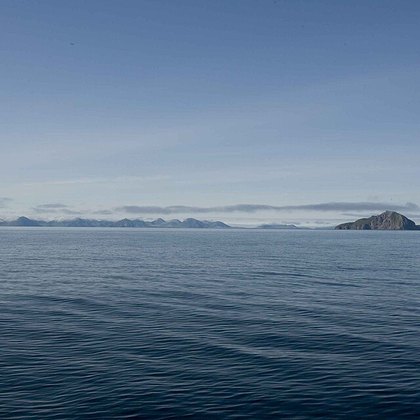
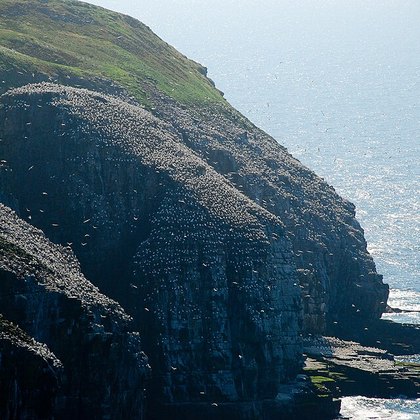
At sea this species forages over the warm, deep water of the Gulf Stream and the Sargasso Sea, diving from flight or from the surface, or picking prey from the surface; unlike many other shearwaters it seldom follows ships. It breeds colonially in small burrows and rock crevices on the earthy slopes of low, bare to lightly vegetated islands and cays.
Where the bird is most often found, arranged by the USNVC — the vegetation classification of the United States and Canada — and CMECS for sea and coast.
Range and movements
The species breeds on islands of the Bahamas and the wider Lucayan Archipelago; on Bermuda, where it once also bred, it has since disappeared. Outside the breeding season it stays closer to its colonies than most other shearwaters, but part of the population moves north along the Gulf Stream in late summer and autumn, with a regular presence off North Carolina and, in warm years, occasional records as far as New England.
- Resident
- Breeding (summer)
- Passage
- dark = core range, pale = thinly spread
Where and when to look
Join a Gulf Stream boat trip off Hatteras, North Carolina, in summer, and watch for the smaller size, longer tail and darker undertail pattern compared with Manx Shearwater, which often turns up on the same trip.
Conservation
The IUCN, which still lists the species as Audubon's Shearwater, classes it as Least Concern (LC). On the Bahamian breeding islands, introduced rats and cats do pose a risk, and colonies on several Caribbean islands have already disappeared over the past century.
Scientific name
Puffinus lherminieri | Lesson, 1839
French naval officer and naturalist René Lesson described the species in 1839 as Puffinus lherminieri; it has remained in the genus Puffinus ever since, hence no parentheses around author and year. The species name honours French naturalist Félix Louis L'Herminier. The type locality was originally vaguely given as 'the Antilles'; in 2013 Storrs Olson restricted it to Saint Barthélemy and Guadeloupe. In the recent split of the former combined species, the scientific name, as the oldest available name, stayed with this Caribbean form, while the new English name refers to the Sargasso Sea, where the species spends most of the year.