All species › Gamebirds › Partridges, pheasants, grouse and allies › Ring-necked Pheasant
Ring-necked Pheasant | Phasianus colchicus
Fazant | Faisán vulgar
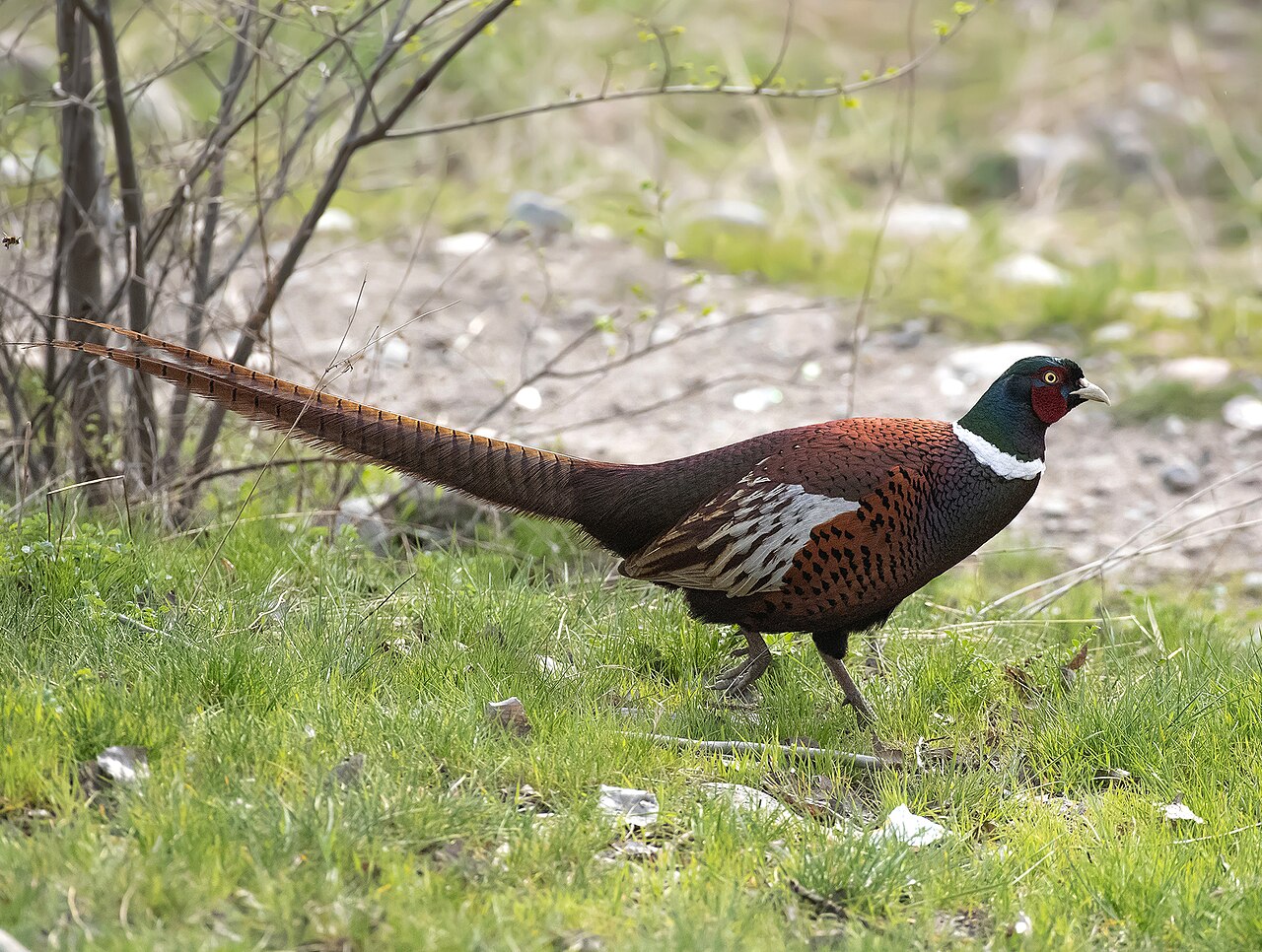
The Ring-necked Pheasant is a large gamebird with a long, barred tail, native to Asia and released as a game species in North America at the end of the nineteenth century. From a handful of birds set free in Oregon's Willamette Valley in 1881, a population grew within a few decades that spread across the whole northern half of the continent. Across much of the Great Plains and the Midwest it is today the leading upland gamebird.
Voice
In spring the male gives a short, harsh two-note crow from the ground, kork-kok, immediately followed by a loud whirring of the wings; the sound carries far over open cropland and is usually the first sign he is present. He repeats it through the morning from the same lookout — a fence post, a low rise, a ditch bank — and also in response to any sudden noise such as a slamming car door or an approaching tractor. The female is far quieter: her usual note is a soft clucking contact call, and on flushing a sharp series of short, high notes accompanies the wingbeats.
Recording: Jens Schöller — CC BY-NC-SA 4.0 · Straubing-Bogen (near Kirchroth), Lower Bavaria, Bavaria, Germany · xeno-canto
Identification
The male has a coppery, strongly iridescent plumage with a dark green head, red bare skin around the eye and usually a white neck ring — though some birds lack the ring, a legacy of the mixed ancestry of the North American population. The long, tapering, boldly barred tail is one of the best marks both in flight and on the ground. The female is plain sandy brown and finely patterned, with a shorter but still long tail. Juveniles resemble the female; on young males the tail soon outgrows that of the hen, the first sign of sex.
Confusion species
In grassland the female is sometimes mistaken for the prairie-chickens of the genus Tympanuchus, which have a much shorter, rounded tail and lack the pheasant's long pointed tail feathers altogether. Gray Partridge (Perdix perdix), sharing the same farmland in parts of the north, is a third the size with a short, rounded tail. Escaped or released domestic pheasants that are entirely white or dark occur locally; they are not another species, only a different colour form.
Habitat
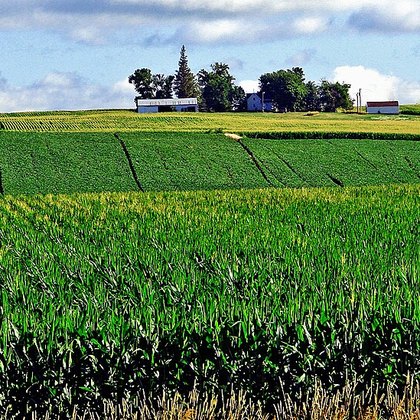
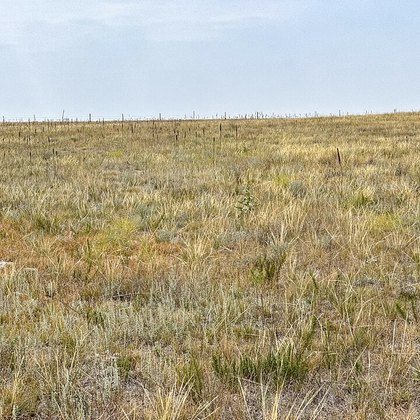
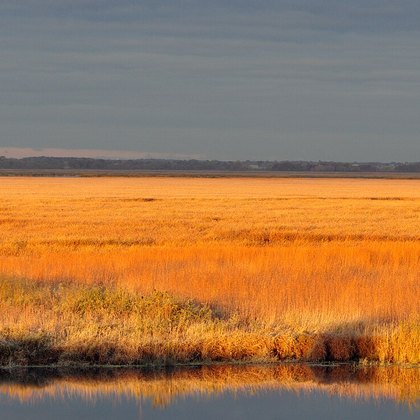
Cropland planted with grain, corn or alfalfa, broken by weedy ditch banks, hedgerows and set-aside strips, is the core habitat: pheasants nest in dense grassy cover but prefer to feed on open or short ground nearby. In the northern Great Plains, dense cattail cover along creeks and sloughs is essential winter shelter during heavy snow and hard cold. Closed forest, high mountains and continuous urban land are avoided, and in the humid Southeast and the arid Southwest of the United States the species has never taken hold despite repeated releases.
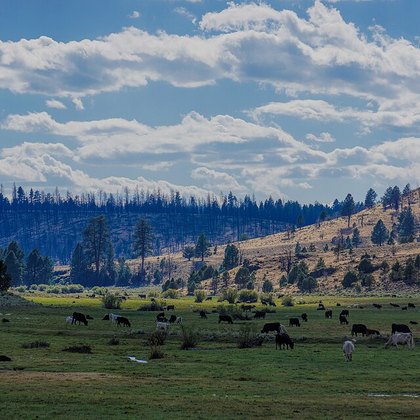
Where the bird is most often found, arranged by the USNVC — the vegetation classification of the United States and Canada — and CMECS for sea and coast.

Range and movements
The first successful introduction took place in 1881 in Oregon's Willamette Valley, with birds brought from Shanghai; Washington followed in 1883 and California in 1889. From there the pheasant was released across nearly the whole arable belt of North America over the following decades, densest in the broad band of grain and corn country running from the Rocky Mountains to the Great Lakes. It is now resident across most of the northern United States, the southern prairie provinces of Canada and southern Ontario, and locally in Hawaii; in the southeastern and southwestern United States the species has failed to establish despite attempts. It does not migrate: pheasants stay within a few kilometres of their birthplace for life, so the present range is almost entirely the result of release rather than natural spread.
- Resident
- Breeding (summer)
- Winter
- Passage
- dark = core range, pale = thinly spread
Where and when to look
Stand at the edge of a grain field or a set-aside strip before sunrise in late spring: the male's crow carries far over flat land and gives away his position before it is light. In winter a dense cattail marsh or an overgrown ditch bank is the surest place to look, especially in the snowy states of the northern Great Plains, where dozens of birds may share the same cover. Flushed, it almost always flies low and straight, a burst of clattering wingbeats followed by a long glide.
Conservation
Least Concern (LC) worldwide, and one of the most numerous gamebirds in North America, with millions of birds; South Dakota alone harvests over a million pheasants a year. The population depends in part on continued releases from game farms and on set-aside programmes for grain farmers; where those programmes have been cut back and farming has intensified, numbers have declined over recent decades.
Scientific name
Phasianus colchicus | Linnaeus, 1758
Linnaeus described the species in 1758 as Phasianus colchicus, in the genus it still stands in, so author and year carry no parentheses. Phasianus is the Latin form of Greek phasianos, 'bird of the Phasis', the river in Colchis from which the Greeks believed the pheasant came; colchicus, 'of Colchis', repeats the same origin. The type locality was later restricted to the Rioni, formerly the Phasis, in western Georgia. North American birds do not descend from this nominate form but from a mix of Asian and European subspecies, chiefly the Chinese P. c. torquatus (with a full neck ring), mixed with ringless forms, which explains why the neck ring on American birds is so often incomplete.