All species › Woodpeckers and allies › Woodpeckers › Red-headed Woodpecker
Red-headed Woodpecker | Melanerpes erythrocephalus
Roodkopspecht | Carpintero cabecirrojo
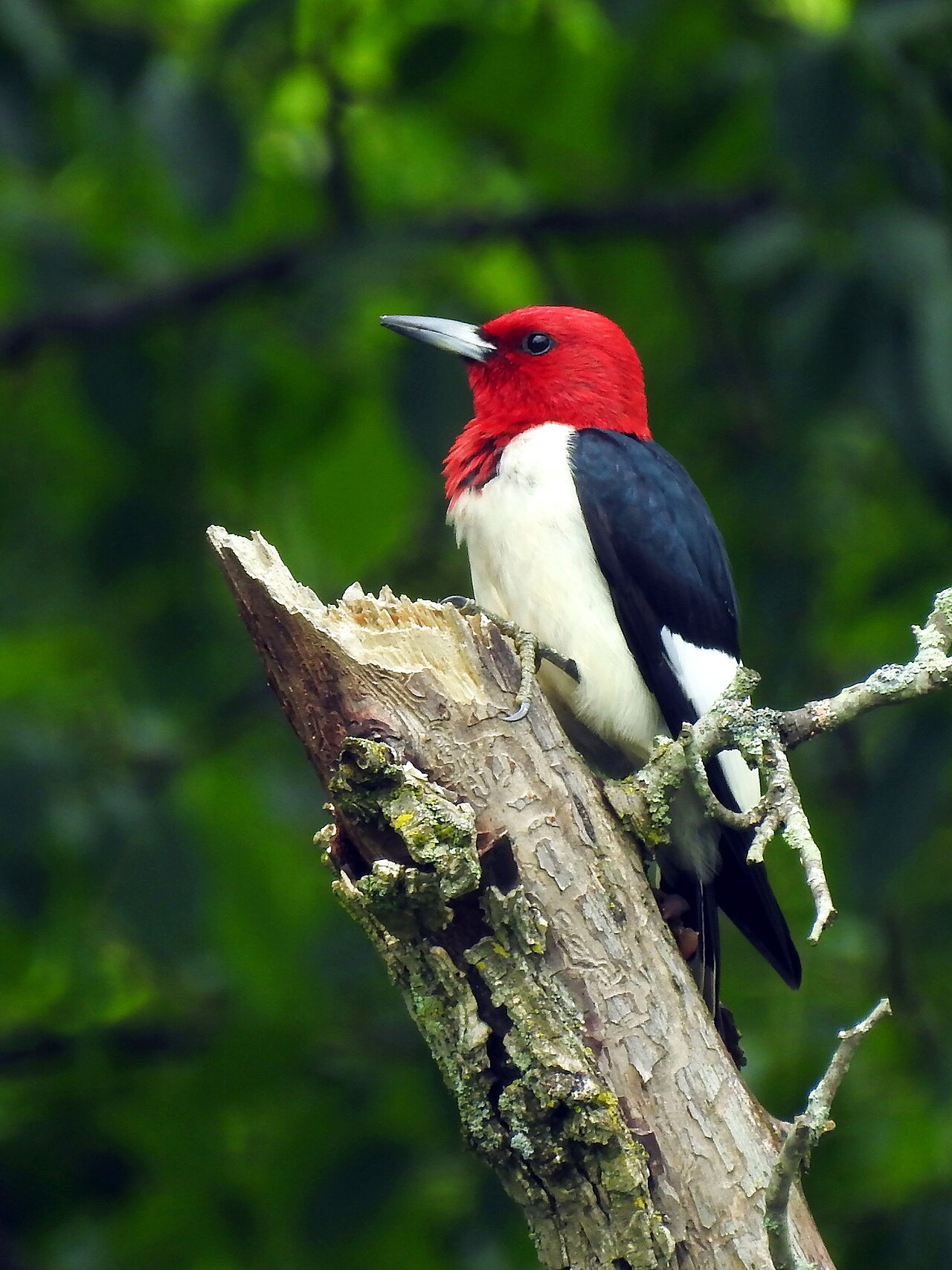
The Red-headed Woodpecker is a North American woodpecker in three sharply divided colours, with an entirely crimson head and neck, a blue-black back and a white belly, and large white wing panels in flight. It inhabits open country with scattered old trees, catches insects in the air like a flycatcher and stores food. It was once numerous enough to be considered a pest; since then it has declined steeply.
Voice
The most frequently heard sound is a loud, harsh queer or churr, higher and shriller than the call of Red-bellied Woodpecker, often repeated as birds chase each other. It also gives rattling series and, in disputes and courtship, a rapid chatter. The drum consists of short rolls, and during courtship partners tap softly on the rim of the nest cavity to attract each other. In winter it is noisy around its food stores and aggressive towards other birds.
Recording: Jim Berry — CC BY-NC-SA 4.0 · Skidaway Island, Chatham County, Georgia, United States · xeno-canto
Identification
Distinctive in adult plumage: head, throat and neck bright crimson with a sharp border to the white breast, back and forewing blue-black, and the secondaries white, so that a perched bird appears to have a large white patch on the lower back. The rump and belly are also white; in flight the bird therefore looks like a black-and-white chequered flag with a red head. Male and female are alike. Young birds have a greyish-brown head, a browner back and white secondaries with black bars; during their first winter they gradually acquire the red.
Confusion species
Red-bellied Woodpecker has only a red cap or nape, a finely black-and-white barred back and a greyish belly; its name often makes beginners think of Red-headed Woodpecker. Red-breasted Sapsucker of the west also has an entirely red head and breast, but a yellowish belly, a narrow white stripe along the closed wing instead of white secondaries, and a black back with pale spots. Young Red-headed Woodpeckers with their brown heads are sometimes taken for another species, but the white wing panels are obvious in that plumage too.
Habitat
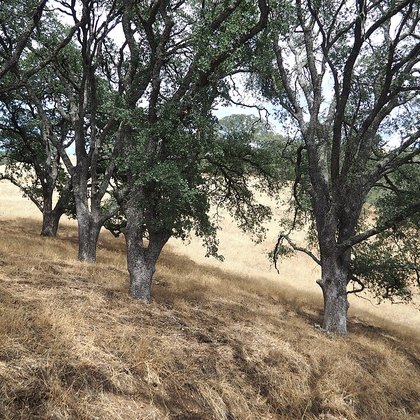
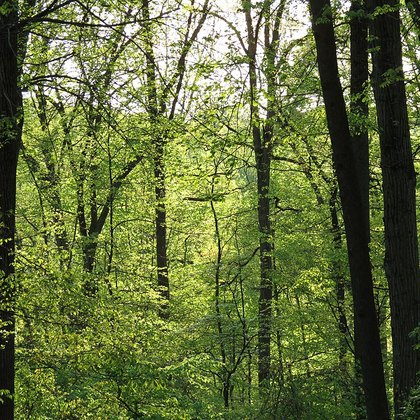
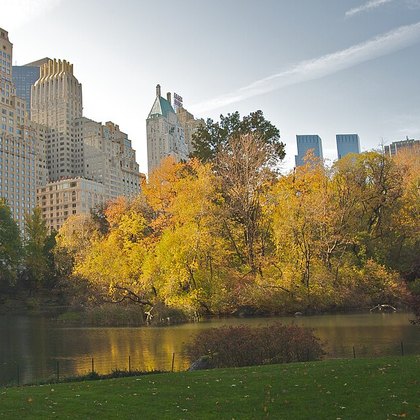
Open woodland and savanna with oaks or beeches, forest edges, river valleys with old trees, flooded woods with dead trunks such as at beaver dams, orchards, golf courses, parks and farmland with scattered trees. It needs dead trees or dead branches for nesting and open space to catch insects from a lookout perch. Recently burned forests are readily occupied. Because it depends heavily on nuts and acorns, it shifts from year to year with the crop, and can be locally numerous one year and virtually absent the next.
Where the bird is most often found, arranged by the USNVC — the vegetation classification of the United States and Canada — and CMECS for sea and coast.
Range and movements
It breeds in southern Canada, from Saskatchewan to southern Ontario, and in the United States east of the Rocky Mountains, from the Great Plains to the Atlantic coast and south to the Gulf Coast and Florida; in New England it is scarce. Northern birds leave in late October and return in late April; in the south many birds stay all year, and in winter they concentrate where the acorn and nut crop is good. It does not occur in Mexico. No subspecies are recognised.
- Resident
- Breeding (summer)
- Winter
- Passage
- dark = core range, pale = thinly spread
Where and when to look
In summer look for it along forest edges and in open oak woods with dead trunks: it likes to sit on a bare treetop or a post and sally out after flying insects like a flycatcher — among North American woodpeckers it is the most skilled at this. In autumn and winter it is often found by a food store: it wedges acorns, beechnuts and even live grasshoppers into bark crevices or under roof shingles and defends them against other birds.
Conservation
The IUCN has rated the species as Least Concern (LC) since 2018; from 2004 to 2018 it was listed as Near Threatened (NT). Partners in Flight estimates the breeding population at about 1.8 million birds, and according to the Breeding Bird Survey numbers fell by more than one per cent a year between 1966 and 2019, some 54 per cent in total. Causes include the loss of dead trees and nut-bearing trees such as the American chestnut, competition for nest cavities with European Starling, and road traffic. In Canada it is legally listed as a threatened species.
Scientific name
Melanerpes erythrocephalus | (Linnaeus, 1758)
Linnaeus described the species in 1758 as Picus erythrocephalus, based on Mark Catesby's description from Carolina; the type locality is given as South Carolina. Because the species has since been moved to another genus, author and year stand in parentheses. William Swainson erected the genus Melanerpes in 1832 specifically for this species; the name comes from the Greek melas 'black' and herpēs 'creeper'. Erythrocephalus combines the Greek eruthros 'red' with kephalē 'head'.