All species › Passerines › Nuthatches › Red-breasted Nuthatch
Red-breasted Nuthatch | Sitta canadensis
Canadese boomklever | Sita canadiense
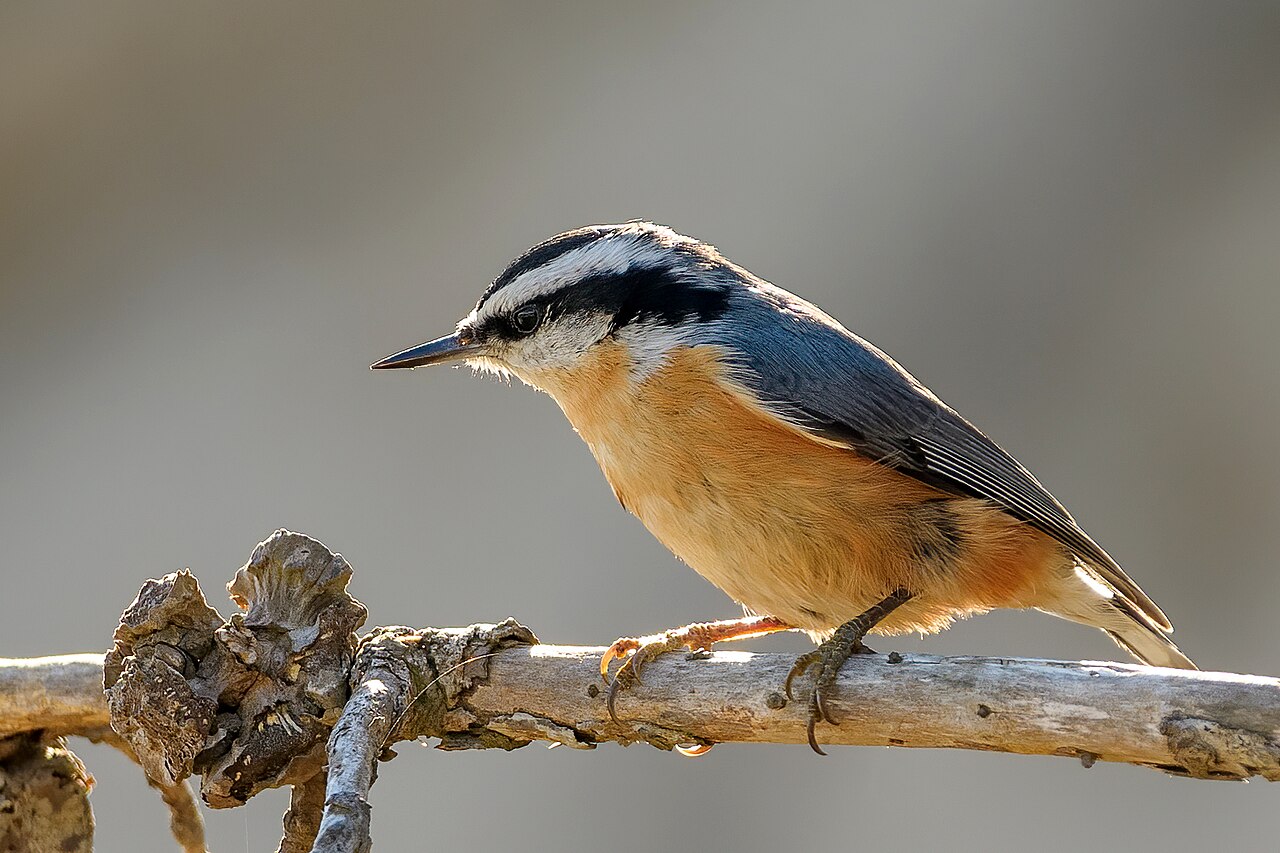
The Red-breasted Nuthatch is a small, short-tailed climber of the conifer woods: blue-grey above, rusty below, with a black line straight through the eye under a white eyebrow. It chisels its own nest hole in dead wood and then smears resin around the entrance, carrying the pitch on a flake of bark held in the bill. When the cone crop fails, thousands move south in autumn as far as the Gulf coast.
Voice
The first thing you notice is a high, nasal ank-ank-ank, as though someone were blowing a toy trumpet; it is thinner, faster and a good deal higher than the tooting of the White-breasted Nuthatch. It comes in runs of three to eight notes, often from high in a spruce, and goes on all winter. Feeding pairs keep contact with a soft, short it that carries only at close range. In spring the run speeds up and evens out and serves as the song, usually from a bare top branch.
Recording: Manuel Grosselet — CC BY-NC-SA 4.0 · Waterton Park, Improvement District No. 4, Alberta, Canada · xeno-canto
Identification
The male has a black crown and nape, a white eyebrow and below it a black line straight through the eye, a white throat and cheek, blue-grey upperparts and rusty to cinnamon underparts. The female is marked in the same way, but the crown is slate-blue rather than black and the underparts are paler, more buff. Juveniles resemble the female and are duller still. The build is that of all nuthatches: a large head, no neck, a straight pointed bill and a tail so short that it props on nothing while climbing. It walks head-down as readily as head-up and works out along branches into the outermost needles. The flight is short and deeply undulating, tree to tree.
Confusion species
White-breasted Nuthatch (Sitta carolinensis) is larger, has an entirely white face without an eye stripe, and white underparts with at most some rust under the tail. Brown Creeper climbs only upward, props on its tail, is streaked brown and has a thin curved bill. Black-capped Chickadee and Carolina Chickadee also wear a black cap, but carry a black throat patch with it, and they hang from twig tips instead of walking on the bark. Golden-crowned Kinglet shares the same conifers and is as small, but is olive-green with two white wingbars and a yellow crown, and flits at the needle tips instead of climbing.
Habitat
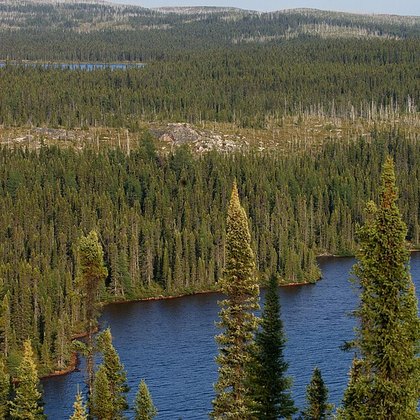
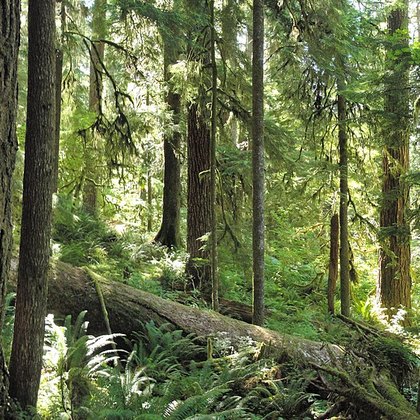
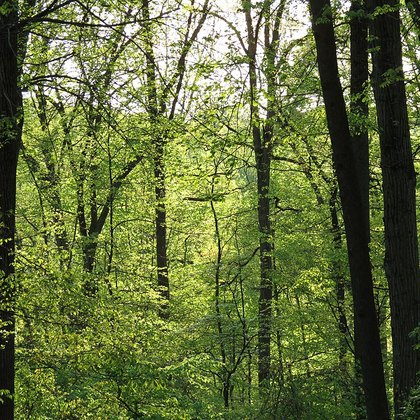
Conifer forest of spruce, hemlock, fir and Douglas-fir: the boreal woods of Canada, the mountain forest of the west and the hemlock slopes of the Appalachians. Where conifers stand among broadleaves a single clump will do, because what it wants are the cones and the bark crevices, not the tree species as such. For the nest it needs standing dead wood — a dead birch, a rotten stub — soft enough to chisel. Outside the breeding season, and above all in irruption years, it turns up in gardens, parks and cemeteries with a single spruce or pine, and at feeders. It does not use open country, bare farmland or pure lowland broadleaf forest in summer.
Where the bird is most often found, arranged by the USNVC — the vegetation classification of the United States and Canada — and CMECS for sea and coast.

Range and movements
It breeds from southern Alaska across the boreal forest of Canada to Newfoundland, south in the mountains to Arizona and New Mexico and in the Appalachians to North Carolina, with a separate resident population in the Sierra San Pedro Mártir of Baja California. Over much of that ground it stays put all year. Roughly every other year, when spruces and hemlocks set few cones, part of the population leaves the breeding range as early as July and August and reaches the Gulf coast, the desert states and Florida by autumn; such years also produce the records far outside the range, including a bird that turned up in England in 1989. In the east it has become more numerous during the twentieth century and has bred further south as planted spruces and hemlocks matured.
- Resident
- Breeding (summer)
- Winter
- Passage
- dark = core range, pale = thinly spread
Where and when to look
Find it by ear: in conifer forest the nasal tooting carries tens of metres, and only then do you locate the bird itself, usually high in the crown and head-down. In winter a feeder with sunflower seed beside a stand of spruces is the surest place; it comes in more briefly and more often than the chickadees, takes one seed and wedges it in a bark crevice. In August and September watch single conifers outside the forest — in irruption years that is exactly where they sit.
Conservation
Numerous and increasing across the board; counts point to a population in the order of twenty million birds. Logging of old conifer forest and the tidying away of standing dead wood take nest sites from it; where dead trunks are left standing, it stays. In irruption years many are killed against the windows of houses with a feeder.
Scientific name
Sitta canadensis | Linnaeus, 1766
Linnaeus described the species in 1766, in the twelfth edition of his Systema Naturae, as Sitta canadensis — the genus it still stands in, so author and year carry no parentheses. The genus Sitta was introduced by Linnaeus in 1758 and goes back to Greek sittē, the name Aristotle used for a bird that climbed tree trunks. canadensis means 'of Canada', and the type locality is given simply as Canada. The Dutch and Spanish names follow that type locality; the English one points to the rusty underparts.