All species › Swifts › Hummingbirds › Lucifer Hummingbird
Lucifer Hummingbird | Calothorax lucifer
Luciferkolibrie | Colibrí lucifer
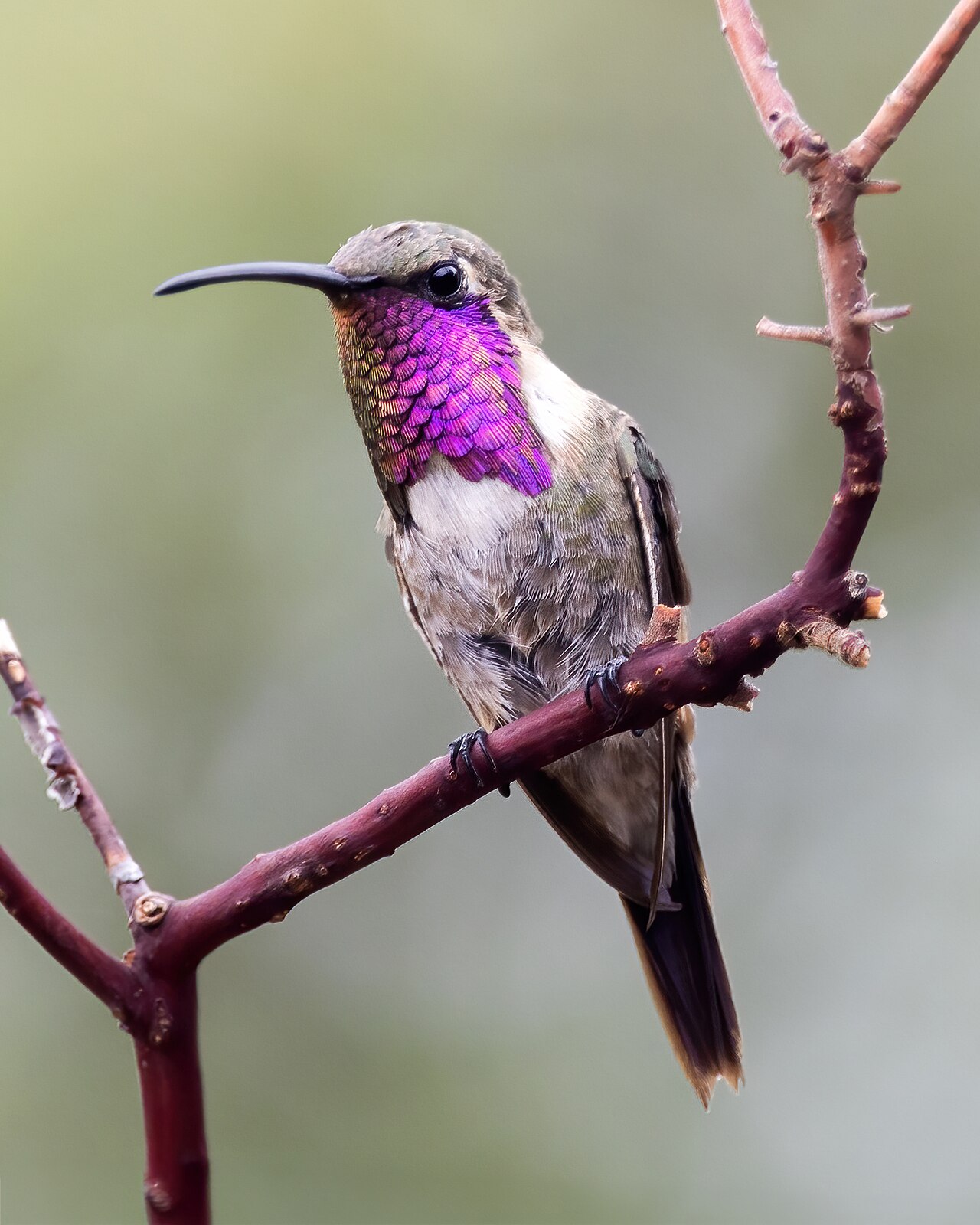
The Lucifer Hummingbird is the only hummingbird breeding regularly north of the Mexican border that has an obviously curved bill. It belongs to the agave slopes of the Chihuahuan Desert, and touches the United States only in West Texas and in a few border canyons of New Mexico and Arizona.
Click a thumbnail to switch the photo above.
Voice
It has no song in the ordinary sense. The voice is a series of thin, dry chip notes, often in pairs, and a soft rattling brzhee-brzhee in disputes over a flowering agave. More telling is the mechanical sound of the display dive: the male climbs tens of metres, drops past the perched female and produces a rattling flutter with wings and tail as he passes. The whole performance may come round five times within an hour.
Recording: Manuel Grosselet — CC BY-NC-SA 4.0 · Tláhuac (near Mexico City), Mexico City, Mexico · xeno-canto
Identification
The male is green above and dingy white below, with a long magenta gorget drawn out into a point on each side. That colour lies not in a pigment but in the structure of the feather: it lights up only when the bird faces you in direct sun, and looks black the rest of the time. The tail is long, narrow and deeply forked; the bill is long and clearly decurved in both sexes. The female is buff below, with a plain pale throat and cinnamon on the flanks and the base of the tail.
Confusion species
Costa's Hummingbird also has a purple throat drawn out into points, but a short straight bill, a purple crown and a short tail. Black-chinned Hummingbird has a straight bill and a black throat with a thin violet lower edge. Females are the most similar: a female Lucifer gives itself away by the curved bill, the buff underparts and the cinnamon tail base, against the straight bill and white belly of a female Black-chinned.
Habitat
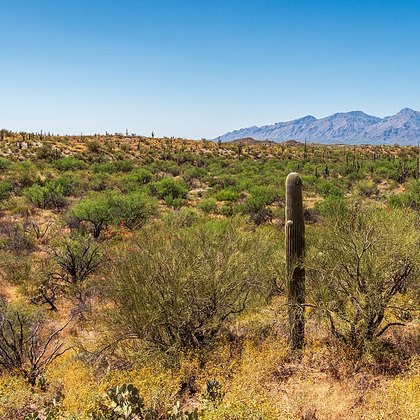
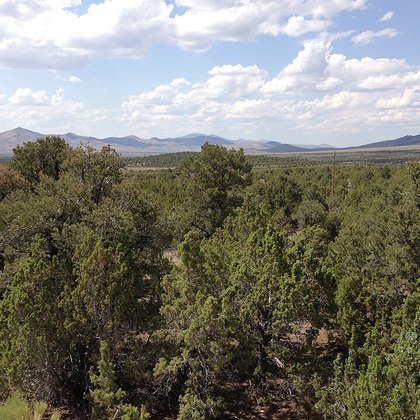
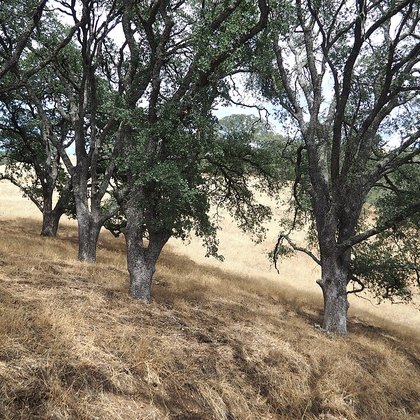
Dry, stony slopes and canyon walls roughly between 1000 and 1700 metres, with agave, ocotillo, sotol and cholla. The flowering stalk of the agave, or century plant, is its main food source. Closed forest and irrigated lowland it avoids; at feeders in the border canyons larger hummingbirds drive it off. In Mexico it winters in similar scrub, in pine-oak woodland and in canyons of tropical deciduous forest.
Where the bird is most often found, arranged by the USNVC — the vegetation classification of the United States and Canada — and CMECS for sea and coast.


Range and movements
The core of the range lies on the Mexican plateau and in the foothills of the Sierra Madre; it breeds from March to September and then moves to central and southern Mexico. In the United States the breeding range is small: Big Bend with the Chisos Mountains, the Davis Mountains, the Peloncillo Mountains of southwestern New Mexico and a few canyons in southeastern Arizona. New Mexico holds only a few dozen birds. Records in the border states have risen, partly through more observers and more feeding stations.
- Resident
- Breeding (summer)
- Winter
- Passage
- dark = core range, pale = thinly spread
Where and when to look
Look for it in July and August, when the agaves flower: a feeder garden in Ash Canyon or a slope trail in the Chisos Mountains gives the best chance. Watch the silhouette rather than the colour — the curved bill and the long forked tail show even against the light, while the gorget stays black most of the time.
Conservation
The species is listed as Least Concern (LC). Partners in Flight puts the world population at about 200,000 birds, virtually all in Mexico; at most a tenth spend part of the year in the United States. The species was placed on the 2014 State of the Birds watch list and its trend is uncertain, since the core range is barely surveyed. In the border mountains feeders probably keep numbers higher than they would otherwise be; grazing and disturbance in the canyons are the pressure there.
Scientific name
Calothorax lucifer | (Swainson, 1827)
Swainson described the species in 1827 as Cynanthus Lucifer; because it was later moved to another genus, author and year stand in parentheses. The genus Calothorax was introduced in 1840 by George Robert Gray, from Greek kalos 'beautiful' and thorax 'breast'; the name thus means 'with the beautiful breast', after the male's gorget. The species name lucifer is Latin for 'light-bearer', the Roman name for the morning star. The specimen described came from Mexico.