All species › Passerines › Mockingbirds and thrashers › LeConte's Thrasher
LeConte's Thrasher | Toxostoma lecontei
Woestijnspotlijster | Cuitlacoche pálido
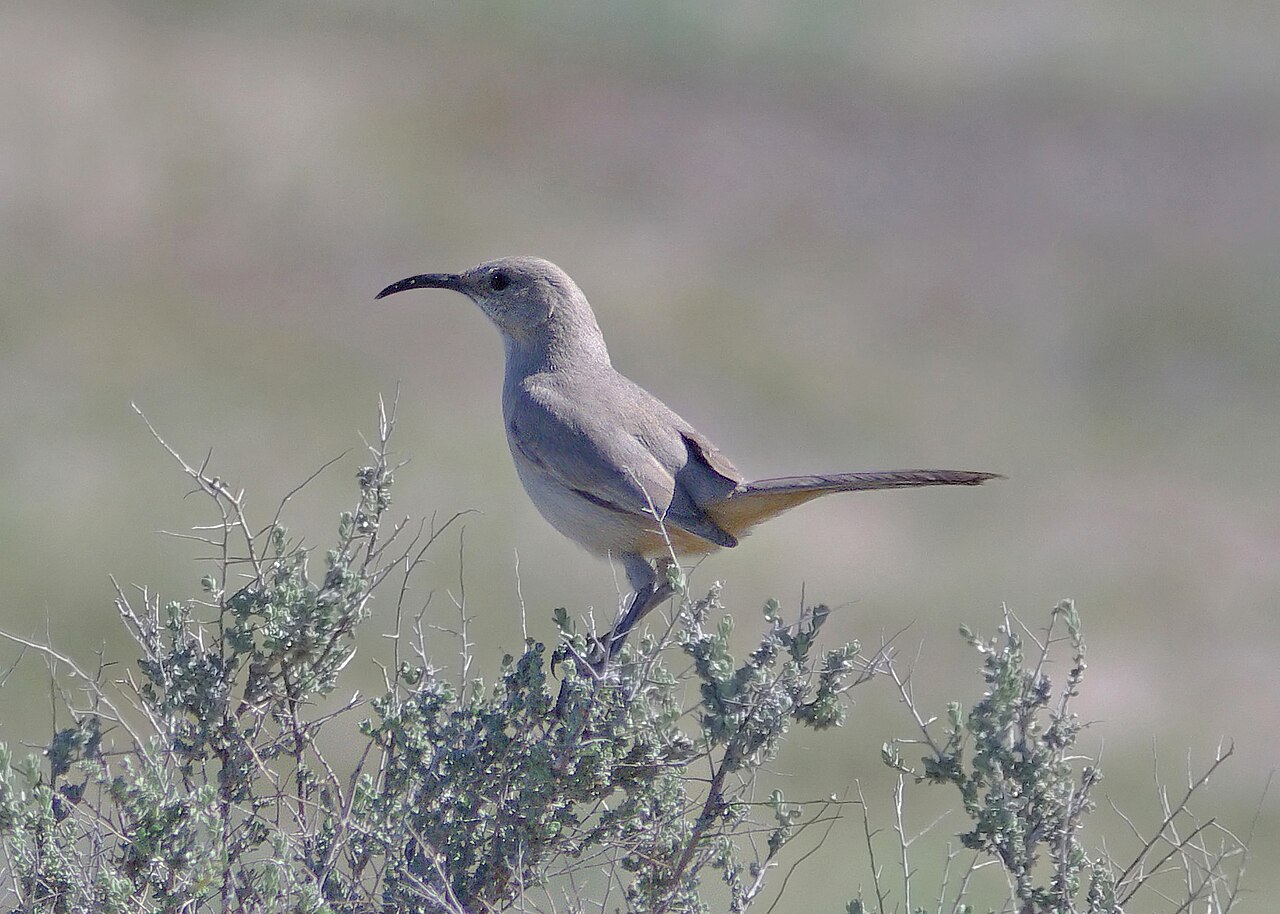
LeConte's Thrasher is the palest thrasher in North America and lives in the driest, barest parts of the Mojave and Sonoran deserts, where four to twenty centimetres of rain fall in a year. It is sandy grey, almost unmarked, and spends most of its time running over open ground with the tail raised rather than flying.
Voice
The song consists of drawn-out warbled phrases repeated several times, beginning softly and then rising in volume, with unhurried pauses. It sings from an exposed perch — the top of a creosote bush or cholla — in the early morning or towards evening, sometimes at night, and mostly from January to April. The female sings as well. The call is a rising whistled chu-eep that carries far across the flats.
Recording: Scott Olmstead — CC BY-NC-SA 4.0 · Southern Santa Cruz Flats, Pima County, Arizona, United States · xeno-canto
Identification
Sandy pale grey over crown, back and underparts, with a slightly darker grey-brown tail that stands out against the pale body, and a faintly marked off-white throat. Breast and belly are plain, without spots or streaks. The undertail coverts are cinnamon. The bill is long, black and sickle-shaped, the legs almost black, the iris dark. Male and female are alike.
Confusion species
No other thrasher is this pale. Bendire's Thrasher is browner, has a much shorter, straighter bill with a pale base, distinct triangular breast spots and a yellow iris. Curve-billed Thrasher is darker grey-brown with blurred breast spots, an orange iris and white tail tips. Crissal Thrasher is darker, has a sharply defined white throat with a dark malar stripe and a bright rufous undertail. On a brief silhouette in the desert, behaviour helps: this species runs and seldom flies, holding the tail up as it goes.
Habitat
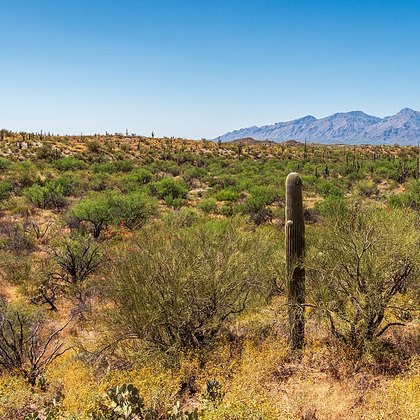
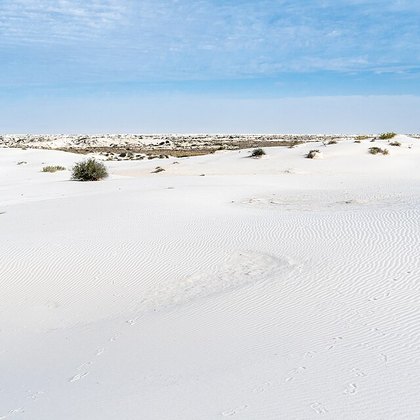
Flat to gently rolling desert with widely spaced shrubs and much bare ground between the plants: saltbush, creosote bush, cholla, Mojave yucca and the vegetation of shallow washes, alluvial fans and sand flats. It avoids canyons and steep slopes as it avoids dense scrub. Nests are placed in a thorny shrub or cactus. In California's San Joaquin Valley a separate, still paler form lives on alkali flats and saltbush (a dry western steppe shrub) ground.
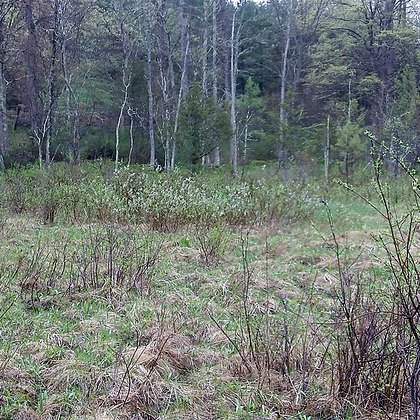
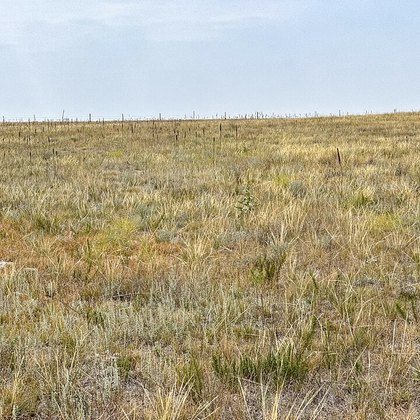
Where the bird is most often found, arranged by the USNVC — the vegetation classification of the United States and Canada — and CMECS for sea and coast.
Range and movements
From the San Joaquin Valley and the Mojave Desert in California east through southern Nevada and the southwestern corner of Utah to central and southwestern Arizona, and south through northeastern Baja California into the Vizcaíno Desert of Baja California Sur and northwestern Sonora. It does not migrate and stays in the same ground all year; densities are low everywhere and birds are widely spaced.
- Resident
- Winter
- Passage
- dark = core range, pale = thinly spread
Where and when to look
Go at first light in February or March to a flat, sparsely vegetated desert plain and listen for the rising whistle; once the sun is high the song stops and the chance is small. Search the ground between the shrubs for a running, pale bird with the tail raised — that behaviour gives it away sooner than the colour.
Conservation
Partners in Flight puts the population at about 71,000 breeding birds. The Breeding Bird Survey shows a decline of 2.8 per cent a year between 1968 and 2023, 80 per cent in all; the 2025 State of the Birds report places the species in its highest alert category, despite the IUCN status of Least Concern (LC). Habitat loss to building, agriculture, grazing, off-road vehicles and fires in desert altered by non-native grasses is the main cause. Because the species lives in thinly settled, hard-to-reach desert, standard surveys measure it poorly.
Scientific name
Toxostoma lecontei | Lawrence, 1851
George Newbold Lawrence described the species in 1851 as Toxostoma Le Contei, from a specimen taken in California near the junction of the Gila and the Colorado, at Fort Yuma; because it has remained in the same genus since, author and year stand without parentheses. The name honours John Lawrence LeConte, entomologist and later president of the American Association for the Advancement of Science. The genus Toxostoma is from Greek toxon 'bow' and stoma 'mouth'. The Dutch and Spanish names refer to the habitat and to the pale colour respectively.