All species › Passerines › Mockingbirds and thrashers › California Thrasher
California Thrasher | Toxostoma redivivum
Californische spotlijster | Cuitlacoche californiano
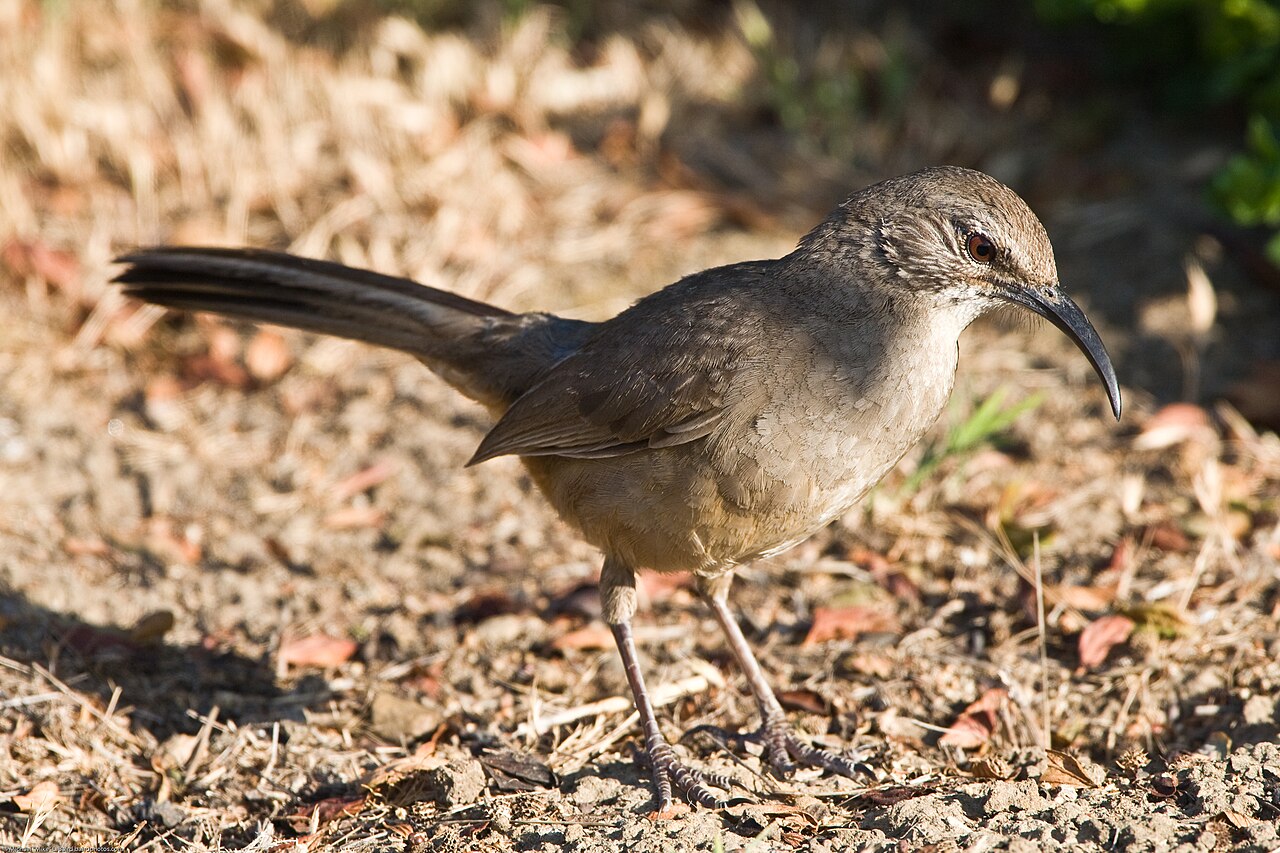
The California Thrasher is the largest thrasher in North America and the bird of the California chaparral (dense evergreen shrubland of dry hillsides). It is dark grey-brown, has a long curved black bill and a dark iris, and spends almost its whole life inside a single scrub territory. Outside California and northwestern Baja California it does not occur.
Voice
The song is a long series of phrases repeated two or three times, mixing harsh, rattling and clear whistled notes, with much imitation of the other birds of the same thicket. Both sexes sing, usually from the top of a shrub, mostly from December to May. The call is a low, two-syllabled chu-rrek and a dry rattle.
Recording: Thomas G. Graves — CC BY-NC-SA 4.0 · Santa Margarita, San Luis Obispo County, California, United States · xeno-canto
Identification
A large, long-tailed thrasher, dark grey-brown above and slightly paler below, with a rusty belly and undertail coverts and an olive cast to the tail. The throat is pale and stands out against a faintly dark malar stripe; a grey-buff eyebrow runs above the eye. The iris is dark brown, not yellow or orange as in most other thrashers. The bill is long, black and strongly decurved. The breast is unspotted.
Confusion species
Crissal Thrasher of the deserts east of the Sierra Nevada is the most similar, but is paler grey, has a more sharply defined white throat with a distinct dark malar stripe and a bright cinnamon undertail; the two ranges barely touch. Curve-billed Thrasher is paler, has a yellow to orange iris and blurred breast spots. Sage Thrasher is much smaller, streaked below and has a short straight bill. All thrashers separate in chaparral from Northern Mockingbird, which shows white wing patches.
Habitat
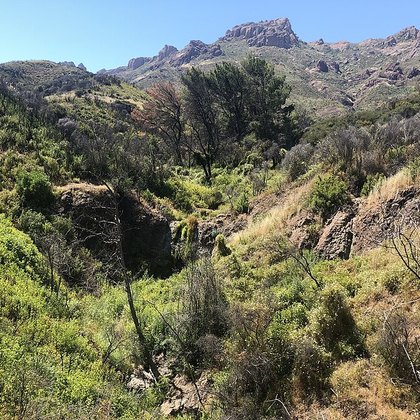
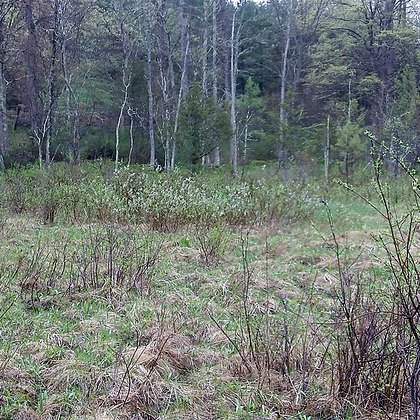
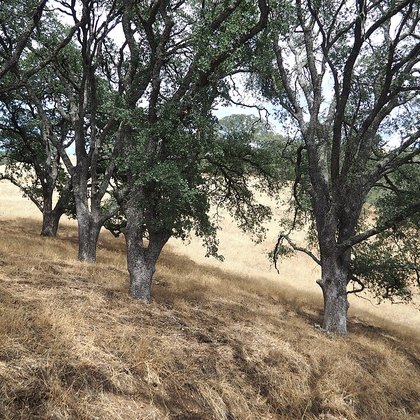
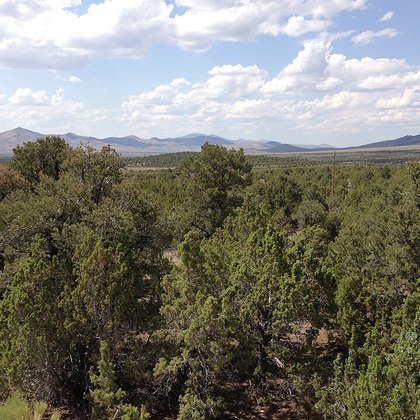
Chaparral on hill slopes, with ceanothus, manzanita, toyon and scrub oak, and also dense scrub in oak woodland, riparian woodland with thick understorey, sagebrush and juniper scrub. A deep layer of litter under the bushes is a requirement: it forages on the ground and digs sideways through leaves and loose soil with its bill. It avoids open woodland without understorey. It reaches about 1600 metres, occasionally 2000 metres in the southern mountains, and persists in large gardens with native shrubbery.
Where the bird is most often found, arranged by the USNVC — the vegetation classification of the United States and Canada — and CMECS for sea and coast.

Range and movements
Endemic to California west of the Sierra Nevada and the deserts, from Shasta and Trinity counties in the north south through the coast ranges and the western Sierra foothills into northwestern Baja California. It does not migrate and moves hardly at all outside the breeding season; even young birds settle close to where they hatched. Territories cover a few hectares to more than ten.
- Resident
- Breeding (summer)
- Winter
- Passage
- dark = core range, pale = thinly spread
Where and when to look
A chaparral slope at sunrise in February or March gives the best chance: it then sings from a shrub top, while later in the day it disappears onto the ground beneath the bushes. In doubt, check the dark iris and the unspotted, rusty-tinged underparts — that separates it from any other thrasher within its range.
Conservation
Partners in Flight puts the population at about 240,000 birds. Between 1968 and 2015 numbers fell by roughly 54 per cent, some 1.6 per cent a year. The main pressure is the loss of chaparral to housing, clearance and fragmentation: because a pair needs a large territory, the species drops out of remnants that become too small. Predation by feral cats falls mainly on young birds. Climate models project a strong contraction of the breeding range under continued warming.
Scientific name
Toxostoma redivivum | (Gambel, 1845)
William Gambel described the species in 1845 as Harpes rediviva, from material near Monterey in Upper California; because it was later placed in Toxostoma, author and year stand in parentheses. The genus Toxostoma is from Greek toxon 'bow' and stoma 'mouth'. The species name redivivum is Latin for 'brought back to life, renewed'; the reason for that choice is not known with certainty.