All species › Passerines › Cardinals and allies › Hepatic Tanager
Hepatic Tanager | Piranga flava
Laaglandlevertangare | Piranga bermeja
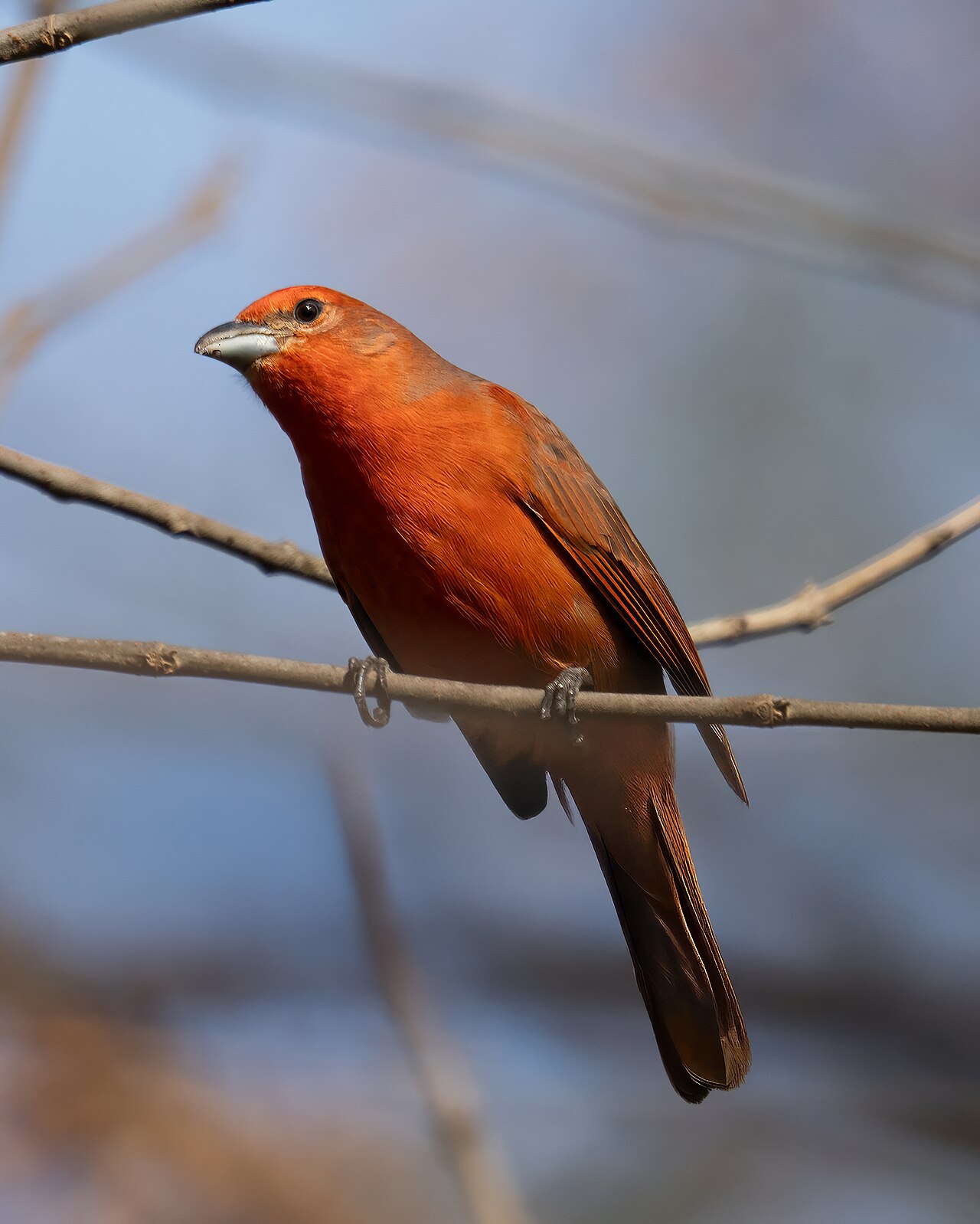
The Hepatic Tanager is the tanager of pine-oak mountain woodland in the southwestern United States and in Mexico. The male is brick to rusty red rather than bright red, with a grey wash on cheek and flank and a dark bill — the combination that separates it from the other two red tanagers.
Voice
The song is a series of short, round whistled phrases with pauses between them, three to four seconds long, closest in tone to a thrush and less burry than that of the Scarlet Tanager. The call is a short, low, clipped chup or tuck, one note at a time and without the chuckle of the Summer Tanager; in flight it also gives a soft, thin wenk.
Recording: Paul Molina Abril — CC BY-NC-SA 4.0 · Azuay: upper Yunguilla Valley, Ecuador · xeno-canto
Identification
The male is greyish brick red, deepest on crown, throat and breast, with a clear grey wash over the ear-coverts and flanks; the back is duller red with grey running through it. The female is olive-yellow above and yellow below, with the same greyish ear-coverts. The bill in both sexes is dark and stout, with a slight angle or tooth in the cutting edge of the upper mandible. The bird forages slowly and methodically through the foliage, usually inside the canopy, and so draws little attention despite its colour.
Confusion species
Summer Tanager is pink to strawberry red without grey, and has a pale horn-coloured bill; that bill difference also works on females, and a female of this species has greyish ear-coverts besides. Male Scarlet Tanager has black wings and tail and occupies deciduous woodland in the east. Western Tanager has two yellow or white wingbars. Flame-colored Tanager is more orange-red and has a streaked back, two white wingbars and a dark outline to the ear-coverts.
Habitat
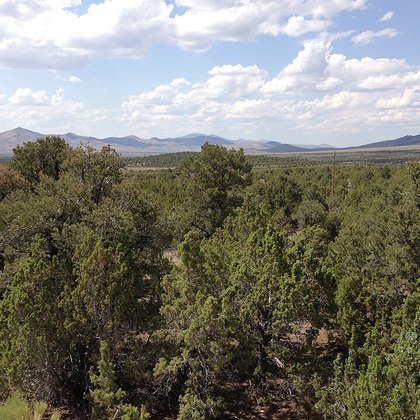
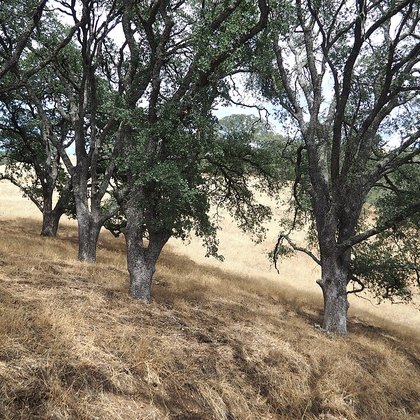
Open mountain woodland of pine, or of pine and oak mixed, generally between 1500 and 2500 metres in the northern part of the range; also juniper-pinyon woodland at the lower edge and dry oak woodland in canyons. It sits higher and drier than Summer Tanager, which occupies the riverside woodland on the valley floor in the same mountains. In Mexico and further south it also uses lower open woodland and forest edge.
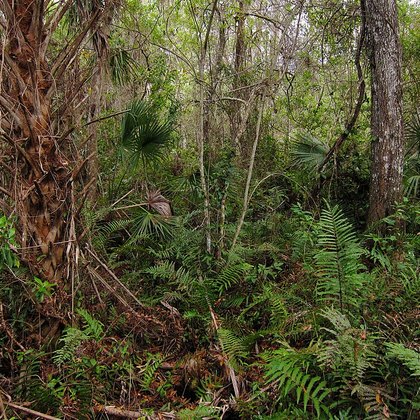
Where the bird is most often found, arranged by the USNVC — the vegetation classification of the United States and Canada — and CMECS for sea and coast.


Range and movements
Within the United States it breeds in the mountains of Arizona and New Mexico, plus West Texas and scattered sites in southern Utah, Colorado and Nevada; the northern limit has shifted gradually since the 1960s. These birds are summer visitors and leave the country in winter. From northern Mexico southward the species is largely resident in the highlands, through Mexico and Central America to Nicaragua and on into South America. The populations differ markedly and are treated as separate species by some lists.
- Resident
- Breeding (summer)
- Winter
- Passage
- dark = core range, pale = thinly spread
Where and when to look
Look for it from May to August in the pine-oak canyons of southeastern Arizona, above the level at which Summer Tanager stops. Listen to the call: a single dry chup is this species, a chuckling pit-ti-tuck is Summer Tanager. On a red male, check bill and cheek — a dark bill and a grey cheek are the proof here.
Conservation
The species in the broad sense is listed as Least Concern (LC) and falls in the lowest concern category in the United States; its range there has expanded northward since the 1960s. It is little studied in the United States: up to 2002 only 106 birds had been ringed in the country. Large-scale forest fires and the alteration of open pine-oak woodland in the border ranges are the main factors for the northern part of the population.
Scientific name
Piranga flava | (Vieillot, 1822)
Vieillot described the species in 1822 as Saltator flavus, from a specimen taken in Paraguay; because it later moved to another genus, author and year stand in parentheses. The genus Piranga goes back to the Tupi word tijepiranga. The species name flava is Latin for 'yellow', after the female of the southern population. The English name Hepatic means 'liver-coloured', after the dark red-brown male; the Dutch name follows the treatment in which the northern birds are counted with the lowland species, while other lists keep them apart as Piranga hepatica.