All species › Pelicans, herons and ibises › Herons, egrets and bitterns › Great Blue Heron
Great Blue Heron | Ardea herodias
Amerikaanse blauwe reiger | Garza azulada
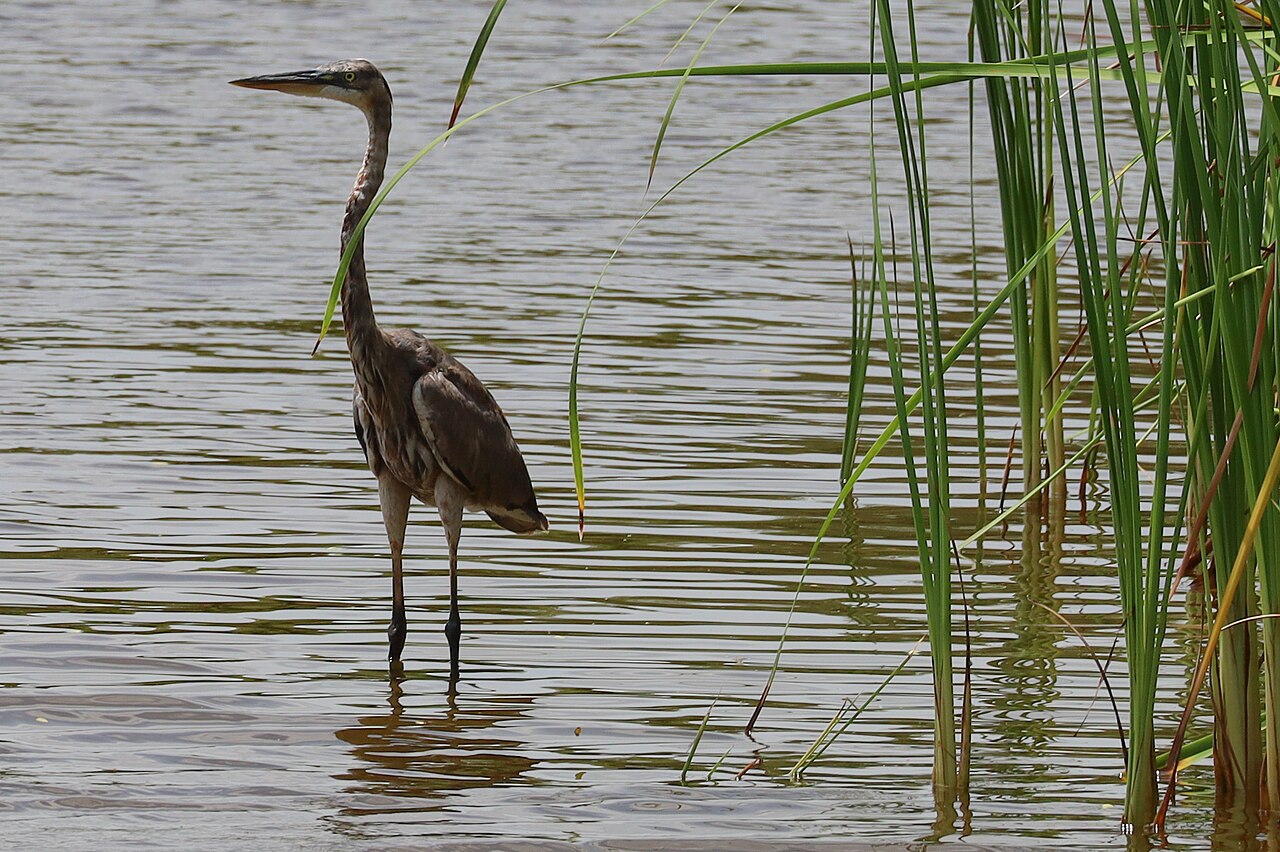
Great Blue Heron is North America's largest heron: a blue-grey bird that can stand upright and motionless at any water's edge, waiting for a fish to come within reach. With its neck folded into an S and its long yellow bill poised like a spear, it can be found on every body of water on the continent. The southern tip of Florida also holds an all-white form that was long treated as a separate species.
Voice
Usually a silent bird, but when startled it gives a hoarse, far-carrying fraahnk as it flaps away on slow wingbeats. At the breeding colony the sound is different: prolonged squawking and bill-clattering as partners change over at the nest. Chicks beg with a shrill, persistent screeching that makes a busy colony audible from a distance.
Recording: Jeff Stewart — CC BY-NC-SA 4.0 · Cavan-Monaghan (near Millbrook), Peterborough County, Ontario, Canada · xeno-canto
Identification
A tall, slender heron with blue-grey plumage, a white head marked by a black eyebrow stripe that trails into long plumes down the neck, and a heavy yellow bill that turns orange in breeding condition. In flight the neck is folded into an S with the legs trailing well beyond the tail — a silhouette recognisable at great distance. Young birds are duller, with a grey rather than white head and lacking the long plumes. Southern Florida holds a pure white form with yellow rather than black legs.
Confusion species
Sandhill Crane flies with its neck outstretched rather than folded and has a much shorter, heavier body. Great Egret is entirely white and noticeably lighter-built, with black rather than greenish-yellow legs — the key difference from the white form of Great Blue Heron, which is otherwise heavier-billed and larger-bodied. At a distance the species is sometimes mistaken for a large raptor perched on a branch, until it moves and unfolds its long neck.
Habitat
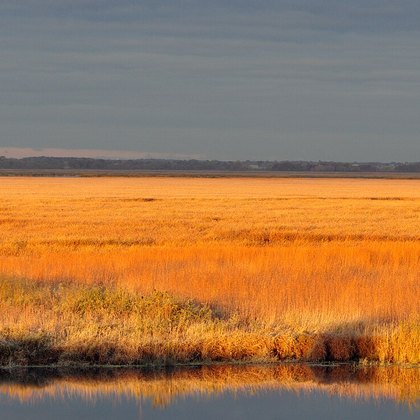
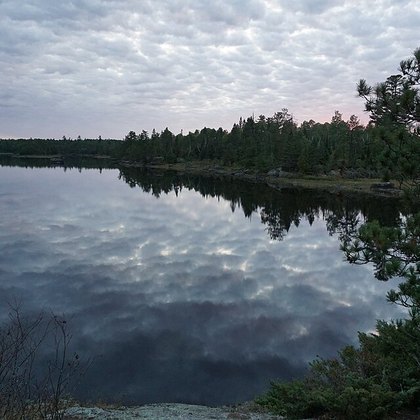
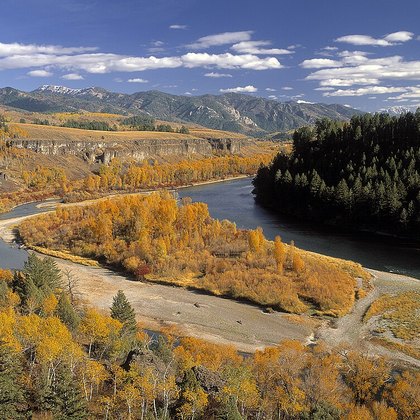
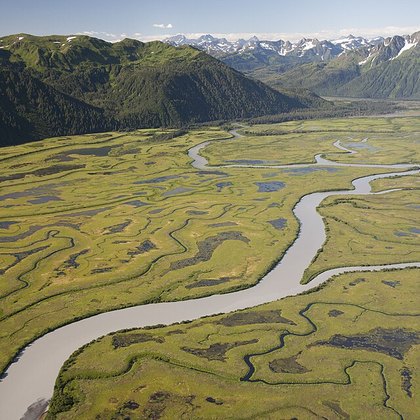
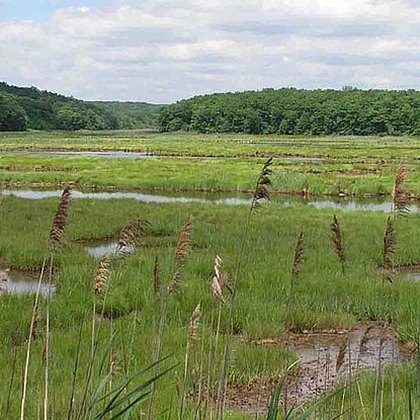
Almost any fresh, brackish or salt water shallow enough to wade in: marshes, lakeshores, riverbanks, salt marsh, estuaries and tidal flats. It also hunts on dry ground, in fields and pasture, for rodents and other small animals. For its nest colony it seeks tall trees over or near water, preferably on islands or in swamp where predators struggle to reach. Only fully frozen or closed-off waters go unused.
Where the bird is most often found, arranged by the USNVC — the vegetation classification of the United States and Canada — and CMECS for sea and coast.
Range and movements
Breeds from Alaska and southern Canada to Mexico and the Caribbean, and is largely resident across the range south of the Canadian border. Birds from the north and the Canadian interior move south in winter to the southern United States and Mexico, joining the resident population there. The species has clearly benefited from the spread of fish farms and urban green space, and has begun nesting in city parks in recent decades.
- Resident
- Breeding (summer)
- Winter
- Passage
- dark = core range, pale = thinly spread
Where and when to look
Look at dawn or dusk along the edge of almost any water: it stands motionless, often for minutes at a stretch, until a fish comes close enough for a sudden jab of the bill. Breeding colonies, sometimes dozens of nests in a single stand of trees, give themselves away in early spring by the noise of calling and bill-clattering birds.
Conservation
Widespread and numerous, with a population that has held stable or increased slightly in recent decades. Like other herons the species suffered from pesticide contamination in the mid-twentieth century; loss of marsh and shoreline habitat remains the main ongoing concern.
Scientific name
Ardea herodias | Linnaeus, 1758
Linnaeus described the species in 1758 as Ardea Herodias, in the same genus it still occupies, so author and year stand without parentheses. Ardea is classical Latin for 'heron'; herodias comes from the Greek erōdios, also 'heron', so the scientific name literally means 'heron-heron'. The type locality was first given only vaguely as 'America', later narrowed to the area around Hudson Bay, based on a description by the naturalist Edwards.