All species › Passerines › Chats, Old World flycatchers and allies › Gray-streaked Flycatcher
Gray-streaked Flycatcher | Muscicapa griseisticta
Gestreepte Vliegenvanger | Papamoscas estriado
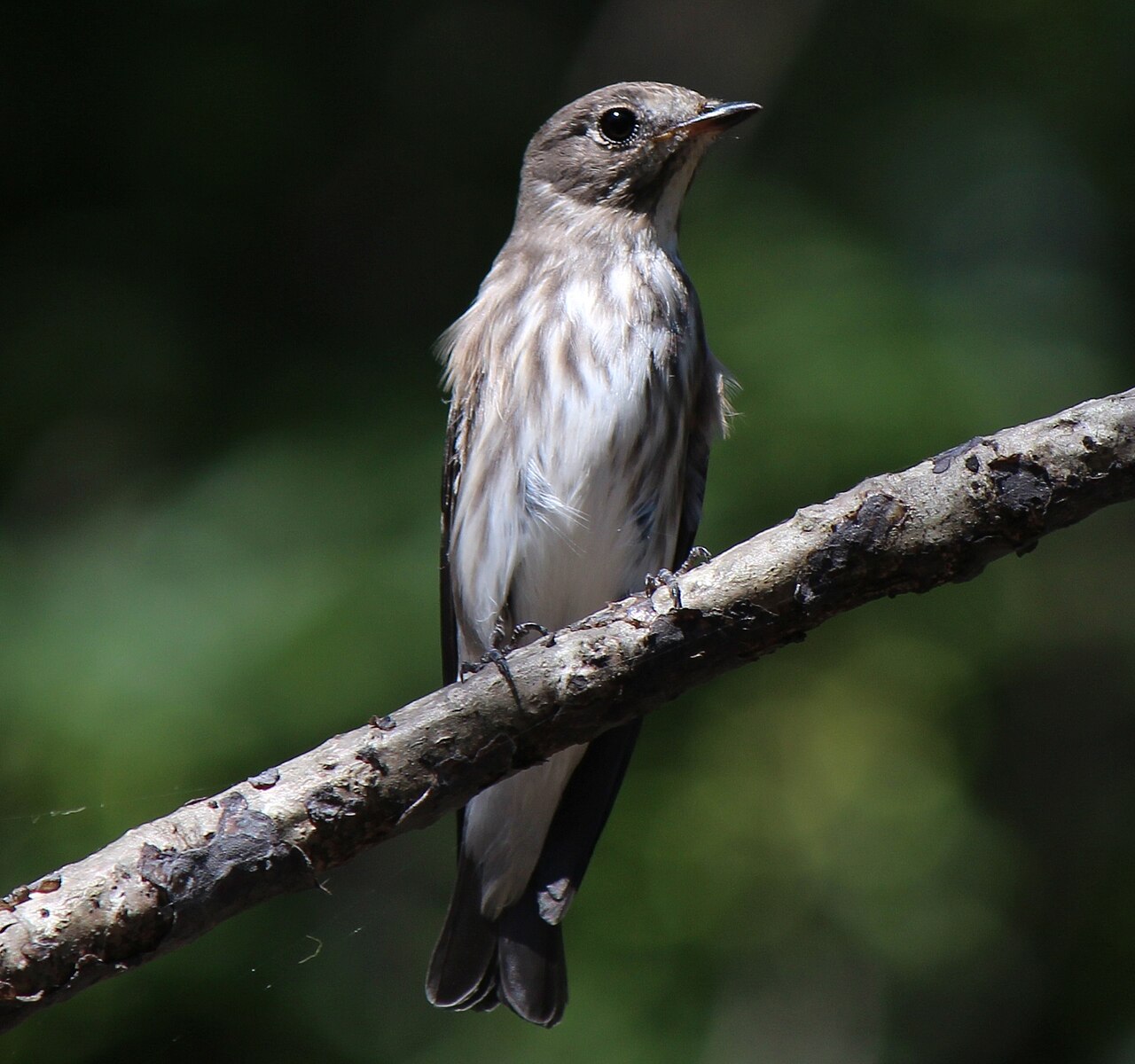
The Gray-streaked Flycatcher is an East Asian flycatcher with sharply grey-streaked underparts and long wings. It breeds in the taiga of southeastern Siberia and northeastern China and winters as far as New Guinea; in the guide area it is a vagrant recorded almost only on the islands off western Alaska.
Voice
The voice is inconspicuous and seldom heard away from the breeding grounds. The song is a thin, rapid series of high slight notes with a few harsher elements interspersed, soft and carrying poorly. The call is a short sharp tsee or a dry rattling tr-r-r-t. Vagrants in Alaska are generally silent, so identification has to rest on plumage.
Recording: Ray Tsu 诸仁 — CC BY-NC-SA 4.0 · Tianlin Community, Shanghai, China · xeno-canto
Identification
A small, slim flycatcher with a long wing: the wing tip reaches almost to the end of the short tail, farther than in any related species. The upperparts are grey-brown, the underparts white with sharply defined, dense grey streaks on breast and flanks that continue onto the belly. Further marks are a white eye-ring, a pale patch between bill and eye, a narrow white wing bar and pale edges to the tertials. Bill and legs are black; the lower mandible is dark throughout.
Confusion species
Dark-sided Flycatcher has a diffuse grey wash on the flanks without sharp streaks and a shorter-looking wing; in that species the streaking does not run onto the belly. Asian Brown Flycatcher is almost uniformly dingy white below, has a larger white face patch around the bill base and a pale base to the lower mandible. Young American tyrant flycatchers such as Western Wood-Pewee are greener above and have a broad, flat bill. The combination of sharp streaking, long wing and wholly black lower mandible settles it.
Habitat
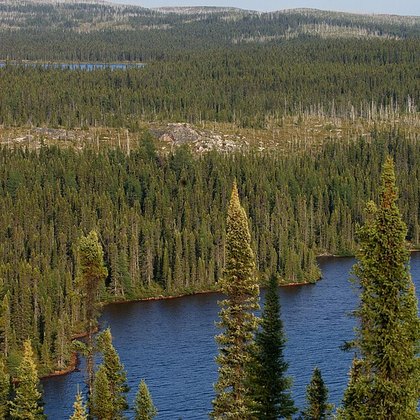
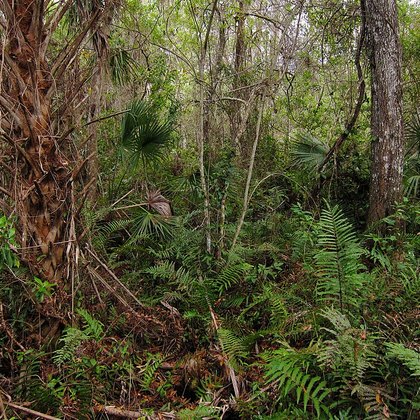
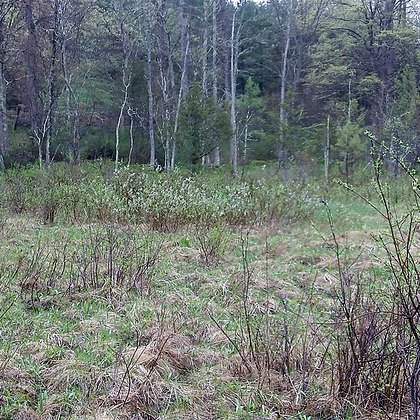
Breeds in open conifer forest and mixed taiga, often along clearings, river valleys and burns, hunting flying insects from an exposed branch. In winter it uses forest edge, second growth and open country with scattered trees, up to about 2000 metres. Vagrants in Alaska perforce sit in low scrub, on rocky slopes or near settlements, hunting from fences and buildings.
Where the bird is most often found, arranged by the USNVC — the vegetation classification of the United States and Canada — and CMECS for sea and coast.

Range and movements
The breeding range lies in southeastern Siberia, including Kamchatka and Sakhalin, and in northeastern China and Korea; the winter is spent in the Philippines, eastern Indonesia, Palau, Borneo and as far as New Guinea. Migration follows the eastern rim of Asia in a narrow band. In the guide area there are a small number of records from the western Aleutians, the Pribilofs and St. Lawrence Island, in late spring and late summer; mainland Alaska and the West Coast farther south have no more than isolated accepted records.
Where and when to look
The best chance is on Attu, Shemya or St. Paul, from late May to early June after a spell of southwesterly wind. Look along buildings and fences for a small bird that flies up briefly and returns to the same perch; check wing length on the perched bird first and the streaking only afterwards, since streaking is easily missed against the light.
Conservation
The IUCN lists the species as Least Concern (LC); the range is large and the population is regarded as substantial. Counts along the migration route do suggest a moderate decline, linked to logging in the wintering range and to loss of suitable forest openings on the breeding grounds. The species has no management status of its own in the guide area, since there is no breeding or wintering population.
Scientific name
Muscicapa griseisticta | (Swinhoe, 1861)
Robert Swinhoe described the species in 1861 as Hemichelidon griseisticta, from a specimen taken near Ta-ku in northern China; because it was later moved to the genus Muscicapa, author and year stand in parentheses. Muscicapa combines Latin musca 'fly' and capere 'to catch'. Griseisticta is from Medieval Latin griseus 'grey' and Latin stictus 'spotted, streaked', after Greek stiktos — thus 'grey-streaked', which the Dutch, English and Spanish names all reflect.