All species › Passerines › Tyrant flycatchers and allies › Gray Kingbird
Gray Kingbird | Tyrannus dominicensis
Grijze koningstiran | Tirano Gris
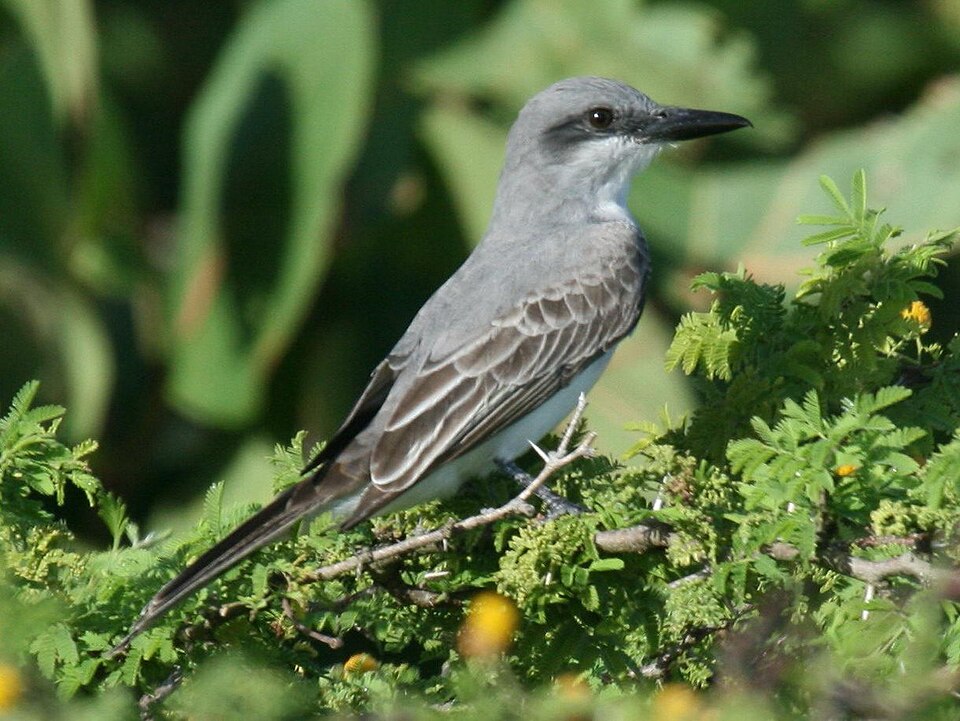
The Gray Kingbird is the only kingbird of the region with no yellow at all in the plumage: gray above, white below, with a heavy black bill and a dark mask. It belongs to the coast — mangrove edge, towns and palms of Florida and the Caribbean — and often perches on a wire or a bare branch above open ground.
Voice
The call is a loud, rolling pi-tir-ree, often repeated three or four times with the stress on the last syllable. That sound gave the species onomatopoeic names on several islands, such as pitirre and petchary. It calls persistently while setting up a territory and while gathering at the roost at the end of the day; it is one of the most frequently heard bird sounds of Antillean coastal villages.
Recording: Rory Nefdt — CC BY-NC-SA 4.0 · John Pennekamp Coral Reef State Park, Key Largo, Monroe County, Florida, United States · xeno-canto
Identification
A large flycatcher with a big head, a straight, heavy bill and a rather long, notched tail. The upperparts are plain gray, the wings and tail darker gray-brown, the underparts white with a gray wash across the breast. A dark mask runs through the eye and cuts across the pale head. An orange crown patch is concealed and rarely visible. Young birds have browner upperparts with cinnamon margins on the wing coverts, rump and tail.
Confusion species
No other kingbird of the region is pure white below: Tropical, Couch's, Cassin's and Western Kingbird all have a yellow belly, and Thick-billed Kingbird has at least a faint yellow wash on the flanks. Eastern Kingbird is also gray and white, but has a black crown, a much smaller bill and a straight black tail with a broad white terminal band; Gray Kingbird has a notched tail without white and a far heavier bill. Thick-billed Kingbird has a dark brown head and an even heavier bill, but no sharply defined mask.
Habitat
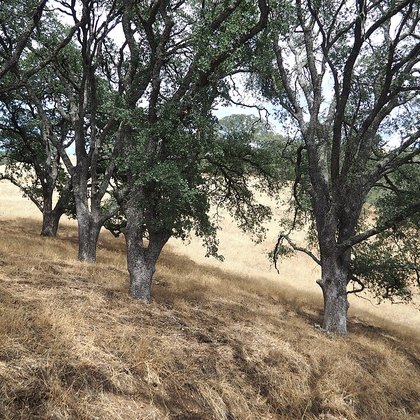
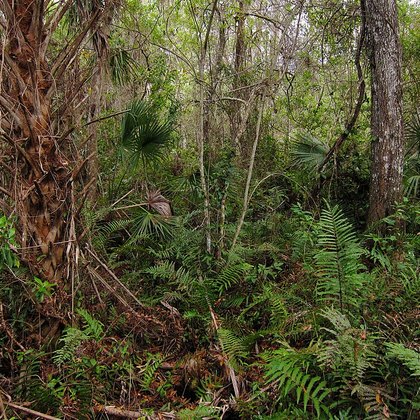
Coastal country: mangrove edge, salt marsh, estuaries and lagoons, coastal towns and cities with palms, gardens and parks, and savanna with scattered trees. In Florida it was formerly almost confined to the coast, but now moves further inland as well, into open pine woodland and agricultural land. In the wintering range it also uses openings in rainforest and the valleys and cities of the Andean foothills.
Where the bird is most often found, arranged by the USNVC — the vegetation classification of the United States and Canada — and CMECS for sea and coast.




Range and movements
It breeds on the coast of the southeastern United States — the stronghold is Florida, with smaller numbers along the coasts of Georgia, South Carolina, North Carolina, Alabama, Mississippi and Louisiana — and on virtually all islands of the Bahamas, the Greater Antilles, the Cayman Islands and the Turks and Caicos. Northern populations leave the breeding range in September and October and winter on the Caribbean coast of Central America and in northern South America, including Colombia, Venezuela and the Leeward Antilles. Beyond the range it is a regular vagrant along the Atlantic coast as far as New England.
- Resident
- Breeding (summer)
- Winter
- Passage
- dark = core range, pale = thinly spread
Where and when to look
The best period is April to August in the Florida Keys and along the Gulf coast of Florida: work a coastal road with wires and watch for the combination of a heavy bill and completely unyellow underparts. Where Eastern and Gray Kingbird occur together the tail decides it: a broad white terminal band means Eastern, a notched tail without white means Gray.
Conservation
The species is rated Least Concern (LC). Partners in Flight puts the world population at about 670,000 breeding birds and scores the species 12 out of 20 on the Continental Concern Score, a low concern category. In southeastern Florida numbers are declining locally as coastal development takes breeding habitat. Hurricanes, pesticides and sea level rise are named as the main pressures on the island and coastal populations.
Scientific name
Tyrannus dominicensis | (Gmelin, 1788)
Gmelin described the species in 1788 as Lanius Tyrannus dominicensis; because it was later moved to the genus Tyrannus, author and year stand in parentheses. Tyrannus is Latin for 'absolute ruler' or 'king', after the concealed crown patch and the driving off of larger birds at the nest. The species name dominicensis refers to Santo Domingo, the old name for the island of Hispaniola, where the described specimen came from.