All species › Passerines › Crows, jays and magpies › Florida Scrub-Jay
Florida Scrub-Jay | Aphelocoma coerulescens
Floridastruikgaai | Chara floridana
The Florida Scrub-Jay is the only bird species restricted to Florida. It lives in low oak scrub on ancient, nutrient-poor sand ridges kept open by fire, in family groups in which young of earlier years help raise the brood. It is one of the few cooperatively breeding birds of North America, and numbers have fallen by some ninety per cent in a century.
Voice
The commonest sound is a scratchy weep, repeated in quick succession in flight or from a perch on top of a shrub. Alongside it come a harsh scold, usually given from the top of a shrub, and a guttural growl. Females have a signal of their own: at a threat they give a rapid, mechanical series of hiccup notes while bobbing up and down with the bill pointed up. The group's sentinel calls from a high branch or post on sighting a raptor.
Recording: Valerie Heemstra — CC BY-NC-SA 4.0 · Pine Flatwoods Trail, Merritt Island NWR, Brevard County, Florida, United States · xeno-canto
Identification
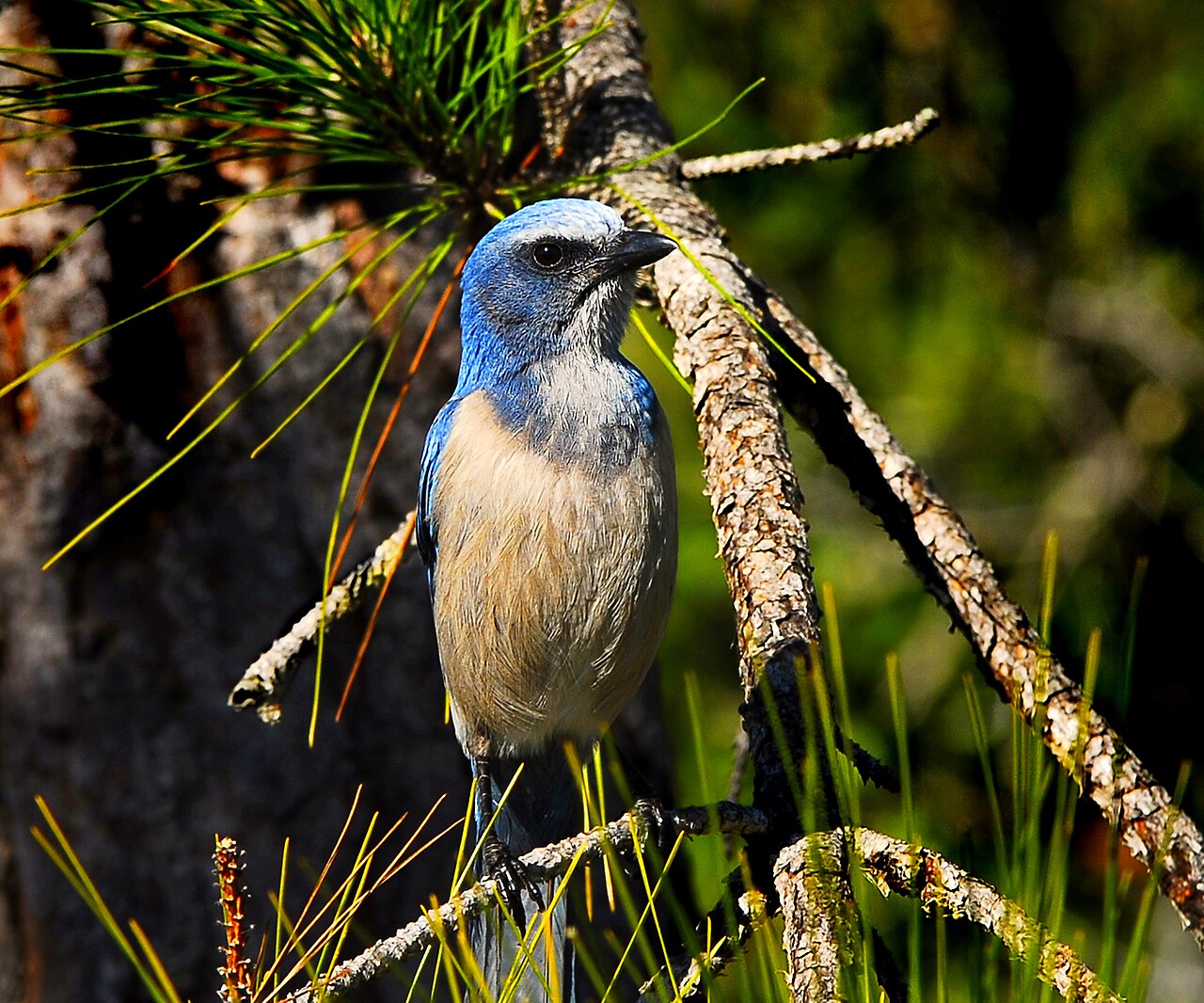
A jay of 23 to 28 centimetres, with a wingspan of 33 to 36 centimetres and a weight of 66 to 92 grams. There is no crest. Head and nape are blue, with a whitish forehead and a white supercilium; the throat is edged blue into a bib, the underparts are greyish and the back is grey. Wings and the long tail are blue, and bill, legs and feet black. First-year birds have a brown head that turns blue over their first year. Flight is low over the scrub, alternating flapping and gliding.
Confusion species
There is no second scrub-jay in Florida, so Blue Jay is the only real candidate for confusion: it has a crest, a black necklace, white patches in wing and tail and black barring, and sits in woodland and gardens rather than low scrub. California Scrub-Jay and Woodhouse's Scrub-Jay are the nearest relatives but live thousands of kilometres to the west; they were formerly treated as one species with the Florida bird, which is regarded as a descendant of a Woodhouse's-like ancestor separate for at least two million years. Escaped or vagrant western scrub-jays in Florida have not been recorded.
Habitat
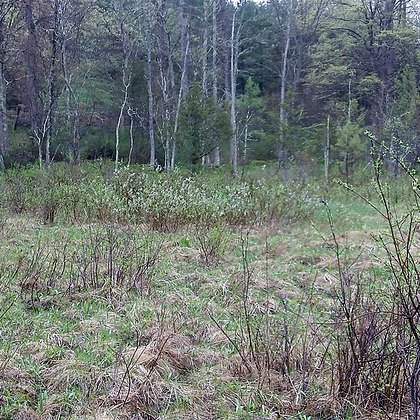
Florida scrub: low, dense oak scrub with sand live oak, sand pine and Florida rosemary on nutrient-poor, sharply draining sand, with open sand patches between. This habitat depends on fire; without it the oaks grow beyond about four metres and the species disappears. The highest, driest ridges are the most suitable. The scrub occurs in central Florida and along a strip of ancient dune ridges on the Atlantic coast. The birds bury thousands of acorns each year just beneath the sand; the forgotten stores contribute to oak regeneration. They also take seeds, insects, tree frogs, lizards, snakes and young turtles; a pair has been recorded killing a black racer together.
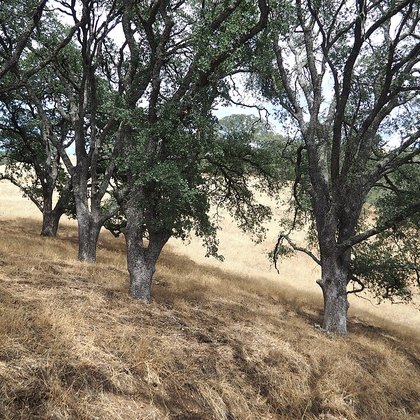
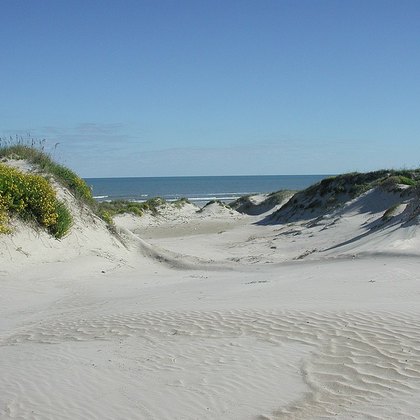
Where the bird is most often found, arranged by the USNVC — the vegetation classification of the United States and Canada — and CMECS for sea and coast.
Range and movements
Resident, confined to Florida and local within it: the central Florida peninsula, with a core on the Lake Wales Ridge, and a few areas along the Atlantic coast, among them Brevard County. The species does not migrate and moves hardly at all; young birds stay two to three years in the natal territory, and most settle in or beside it. Isolated subpopulations therefore cannot repopulate themselves.
- Resident
- Winter
- dark = core range, pale = thinly spread
Where and when to look
Drive the Lake Wales Ridge past managed scrub — Archbold Biological Station and the reserves around it, or Oscar Scherer State Park on the west coast — and watch for a bird perched on top of a low shrub or a post: that is the family group's sentinel. The whole group usually appears within a few minutes. Do not feed the birds: fed pairs breed earlier in the year, so that the young hatch before the caterpillars they depend on are available.
Conservation
The IUCN lists the species as Vulnerable (VU); Florida has listed it as threatened since 1975 and the federal listing dates from 1987. Partners in Flight arrived at about four thousand birds; more recent assessments work from roughly eight thousand mature birds, with no single subpopulation above a thousand. Over the last hundred years some ninety per cent of the population has been lost; in Brevard County the decline since 1993 was a third. The main cause is loss of scrub to housing, roads and railways, precisely on the highest and driest ground. Fire suppression, which lets the scrub close over, road casualties in built-up areas and predation by free-roaming cats add to this. Management consists mainly of controlled burning of the remaining parcels.
Scientific name
Aphelocoma coerulescens | (Bosc, 1795)
Louis Bosc described the species in 1795 as Corvus coerulescens, from material out of Florida; because it was moved to another genus, author and year stand in parentheses. The genus Aphelocoma was introduced in 1851 by Cabanis, from Greek aphelēs 'smooth, plain' and komē 'hair, plumage': the plumage is not striped or barred as in other jays. The species name coerulescens is Latin for 'turning blue'.