All species › Gamebirds › Partridges, pheasants, grouse and allies › Dusky Grouse
Dusky Grouse | Dendragapus obscurus
Blauw sneeuwhoen | Gallo de las Rocosas
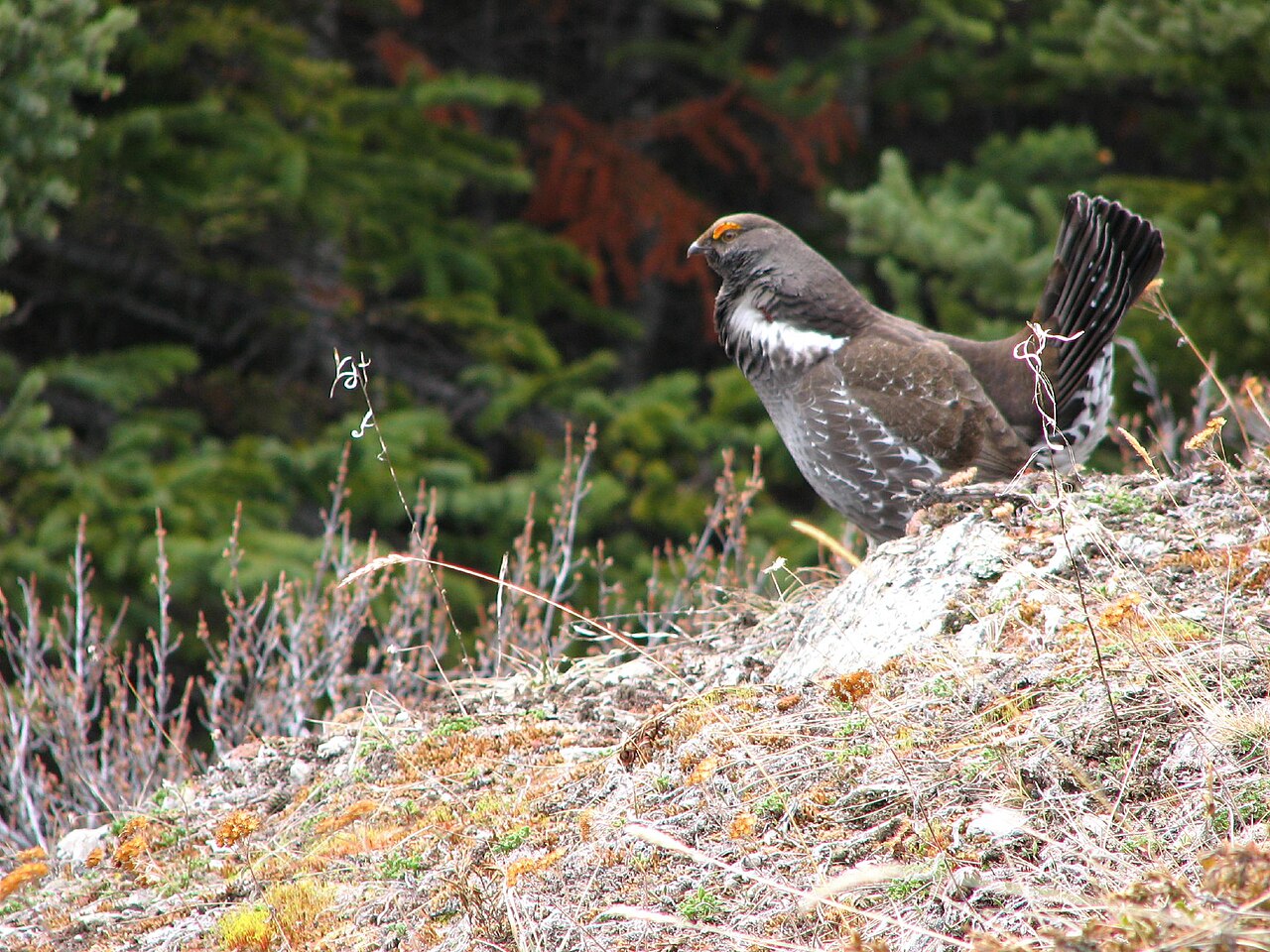
Dusky Grouse is the heavyset grouse of the interior Rocky Mountains, from Yukon in the north to New Mexico in the south. Unlike its coastal relative, the male displays on the ground, with a muffled, subdued hoot that is barely audible even at a hundred metres. His purplish-red neck sacs and red eyebrow combs are then the only bright colour in an otherwise grey-brown plumage.
Voice
The display call consists of five to seven soft, low hoots, so quiet that they are barely audible even at a hundred metres; the male repeats the series for hours from a fixed, usually open spot on the ground. While calling he inflates the purplish-red neck sacs and the red skin above the eye, tail fanned and neck feathers raised into a ruff. In alarm he gives a hoarse cackling call, and chicks keep contact with the hen through soft peeping notes. Outside spring the species is almost silent, and even the display is more often seen than heard.
Recording: Bruce Lagerquist — CC BY-NC-SA 4.0 · Salmo Divide Trail, Colville National Forest, Pend Oreille Co., Washington, United States · xeno-canto
Identification
A heavy, short-tailed grouse with a small head; the male is grey-brown to slate grey, with an almost solid black tail that in some birds carries a narrow grey terminal band. During display he inflates the red skin above the eye and the purplish-red, white-bordered neck sacs, fans the tail and raises the neck feathers into a ruff. The female is brown with black and white speckling, smaller than the male and lacking the coloured neck sacs. Juveniles resemble the female but are more finely marked. In flight the species is heavy and laboured, with short bursts of rapid wingbeats between glides.
Confusion species
Sooty Grouse (Dendragapus fuliginosus) is the near-identical species of the coastal ranges west of Dusky Grouse; their ranges overlap only along a narrow strip of interior British Columbia. There, displaying males are told apart by the colour of the inflated neck sac: purplish red in Dusky Grouse, yellowish orange in Sooty Grouse. The display also gives the species away: Dusky Grouse stands on the ground and is barely audible beyond a hundred metres, while Sooty Grouse sings high in a tree and carries for kilometres. Females and juveniles of the two species are essentially indistinguishable in the field.
Habitat
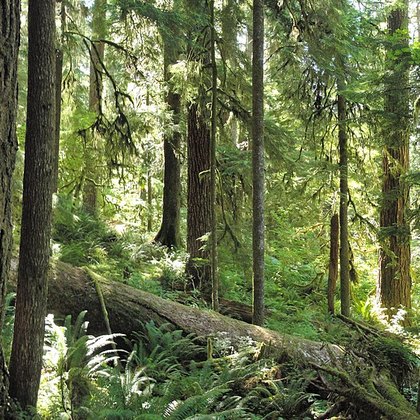
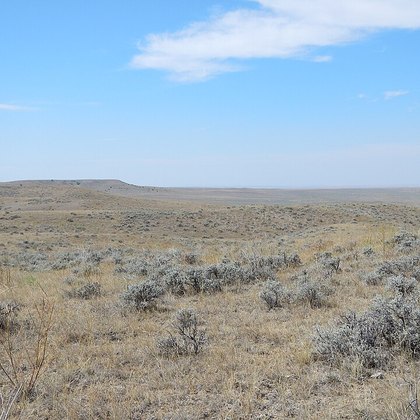
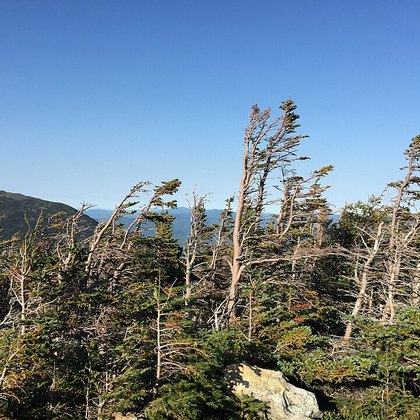
Mountain forest of ponderosa pine, lodgepole pine, aspen and subalpine fir, with an open understory that leaves the display in view. In winter he moves into the densest, highest conifer stands, where he lives almost entirely on conifer needles; in early spring and late summer he instead drops down to warm, dry bitterbrush and sagebrush foothills. Above treeline he uses krummholz and alpine meadows for summer food. Open steppe without any trees is as unsuitable as closed lowland forest.
Where the bird is most often found, arranged by the USNVC — the vegetation classification of the United States and Canada — and CMECS for sea and coast.
Range and movements
Resident in the Rocky Mountains and adjoining western ranges, from Yukon and southern British Columbia and Alberta through Washington, Oregon, Idaho, Montana, Wyoming, Utah, Colorado and Nevada to Arizona and New Mexico, with an isolated population in the Black Hills of South Dakota. It does not migrate over long distances but does move vertically between summer and winter habitat, sometimes several tens of kilometres. The range has stayed largely stable since the nineteenth century, though the species is under pressure in parts of the southwest from wildfire and the conversion of mountain forest to grassland. In western British Columbia its range meets that of Sooty Grouse.
- Resident
- Breeding (summer)
- Passage
- dark = core range, pale = thinly spread
Where and when to look
Look at dawn in April or May for an open patch in mountain forest with a clear view of the ground; the male often displays there for weeks in the same spot and, unlike his coastal relative, can actually be seen. Approach slowly once you hear the soft hoot — it is so quiet that you will soon need to stand closer than feels comfortable. Outside spring the species is most often seen where mountain forest gives way to open sagebrush foothills.
Conservation
Not threatened; numbers have stayed stable since 1966, with an estimated two hundred thousand breeding birds. Hunting, logging and grazing play a local role, and research suggests that increasing wildfire in the southwest may in time push the species out of parts of its range. Partners in Flight rates it of low conservation concern.
Scientific name
Dendragapus obscurus | (Say, 1822)
Thomas Say described the species in 1822 as Tetrao obscurus, in the genus of the Eurasian capercaillies, from birds collected on the Long Expedition to the Rocky Mountains; because it has since been moved to another genus, author and year stand in parentheses. The genus Dendragapus was introduced in 1864 by the American zoologist Elliot. obscurus is Latin for 'dark, indistinct', after the plain grey-brown plumage. The type locality is 'Defile Creek', about twenty kilometres north of present-day Colorado Springs, Colorado.