All species › Passerines › Cardinals and allies › Dickcissel
Dickcissel | Spiza americana
Dickcissel | Arrocero americano
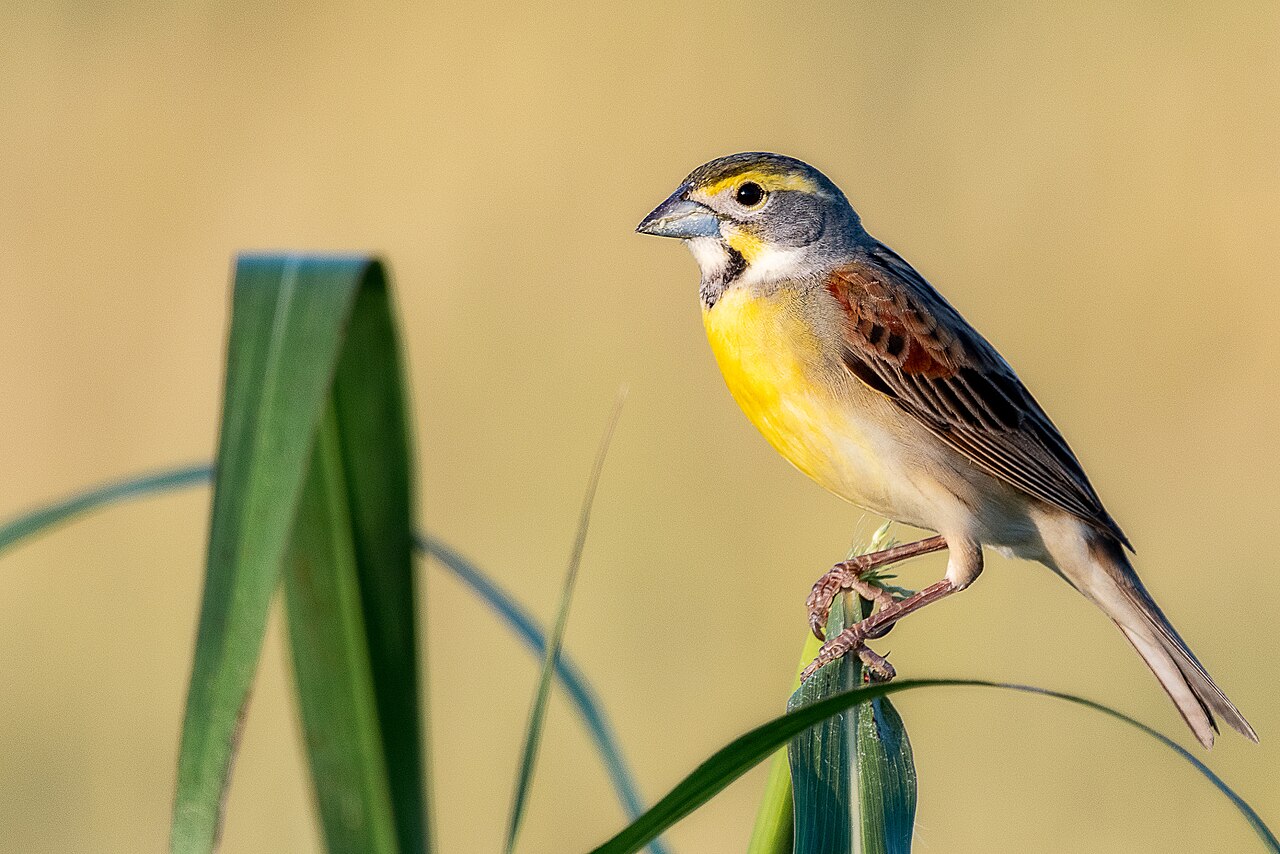
The Dickcissel is a prairie bunting with a heavy pale bill, a yellow breast marked with a black V and a chestnut shoulder patch. It breeds in the grassland heart of North America and gathers in winter in flocks of hundreds of thousands in northern South America.
Voice
The name comes from the song: a sharp dick dick followed by a buzzed ciss-ciss-el, usually given from a fence post, a thistle stem or a telephone wire. The male may repeat the phrase for an hour at short intervals, including in the middle of the day in full sun. The flight call is a low, rattling buzz that recalls an electrical short; that note can be heard at night over migrating flocks and is often picked up on sound recordings.
Recording: Anne McCormack — CC BY-NC-SA 4.0 · Heron Pond Avian Observatory at Riverlands West Alton, MO, United States · xeno-canto
Identification
The breeding male has a grey head with a yellow eyebrow and a yellow stripe along the jaw, a white chin, a black throat patch running into a V on the yellow breast, and a rufous patch at the bend of the wing. The back is brown with black streaks; the bill is thick, conical and blue-grey. The female lacks the black throat, is duller yellow on the breast and shows fine streaking on the flanks, but keeps the yellow eyebrow and usually some rufous on the shoulder. In winter the male's black V is largely hidden by pale feather fringes.
Confusion species
The pattern of yellow with a black V suggests a small meadowlark, but that bird is far larger, has a long pointed bill and white outer tail feathers. Females and winter birds resemble House Sparrow: check the yellow eyebrow, the yellow wash on the breast, the rufous shoulder and the unstreaked chin. Grassland sparrows have a finer bill and no rufous at the bend of the wing.
Habitat
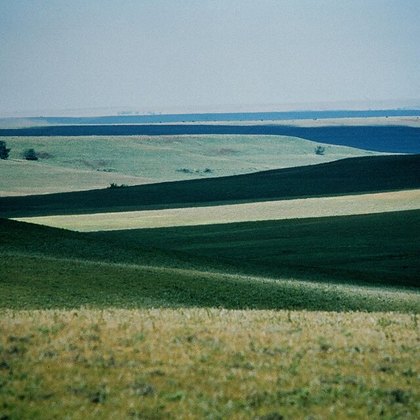
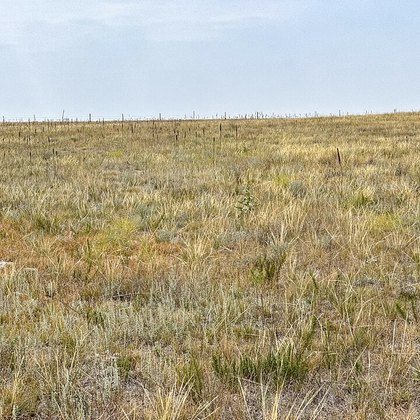
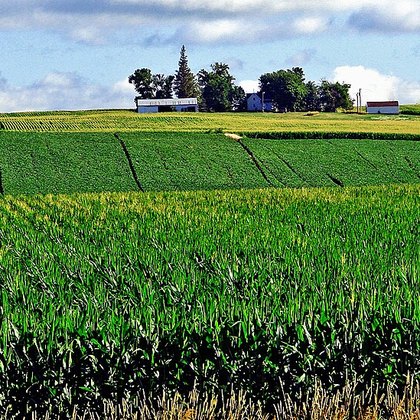
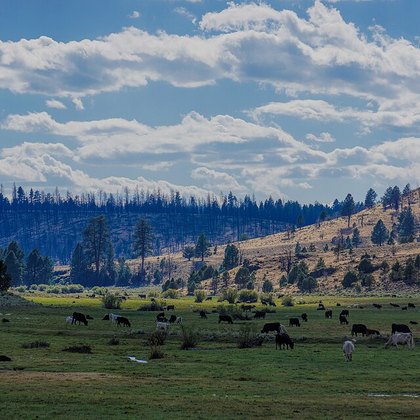
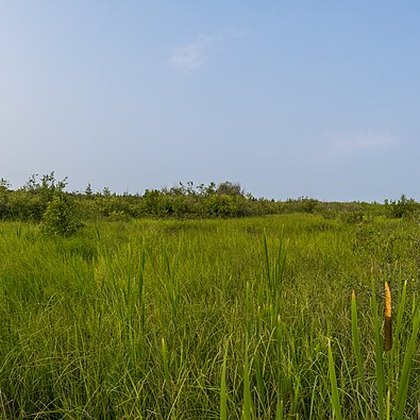
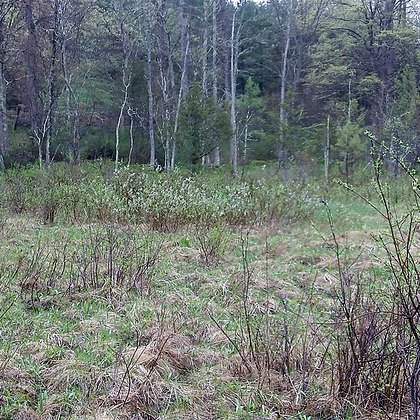
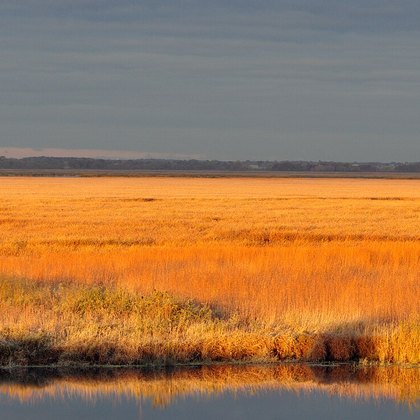
Tall, dense grassland: originally tallgrass prairie, today mostly hayfields of alfalfa and clover, fallow fields, lightly grazed grassland and rough growth along roads and ditches. Song perches must be present — shrubs, fence posts or stems standing above the grass. In winter the species needs three things side by side: grassland or cropland to forage in, scrub for daytime resting, and densely vegetated marsh or tall grass to roost in at night.
Where the bird is most often found, arranged by the USNVC — the vegetation classification of the United States and Canada — and CMECS for sea and coast.
Range and movements
The core breeding range lies on the Great Plains and in the Midwest, from southern Manitoba and the Dakotas south to Texas and east to Ohio. The edge of the range shifts from year to year with rainfall: in dry years more birds breed to the east and north, in wet years fewer. In the nineteenth century the species bred along the whole Atlantic seaboard and largely disappeared from there after 1850. Autumn migration follows the Gulf coast into Central America; the winter centre of gravity lies in the llanos of Venezuela and Colombia, where flocks of over a million birds have been counted. Small numbers winter in southern Mexico and Central America and on the Gulf coast of the United States.
- Resident
- Breeding (summer)
- Winter
- Passage
- dark = core range, pale = thinly spread
Where and when to look
In June, drive with the window down past a hayfield or a fallow field in Kansas or Nebraska: the song carries to the road and the male nearly always sits in the open on a post or a stem. Away from the core range the buzzing flight call during autumn migration is the most useful mark.
Conservation
The IUCN places the species in the least concern (LC) category, but the North American Breeding Bird Survey shows a decline of about fourteen per cent since 1970, with steeper falls in the northern Midwest. Conversion of hayfield and prairie to row crops and mowing during the breeding season destroy nests; on the Great Plains part of the population breeds in farm crops where the young do not survive cutting. On the wintering grounds the flocks are locally controlled with pesticides in sorghum and rice fields, where they are treated as a crop pest; that mortality can involve large numbers because the whole population concentrates at few roosts.
Scientific name
Spiza americana | (Gmelin, 1789)
Gmelin described the species in 1789 as Emberiza americana from a specimen from New York; because of its placement in another genus, author and year stand in parentheses. The genus Spiza comes from Greek spiza, a name for a finch. The species name americana means 'of America'. The English name, taken over by Dutch, imitates the sound of the song; the Spanish name arrocero americano refers to its foraging in rice fields on the wintering grounds.